India at UN opposes 'negative characterisation' based on unverified allegations

India has told the United Nations General Assembly that human rights should not be used as an instrument of political pressure or for selectively targeting countries, and said it opposed attempts to turn unverified allegations and incomplete statistics into a negative characterisation of the country.
The statement was delivered by Barkha Tamrakar, Deputy Secretary in the Ministry of External Affairs, at the Third Committee of the UN General Assembly in New York on Tuesday, October 20, 2026. The committee was discussing the agenda item concerning the Working Group on Enforced Disappearances.
Ms. Tamrakar said India engages with international human rights mechanisms, but such engagement must be based on dialogue, consultation, cooperation, non-selectivity and transparency. She said human rights should not become a tool for political pressure or selective targeting.
She called on delegations to cite the report faithfully and not to 'inflate a humanitarian communication into a verdict'. India, she said, remained prepared to clarify specific and properly documented cases through established channels. However, it formally opposed any attempt to convert unverified allegations, incomplete statistics or a report that contains no India country observation into a negative characterisation of the world's largest democracy.
The Third Committee is one of the main committees of the UN General Assembly and handles social, humanitarian and human rights issues. The Working Group on Enforced Disappearances is a UN human rights mechanism that examines cases of enforced disappearance. Its reports are among the documents discussed by member states in the committee.
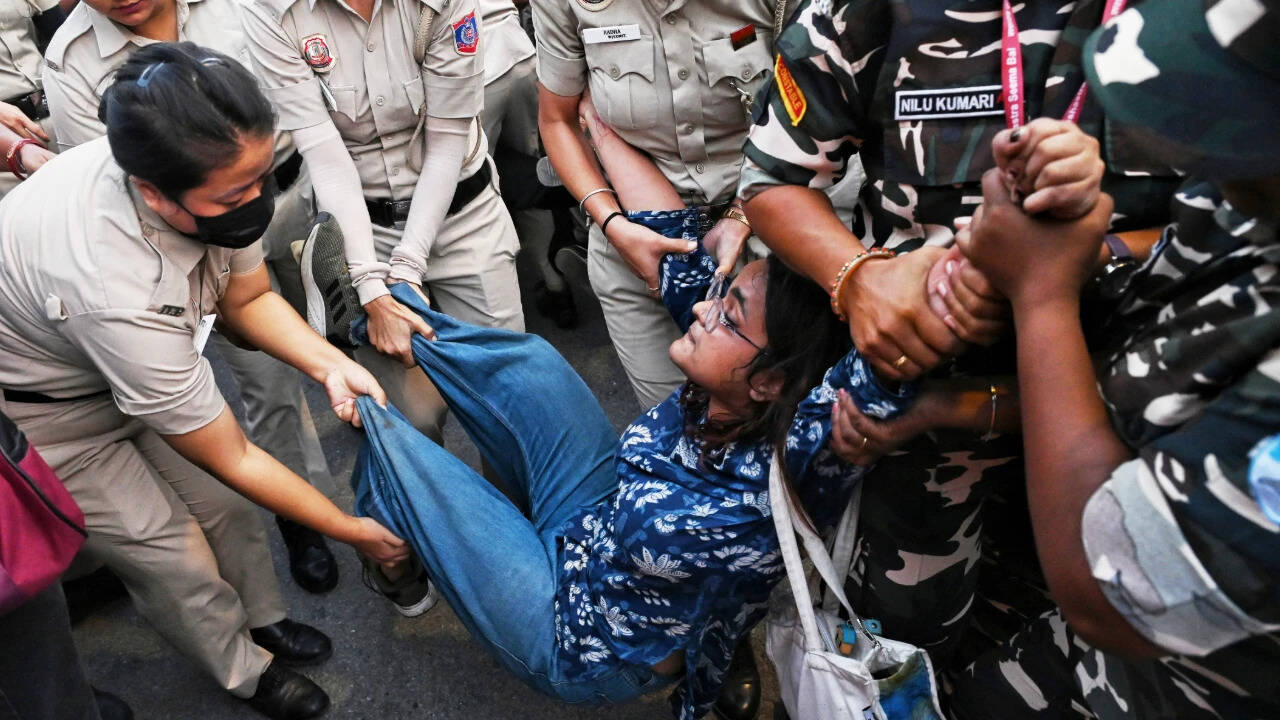
The remarks came as more than 20 UN human rights experts in Geneva expressed alarm on the same day over what they described as a 'repeatedly heavy-handed police response' to peaceful youth-led demonstrations in New Delhi. The experts called on authorities to ensure justice for reported human rights violations during the protests.
Last week, India rejected as 'hearsay' a report by a UN human rights expert that took note of a 'satirical political movement' created by the country's youth and alleged that they had faced retaliation. New Delhi urged the expert to verify claims before 'vilifying issues based on unverified allegations'.
The UN Human Rights Office of the High Commissioner had also expressed concern over 'reports of mass detentions of demonstrators, protest leaders, members of civil society organisations, lawyers and journalists' before and during large-scale demonstrations in Delhi. India described those remarks as 'unwarranted' and an 'unacceptable interference' in the country's internal affairs.
The exchange reflects continuing tension between India and some UN human rights mechanisms over how country situations are reported and discussed. India has consistently argued that human rights discussions should be conducted through dialogue and cooperation, and that allegations should be verified before being used to characterise a country's record. The statement did not name any delegation, and India said it would continue to engage with international human rights mechanisms through established channels.