India and Indonesia Join Hands: Modi, Prabowo Inaugurate Temple Restoration Project
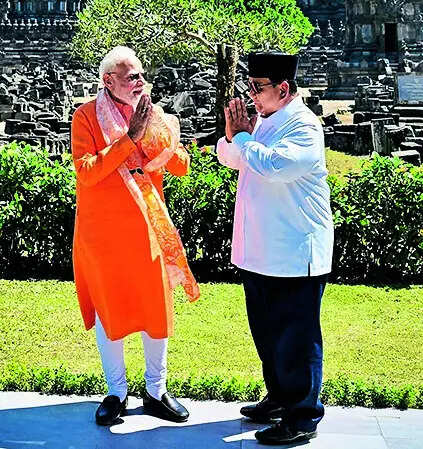
Indian Prime Minister Narendra Modi and Indonesian President Prabowo Subianto jointly inaugurated a significant temple restoration project in a ceremony held in Jakarta on Tuesday. The project, aimed at restoring ancient Hindu temples in Indonesia, marks a deepening of cultural and diplomatic ties between the two nations.
The restoration initiative focuses on several temples in Central Java, including the UNESCO World Heritage site of Prambanan, which has seen damage over centuries due to natural weathering and seismic activity. The project, funded jointly by the Indian and Indonesian governments, will employ local artisans and conservation experts, who will use traditional techniques while incorporating modern preservation methods.
In a joint statement, both leaders emphasised that the project symbolises the shared heritage of the two countries, rooted in centuries-old cultural exchanges. “The restoration of these temples is not merely an architectural undertaking; it is a revival of our ancient bond of knowledge, art, and spirituality,” Prime Minister Modi said during the inauguration.
President Prabowo echoed similar sentiments, stating that the collaboration showcases Indonesia’s commitment to preserving its diverse cultural legacy while strengthening ties with India. “These temples are a living part of our history, and their restoration will ensure that future generations can witness the grandeur of our shared civilisation,” he added.
The project is part of a broader cultural agreement signed between India and Indonesia in 2023, which includes exchange programmes for scholars, artists, and conservationists. The Indian government has allocated approximately ₹50 crore (around $6 million) for the restoration work, with Indonesia contributing an equal amount in kind and resources.
Experts from the Archaeological Survey of India (ASI) and the Indonesian Heritage Preservation Agency will collaborate on the project, which is expected to be completed in three phases over the next five years. The restoration will include stabilising structures, cleaning inscriptions, and reconstructing damaged sections using original materials.
The initiative has been welcomed by historians and cultural enthusiasts. Dr. Sunita Pandey, a historian specialising in Indian-Indonesian links, described it as a “landmark effort to preserve a shared legacy that is often understudied.” She added that the project could also boost tourism in the region, bringing economic benefits to local communities.
However, some conservationists have cautioned against hasty work, stressing the need for meticulous planning and transparency. The Indonesian National Heritage Trust urged both governments to ensure that the restoration follows international standards and involves community participation.
The temple restoration is seen as a soft-power move by both countries, strengthening diplomatic bonds amid a shifting geopolitical landscape. India and Indonesia have historically enjoyed warm ties, with bilateral trade exceeding $30 billion in 2023. The cultural project is expected to further enhance people-to-people connections.
The inauguration ceremony was attended by delegates from both nations, including ministers, diplomats, and representatives of temple communities. The event concluded with a traditional dance performance and a joint offering of flowers at the temple site.







