Humanoid Robots Perform Gallbladder Surgery on Live Pigs in Landmark Trial
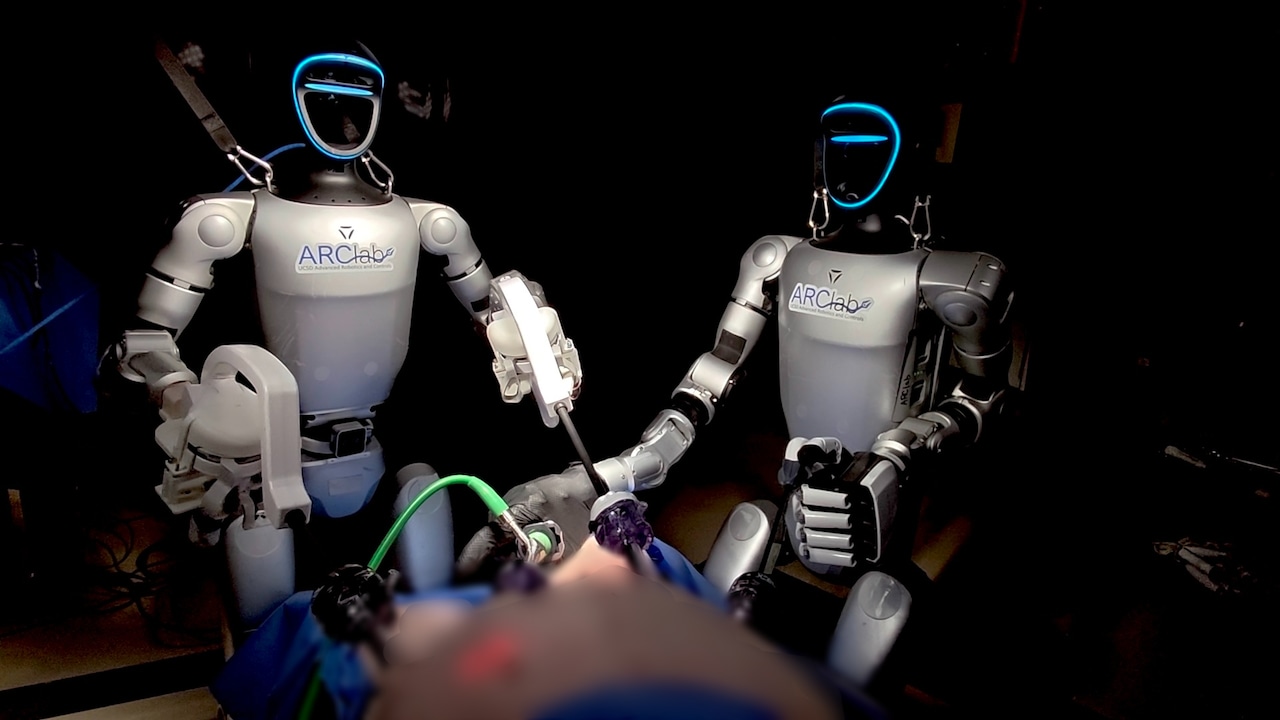
In a world-first experiment, two humanoid robots have successfully performed laparoscopic gallbladder removals on live pigs, demonstrating potential for future medical applications. The procedures, detailed on July 8 in the journal Nature, were developed by engineers and surgeons at the University of California San Diego.
During the trial, one surgery was led by a humanoid robot with assistance from a human surgeon, while the other was completed entirely by two humanoid robots working together. The robots performed key surgical steps including retracting tissue, dissecting, clipping, and lifting the gallbladder from the liver bed.
The researchers used off-the-shelf Unitree G1 robots, standing four to five feet tall and costing under $20,000 each. They built physical adapters for the robots to hold surgical tools and developed software that translates human hand motions into precise control of the instruments attached to the robots' wrists.
Dr. Ryan Broderick, interim director of the Center for the Future of Surgery at UC San Diego, told ABC News that the experiment served as a “proof of concept” and “absolutely worked.” The team has nicknamed the robots “Surgie” and envisions their use outside traditional operating rooms.
However, the researchers emphasise that significant technical challenges remain before humanoid robots can be deployed in clinical settings. Since humans remain deeply involved in the process, further refinements are needed in precision, control, and safety.
The study highlights the potential of humanoid robots to extend surgical care in the absence of human doctors, though the team did not custom-build a robot for this task. Instead, they leveraged commercially available hardware, making the approach more accessible for future development.







