Heavy Rain and Pipeline Work Cause Cave-In on Delhi-Gurgaon Expressway, Snarling Traffic for Hours
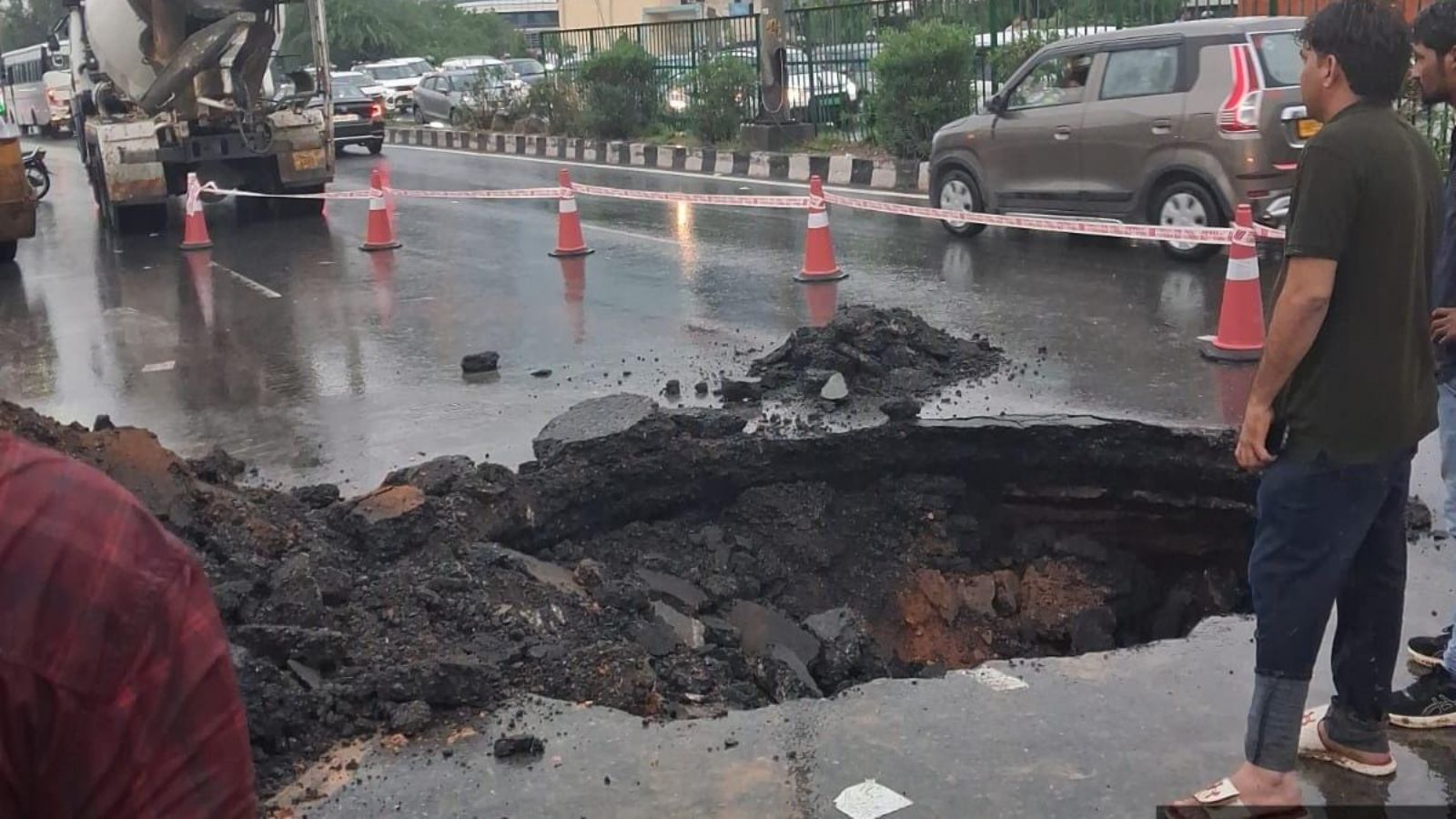
Traffic on the Delhi-Gurgaon Expressway remained severely affected on Wednesday as repair work continued on a section near Narsinghpur that caved in after heavy rain on Tuesday.
The cave-in, caused by pipeline installation work combined with the rain, disrupted one of the National Capital Region's busiest arterial roads. Authorities barricaded two lanes on the Jaipur-bound carriageway, leading to major traffic congestion during peak hours.
On Wednesday, some employees of nearby factories and Bestech Cyber Park chose to walk the final stretch due to the slow-moving traffic. “It was taking very long to cross so we have decided to go on foot,” two professionals said while navigating a muddy part of the service road.
Dharm Veer Singh, a resident of Sector 82, said he reached home three hours later than usual on Tuesday. “Even an hour and a half after crossing Ambience Mall, I had only reached Sector 15 (near 32nd Avenue). So I took the Dwarka Expressway then,” he said.
National Highways Authority of India (NHAI) officials stated that all three lanes would be open to traffic by Wednesday evening. “Two out of three lanes had to be shut for traffic yesterday. We have already opened one, and the remaining one will also be opened by evening. We are just ensuring it is sealed properly with soil because the road sees heavy truck traffic,” an NHAI official said.
Repairs continued through Wednesday, with all lanes expected to be operational by evening.
What caused the cave-in?
The collapse occurred at a location where the Gurugram Metropolitan Development Authority (GMDA) is laying a pipe beneath NH-48. The incident left a large crater on the expressway.
“NHAI would like to inform that a localised cave-in has occurred on a portion of NH-48 near Narsinghpur (Delhi-Jaipur side) at a location where @OfficialGMDA was carrying out pipe culvert pushing works,” the Authority said in a statement. A culvert is a pipe for water that goes under a road.
“The GMDA was pushing one of its pipes from left to right, and we did not expect such heavy rainfall yesterday. The water eventually seeped in from the pipe that was being pushed in and emerged on the other end, which led the area to settle and crater in,” explained an NHAI official.
A GMDA engineering team official at the site blamed the cave-in on the persistent rain. “We were putting in place two pipes to connect to the temporary drain that is in process of being concretised and was carrying runoff. Because of the heavy rain, water seeped through. If it had rained even two days later, the cave-in would not have happened,” the official said. “Nearby industries also tend to release their drainage directly here despite our instructions, adding to the load,” he added.
What precautions will NHAI take going forward?
The NHAI official said they have told all agencies involved in pipe-pushing to stop such work until the monsoon ends. GMDA officials said the cave-in was covered up by 9 pm Tuesday, and the remaining pipe installation work will be completed depending on the spells of rain ahead.
What was the aftermath?
The cave-in resulted in a traffic jam stretching for kilometres, with many commuters reporting delays ranging from an hour to a couple of hours. Traffic Police created diversions through Dwarka Expressway and Southern Peripheral Road. They also issued a cautionary advisory requesting corporate employees to work from home due to the inclement weather.







