Guinea landfill collapse kills at least 31 in Conakry after heavy rain
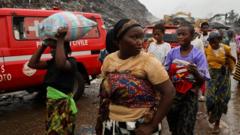
At least 31 people have died after a mound of rubbish at a major waste site collapsed onto nearby homes in Guinea's capital, Conakry, the government has confirmed. The incident occurred in the Dar-es-Salam area during the early hours of the morning, following heavy rainfall overnight.
According to an official statement, another 22 people were injured, six of them seriously. The government said that “significant” resources and personnel, including the military, had been deployed to search for survivors after the collapse, which happened at around 02:00 local time.
Rescue teams were later seen using excavators to comb through scattered debris at the site, as local residents gathered nearby. The search operation continued through the day, with officials expressing concern that the death toll could rise further.
Guinea's Prime Minister, Mamadou Oury Bah, visited the scene to assess the situation and oversee the rescue efforts. His presence underscored the gravity of the disaster, as families anxiously awaited news of missing relatives.
One woman, speaking to local media, said that her five children had died in the collapse. The tragedy has highlighted the precarious living conditions of many residents in Conakry, where informal settlements often develop close to or on top of waste dumps.
Landfill collapses are not uncommon in parts of West Africa, where rapid urbanisation and inadequate waste management systems have led to the creation of large, unstable rubbish mounds. Heavy rains, like those that preceded this disaster, can destabilise such heaps, turning them into lethal hazards for nearby communities.
The government has promised a full assessment of the site and has urged residents in the affected area to cooperate with rescue teams. As of now, no official cause has been established, but the combination of accumulated waste and torrential rainfall is being investigated.
The tragedy has also reignited calls for better urban planning and stricter enforcement of safety regulations around waste disposal sites. Local activists have long warned that such incidents were foreseeable, given the lack of proper waste management infrastructure in the city.
International aid agencies have offered assistance, and the United Nations has expressed condolences to the families of the victims. The focus remains on completing the search and rescue operation, with authorities working to ensure that every possible survivor is recovered.
In the coming days, the government is expected to provide more detailed information on the number of missing persons and the measures to prevent similar disasters in the future. For now, the people of Dar-es-Salam are left to mourn their dead and count the cost of a catastrophe that many believe could have been avoided.