Delhi's EV push: Expert warns of grid challenges, clean energy need
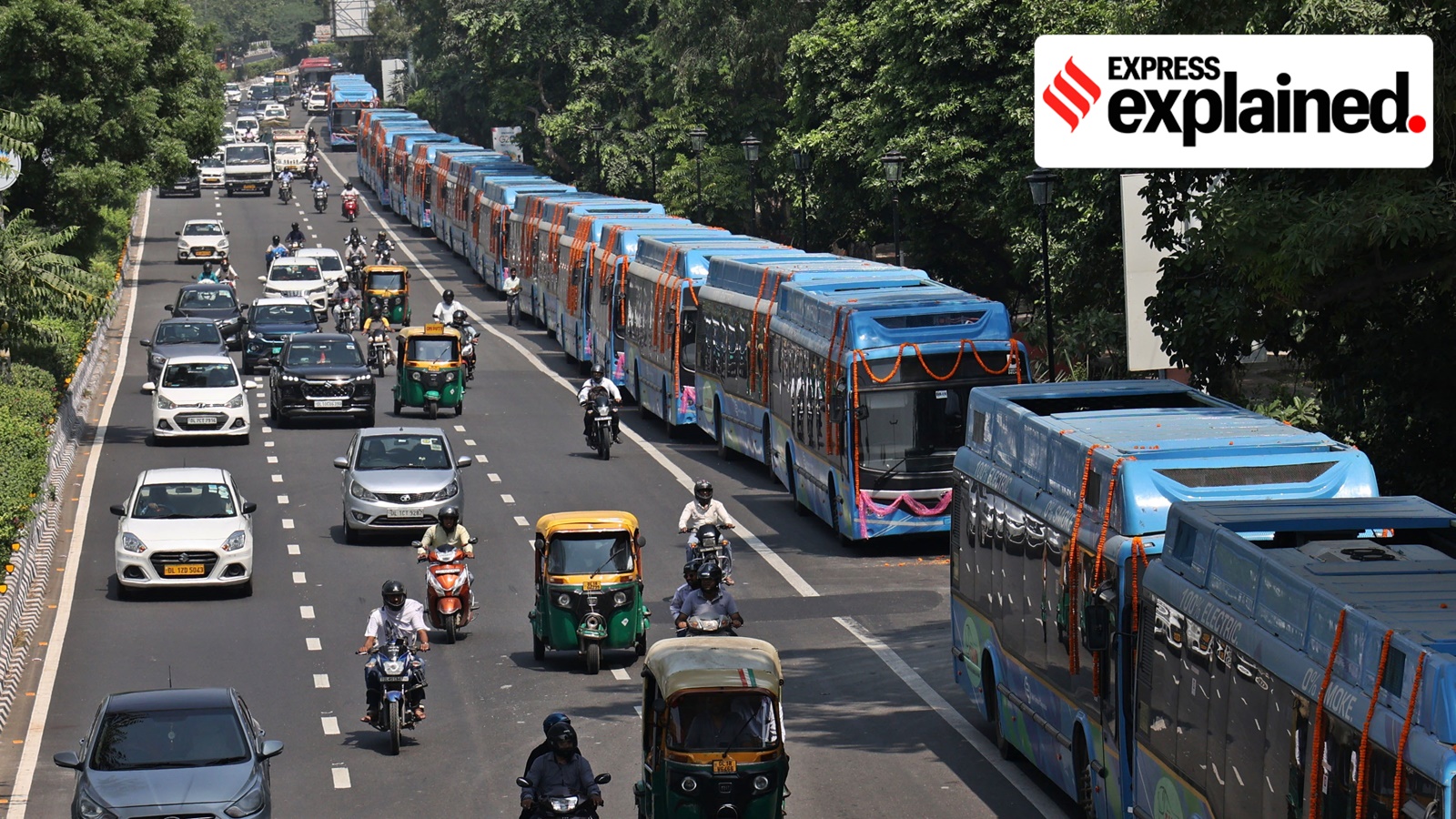
The Delhi government's new Electric Vehicles (EV) policy aims to electrify 30% of the city's vehicle fleet by March 31, 2030, as part of efforts to curb air pollution. The policy cites the Commission for Air Quality Management, which identified vehicular emissions as the largest contributor to air pollution in the National Capital Territory. Two-wheelers make up about 67% of Delhi's vehicle stock.
However, the transition from internal combustion engine (ICE) vehicles to EVs involves significant challenges, according to Gauhar Raza, former professor at the Academy of Scientific and Innovative Research and Chief Scientist at the Council of Scientific and Industrial Research. In an interview, he explained the technical, infrastructural, and environmental aspects of the shift.
Why the transition matters
Raza said ICE technology has largely reached its limits. Despite decades of engineering improvements, major efficiency gains have come from better accessories, electronics, and supporting systems rather than the engine itself. The future of transportation lies in electric mobility, where the next technological leap is expected.
Additionally, recent events in West Asia have highlighted India's vulnerability as a fossil fuel import-dependent country, making the shift to EVs a strategic priority.
Efficiency: EVs vs ICEs
Efficiency, Raza explained, is the combined effectiveness of all vehicle components. In an ICE, energy is lost at multiple stages—through heat, friction, and mechanical systems. Even with improved parts, overall efficiency has a practical ceiling. In contrast, an EV's drivetrain is inherently more efficient because fewer stages lose energy. More stored battery energy is used to move the vehicle.
However, actual efficiency also depends on driving habits and conditions.
Environmental impact: not automatic
While EVs produce no tailpipe emissions—improving urban air quality—their overall environmental benefit depends on the energy source. If electricity comes from thermal power plants, pollution is merely shifted from city streets to power plant locations. Thus, the transition to EVs must go hand in hand with cleaning the electricity grid.







