US Strikes on Iran Enter Ninth Night; Iran Reports Oil Tanker Explosions in Hormuz
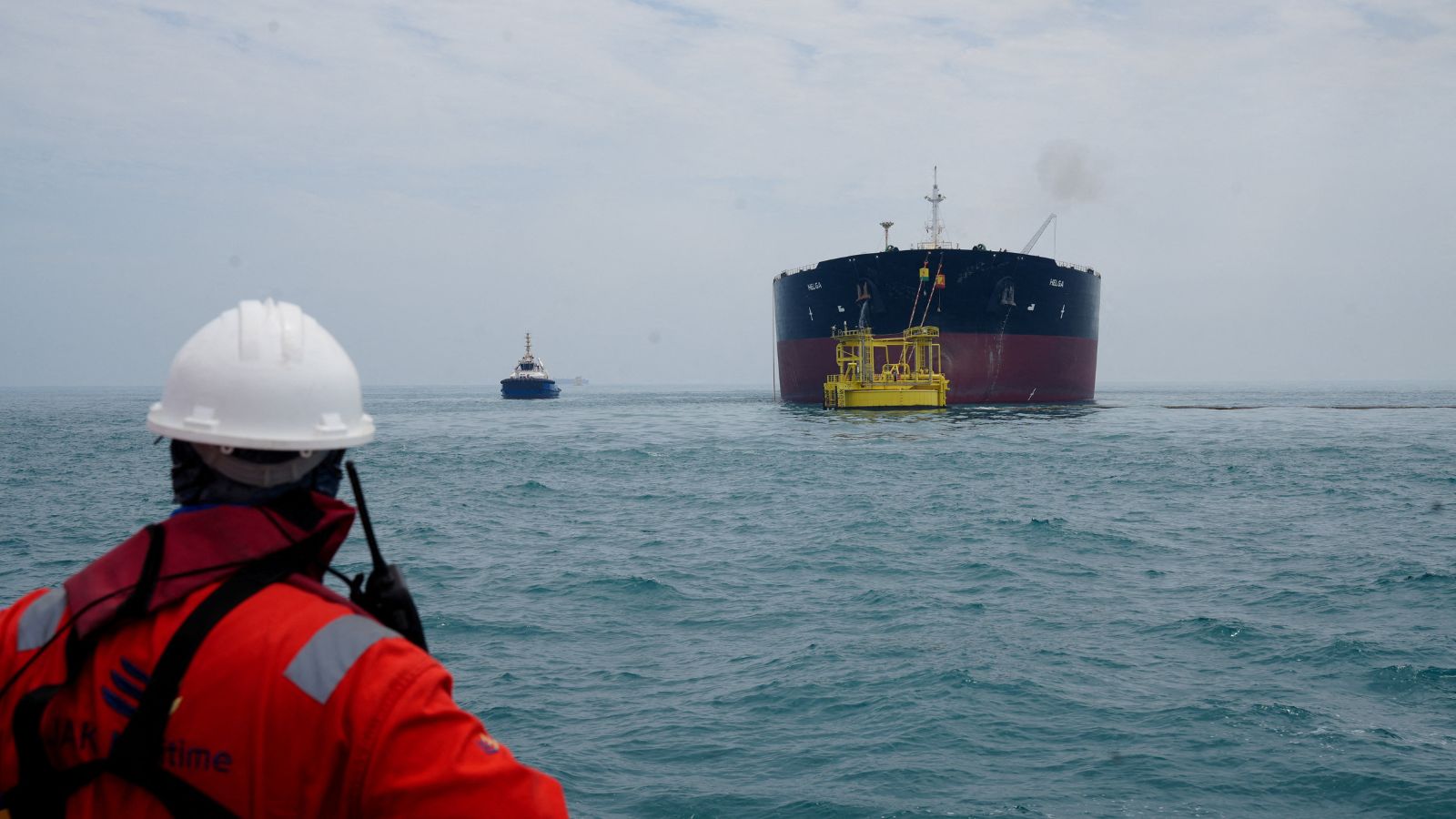
The United States carried out a ninth consecutive night of strikes on Iran early Monday, hours after Iran's Revolutionary Guard claimed that two oil tankers had exploded and been immobilised in the Strait of Hormuz. The strait is a critical maritime chokepoint through which about one-fifth of global crude oil and a substantial share of liquefied natural gas normally pass.
Iran's Revolutionary Guard said the tankers were damaged after being encouraged by the US military to use what the Guard called an unsafe route. Reuters could not independently verify the claim, and the Guard provided no details on the vessels' names, flags, crews, or casualties. The Guard warned that the waterway would remain unsafe as long as US 'aggression' continues, stating that not even 'a single drop of oil and gas' would pass through safely, and called on the US military to prepare for a 'punitive operation'.
Separately, the British military reported a ship on fire near Oman's coast early Monday, though the cause was not immediately clear.
The US Central Command said it launched fresh strikes aimed at weakening Iran's ability to threaten commercial vessels and civilian sailors. Iran's Tasnim news agency reported missile strikes on several Iranian cities, including Tabriz, Chabahar, Konarak, Bandar Mahshahr, and Bandar Imam Khomeini. US President Donald Trump told reporters, 'We hit them very hard again tonight,' saying it was done in honour of American troops killed since Friday.
The American death toll from the conflict has risen to 17, with more than 420 wounded. A US service member was killed in Iraq on Saturday during a controlled detonation of an unexploded Iranian drone. Two more troops died in a Friday attack on a US base in Jordan, where a third remains missing. Central Command said unidentified remains were found at the site on Sunday and are still being examined.
Iran's Revolutionary Guard also claimed it struck a US special operations post in Syria's Al-Tanf area, and earlier carried out a drone attack on US assets in Kuwait. Kuwait confirmed that one of its desalination plants was hit for a second consecutive day, sparking a fire, though officials said the power grid remains stable. Jordan shot down several incoming Iranian missiles, and Israel warned that missiles fired towards Jordan's port city of Aqaba could spill into Israeli territory for the first time in weeks. The US Embassy in Bahrain warned that Iran may be planning to target locations in central Manama.
Iran's atomic energy agency said US strikes hit the construction site of a planned nuclear power plant in the country's southwest. However, satellite images reviewed by The Associated Press showed only early-stage clearing work at the site as of July 9, and the International Atomic Energy Agency said the facility held no nuclear material when it was last inspected. Iranian authorities report at least 50 people killed and more than 500 wounded in the latest round of US strikes.
Brent crude rose above $90 a barrel on Monday, its highest level since mid-June, as concerns grow over the stability of the Strait of Hormuz. The US has reimposed a naval blockade on Iranian ports, saying it has redirected six ships and disabled one over the past week. The conflict continues to escalate, with no signs of de-escalation.