US Reimposes Blockade on Iran as Hormuz Ceasefire Collapses
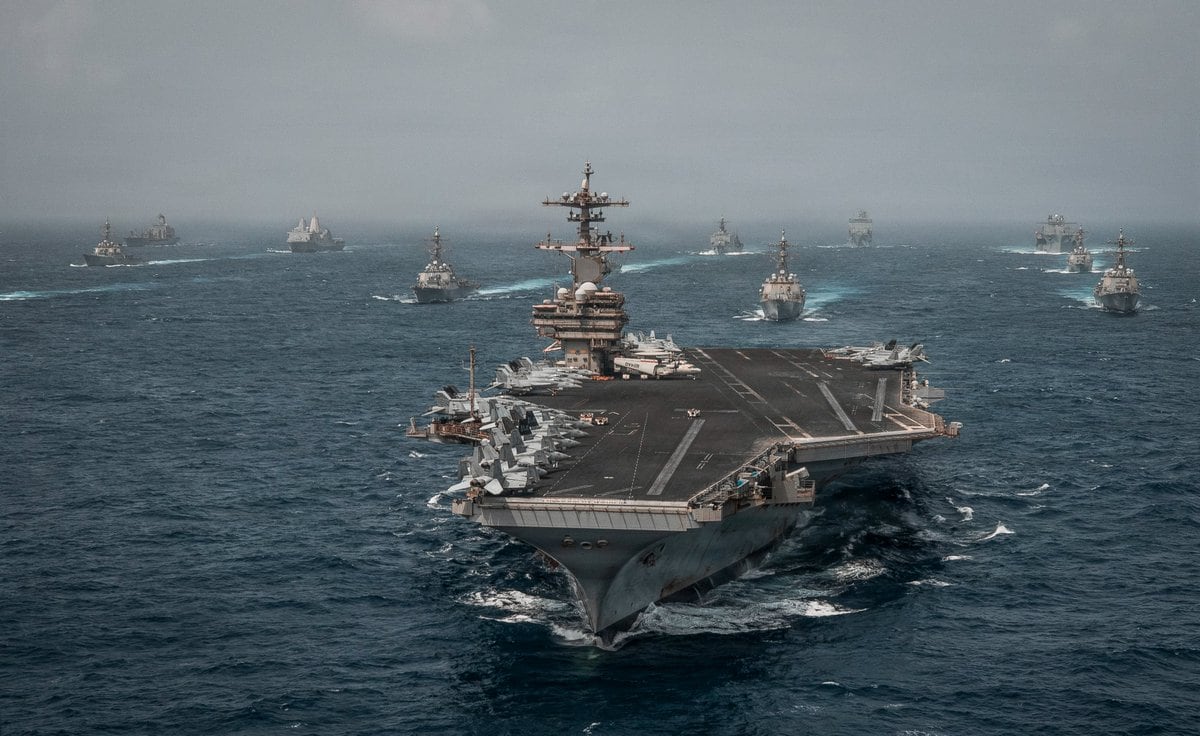
The United States military announced on Tuesday that it has reinstated its blockade of Iranian ports in the Strait of Hormuz, citing Iran's attacks on commercial shipping. This move comes as a temporary ceasefire agreement unravels, raising fears of a return to full-scale conflict.
The blockade was first imposed in mid-April, then lifted in mid-June following the signing of an interim deal aimed at ending hostilities. That deal set a 60-day timeline for negotiations on Iran's nuclear program, but talks stalled as fighting in the strait escalated.
President Donald Trump announced the return of the blockade on Monday and initially proposed a 20% fee on ships traversing the strait. However, hours before the blockade resumed, he abandoned the fee plan, citing requests from Gulf allies.
The interim peace agreement was intended to reopen the waterway, a critical route for global energy supplies, and provide time for negotiators. Instead, renewed fighting has disrupted shipping, threatened the global economy, and prompted warnings to commercial airlines.
Prior to reimposing the blockade, the US conducted a new wave of strikes, a US official told the Associated Press on condition of anonymity. Iran's Deputy Foreign Minister Kazem Gharibabadi accused the US of trying to prevent Tehran from exercising what he called 'effective sovereignty' over the Strait of Hormuz.
Before the conflict, a fifth of all traded crude oil and natural gas passed through the strait without tolls. After the US and Israel attacked Iran on February 28, the waterway was effectively closed, sending oil, fertilizer, and other commodity prices soaring.
Iran has recently attacked ships on a US-patrolled route, triggering tit-for-tat strikes. The US has threatened to forcibly reopen the strait, but experts say that would require a larger naval force and possibly ground troops.
Trump said Tuesday that he received calls from 'kings and emirs' who proposed an alternative to collecting fees: investing billions in the US. Trump expressed preference for this arrangement, stating, 'I don't think anybody should be able to charge a fee for the strait.' It remains unclear if these investment commitments are new beyond those announced during his Middle East visit last year.
The US Central Command stated it struck several Iranian areas, targeting 'coastal defence systems, missile and drone sites and maritime capabilities.' Iran acknowledged the strikes but provided no casualty or damage assessments. The US military said the strikes would 'impose a heavy cost on Iranian forces and degrade their ability to attack innocent civilians and commercial shipping.'
In response, Iran attacked targets in Bahrain, Kuwait, Jordan, and three tankers in the strait. The International Maritime Organization reported that two mariners were killed and 14 wounded on the tankers Mombasa and Al Bahiyah, which are associated with the United Arab Emirates. The UAE threatened retaliation. Iran's Revolutionary Guard said the tankers 'ignored repeated warnings.'
Qatar condemned the Iranian attacks on Jordan, Bahrain, and Kuwait as an 'egregious violation' of their sovereignty.