UN's First Scientific AI Report Warns Governments: Governance Falling Behind
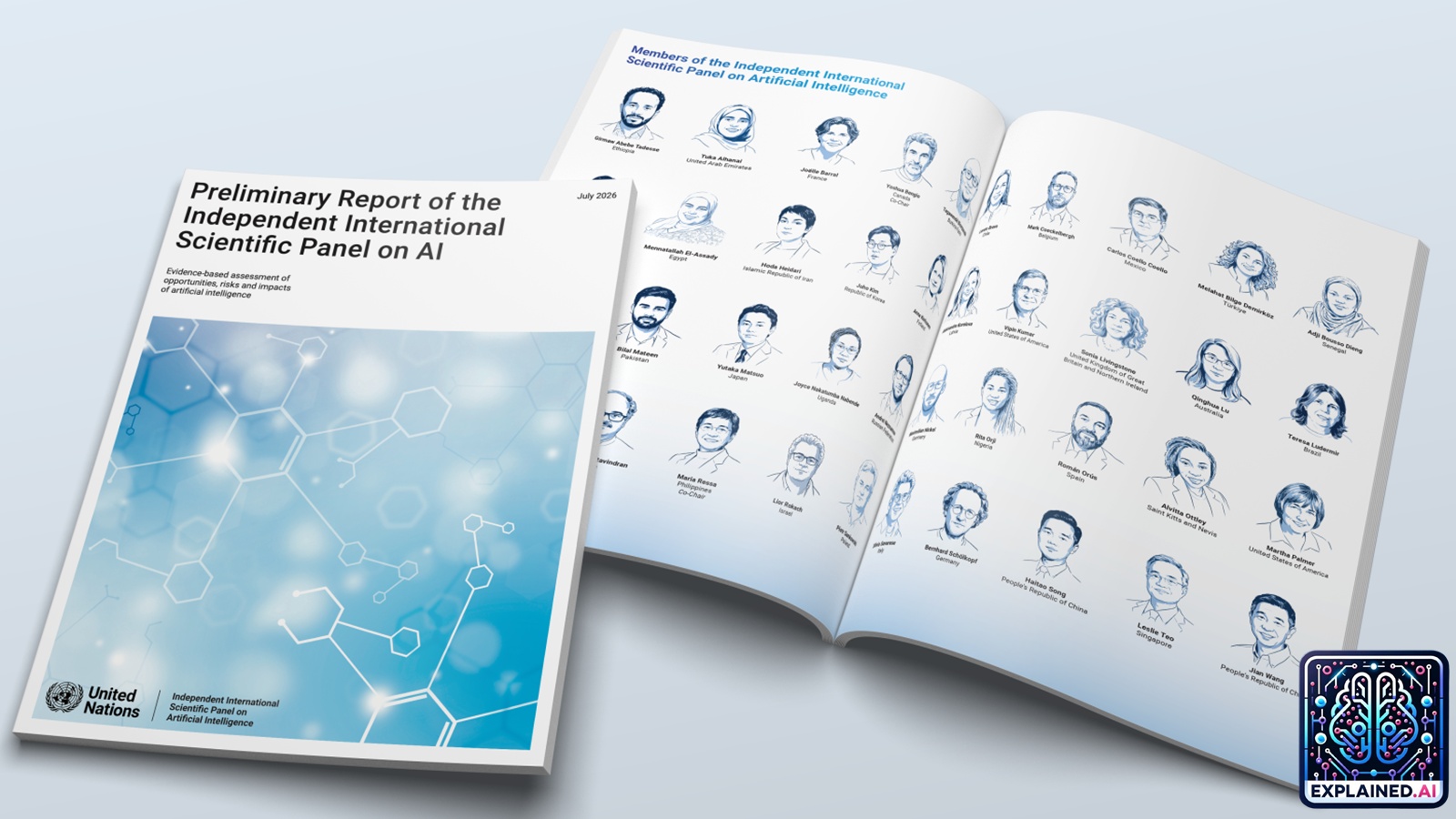
The United Nations has released its first scientific assessment of artificial intelligence, warning that the rapid pace of AI development has outstripped existing safety measures and global governance mechanisms. The Preliminary Report of the Independent International Scientific Panel on AI, co-chaired by Turing Award laureate Yoshua Bengio and Nobel laureate Maria Ressa, highlights critical gaps in understanding and regulating the technology.
The report examines AI across seven themes: advances in AI science; applications in healthcare, education, and agriculture; economic implications; security and environmental impacts; human rights and democracy; cultural and individual wellbeing; and governance and reliability. It is the first in a series of periodic assessments, with a comprehensive report expected next year.
The panel warns that AI capabilities are progressing faster than scientific understanding and public oversight. Policymakers face a dilemma: waiting for complete certainty may mean acting only after serious harms occur. “The world cannot govern what it cannot understand,” UN Secretary-General António Guterres said, stressing the need for independent scientific evidence before making policy choices.
A major concern is the emergence of frontier AI models and autonomous agents that can perform complex tasks with limited human intervention. While promising productivity gains, they introduce risks that current governance mechanisms cannot address. The report notes that dozens of governance instruments exist but are fragmented, concentrated among a few corporations, and rarely measure real-world effectiveness.
The report also highlights a growing “compute divide.” Frontier AI development is concentrated in the United States (75% of global AI computing capacity) and China (15%), leaving the rest of the world with just 10%. This concentration of semiconductors, data centres, and cloud infrastructure makes computing power a strategic resource. Countries without access risk becoming consumers rather than creators of AI, unable to build sovereign capabilities or shape global standards.
For nations like India, which is investing in AI infrastructure through the IndiaAI Mission, the findings underscore the urgency of bridging this divide. The panel calls for global cooperation to ensure equitable access and robust governance.