Union Minister Defers Paper Leak Questions; Chief Justice Rejects Adjournment Requests
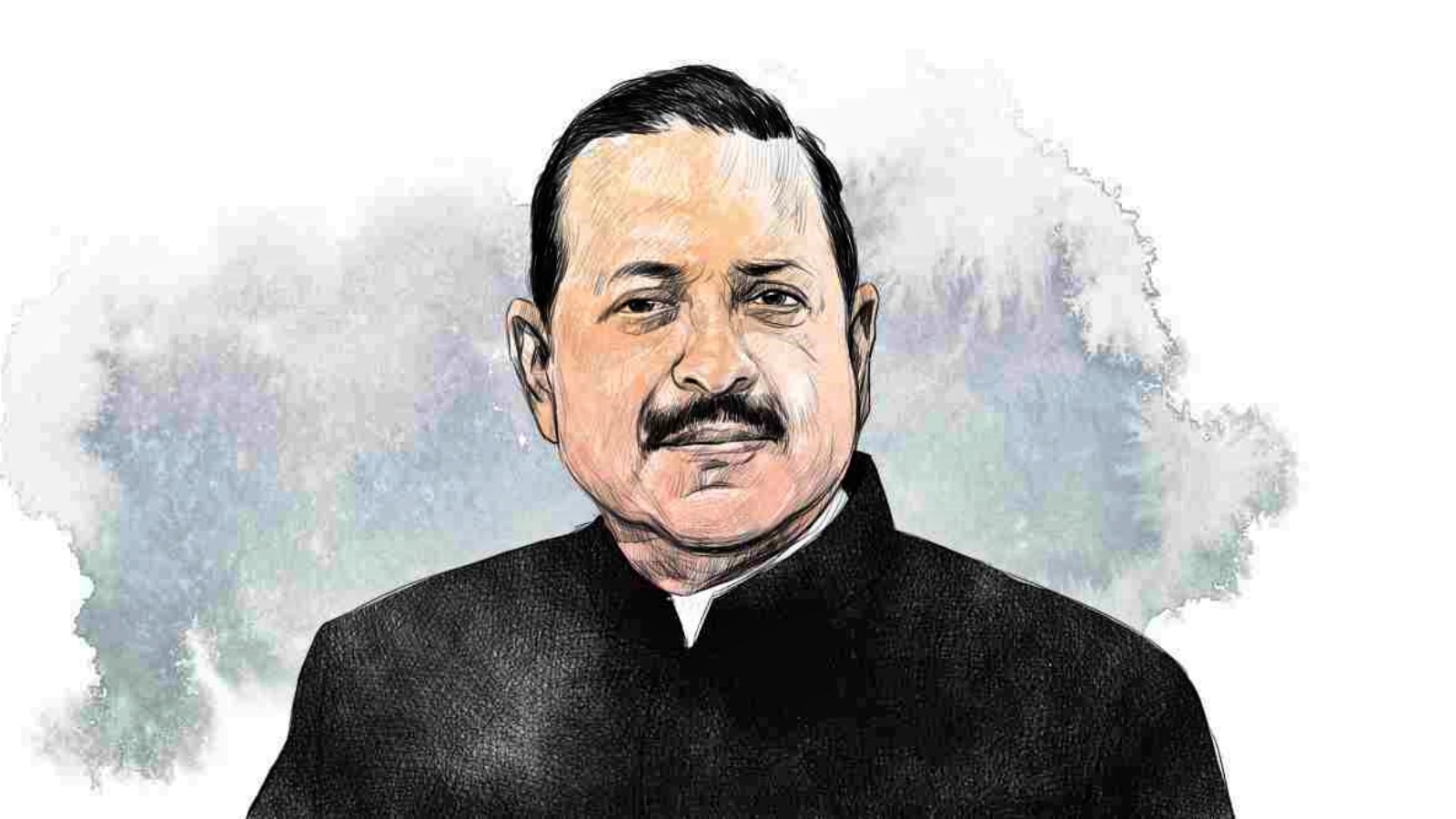
At a press conference in New Delhi on Wednesday, Union Minister Jitendra Singh, who holds charge of the Personnel, Public Grievances and Pensions Ministry, chose to avoid direct answers when journalists asked about the ongoing controversy over examination paper leaks and the government’s reported decision to block the messaging platform Telegram until a re-test for the medical entrance exam NEET is conducted. The minister, who was briefing the media on his ministry’s achievements over the past 12 years, referred all such questions to the Education Ministry and the Information & Broadcasting Ministry, stating with a smile that he had learned to speak only as much as was required.
The scrutiny over paper leaks has intensified in recent weeks, with allegations of question papers being sold ahead of examinations for several competitive tests, including the National Eligibility cum Entrance Test (NEET) for undergraduate medical courses. The government has faced demands for a thorough investigation and stringent action. Amid these demands, reports emerged that authorities might suspend Telegram services temporarily to prevent the circulation of leaked material before the NEET re-test. However, Minister Singh did not confirm or deny the reports, simply deflecting queries to the concerned ministries.
In a separate development, the Supreme Court witnessed a firm exchange on judicial work schedules. Chief Justice of India Surya Kant, along with Justice V. Mohana, was presiding over a bench when two junior counsel appearing for a petitioner and a respondent requested that their matter be taken up only after July 13, when the court’s so-called partial working days would end. The lawyers cited the unavailability of senior advocates. The Chief Justice promptly rejected the request, emphasising that judges cannot afford to not work. “You are free professionals. The salary we get, how do we justify it if we don’t work?” the CJI observed. He cautioned that questions could be raised about judges enjoying partial working days and not fulfilling their duties, asking who would be responsible if such a perception took hold.
To another counsel who sought an adjournment on the ground that the court was on “vacation,” the Chief Justice clarified that the Supreme Court, in fact, had five benches functioning that very day. He said pointedly that nine other judges were working alongside him and that there were no vacations. The bench ultimately agreed to hear the matter on Thursday.
These parallel incidents highlight the contrasting approaches to accountability in two arms of the state. While the executive appears to be strategically side-stepping uncomfortable questions on a sensitive issue, the judiciary is publicly reinforcing its commitment to work and accessibility, even during traditionally lean periods. The Supreme Court’s summer recess, often seen as a period of reduced activity, has this year been partially curtailed to address pending cases, a fact CJI Kant underlined to dispel any notion of idleness.
The NEET paper leak case remains under investigation, and the government’s final decision on blocking communication platforms is yet to be formally announced. The Union Education Ministry has maintained that a re-test will be held and that all necessary measures are being taken to ensure fairness. Meanwhile, the Supreme Court’s insistence on hearing cases without delay sends a clear signal about judicial efficiency, especially at a time when public trust in institutions is being tested.
The Supreme Court’s summer vacation has been a subject of public debate for years, with critics arguing that it delays justice. However, the court has increasingly adopted a system of partial working days where a roster of judges continues to hear urgent matters. CJI Kant’s remarks on Wednesday were seen as a direct rebuttal to such criticism, reaffirming that the institution remains functional year-round. On the other hand, the press conference exchange involving Minister Singh drew attention on social media, with some lauding his discipline in not straying beyond his brief, while others expressed disappointment over the lack of answers on the paper leak crisis.