UK renationalises British Steel: A move to secure primary steelmaking
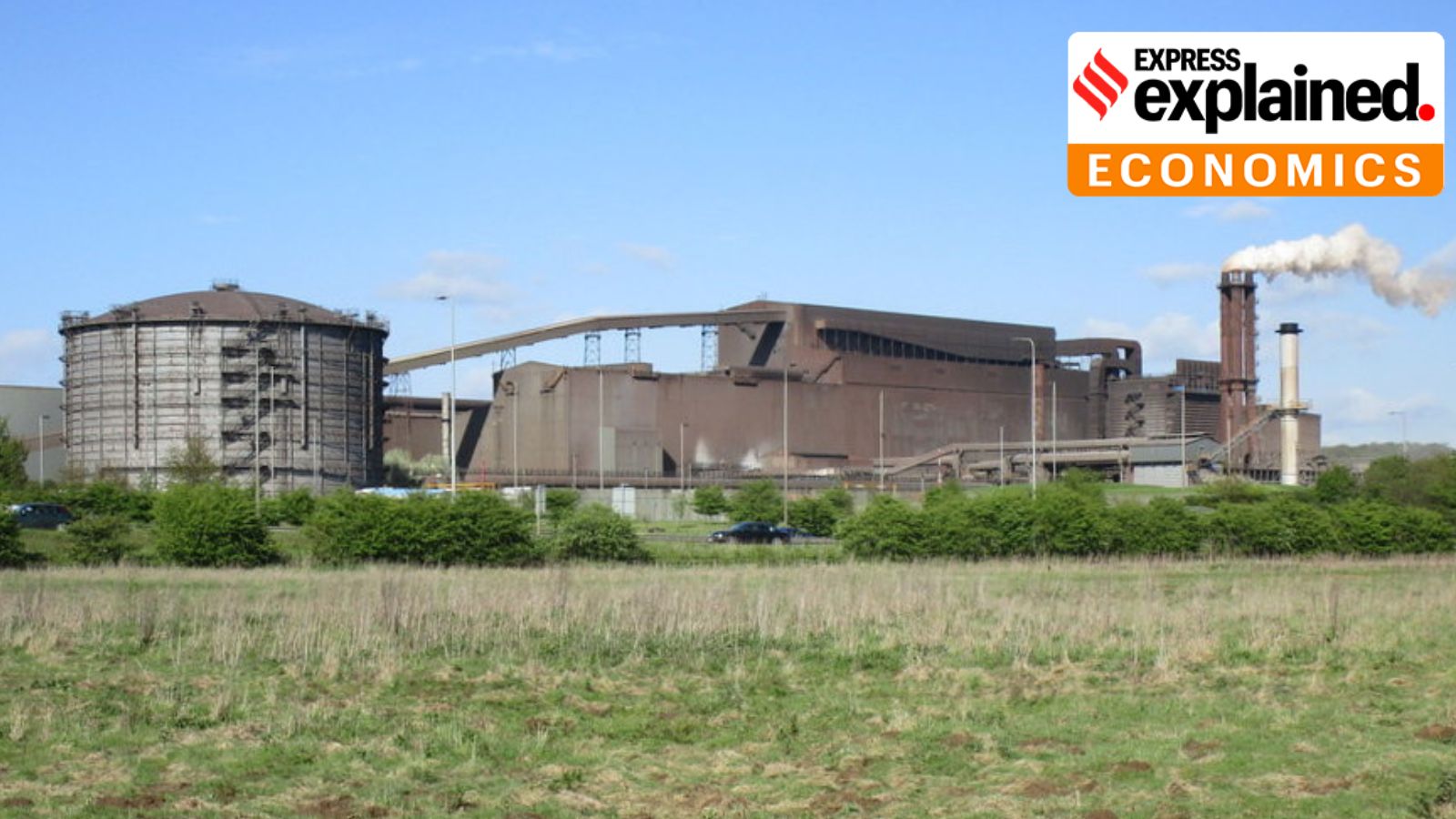
The British government has taken full ownership of British Steel, a beleaguered steel major, a year after assuming control of its Scunthorpe plant in Lincolnshire. The government had cited national security considerations last year when it took over the plant, after former owner Jingye said it would have to close operations due to continued losses.
This move has reignited debate over whether the privatisation of British Steel nearly four decades ago addressed the structural problems facing the UK's steel industry. Over the weekend, Jingye accused the UK government of offering “almost zero compensation” for its investment and said it had begun consultations under relevant bilateral investment agreements, reserving the right to pursue international arbitration. China's foreign ministry also criticised the move, warning it could affect Chinese investor confidence in the UK.
A brief history of British Steel
Modern British Steel traces its origins to the British Steel Corporation, created in 1967 after Harold Wilson’s Labour government nationalised 14 of the UK’s largest steel producers. The corporation was privatised in 1988 as British Steel plc, passing through a succession of owners, mergers, and restructurings without resolving the industry’s underlying problems.
Once closed, blast furnaces are difficult and costly to restart. Their closure would leave the UK without the ability to produce primary steel through the blast furnace route, even though other steelmakers would continue producing steel, largely by recycling scrap in electric arc furnaces. The government moved from operating the plant to assuming ownership last week, arguing that retaining primary steelmaking capacity was a matter of national interest.
Why has British Steel struggled?
David Bailey, Professor of Business Economics at the University of Birmingham, argues that British Steel’s repeated crises point to deeper structural problems. “Whether under private, international or domestic ownership, the industry has faced the same underlying challenges: high industrial energy costs, unfair competition from dumped imports, inconsistent policy support, and a lack of long-term certainty for investment,” Bailey told The Indian Express. He argued that ownership alone had never been “the decisive factor in securing the long-term future of the sector”.
These structural problems have been compounded by a difficult global market. According to the OECD’s Steel Outlook 2026, global steelmaking capacity has continued to expand much faster than demand, with excess capacity projected to reach 745 million tonnes by 2028. China, which now produces more than half the world’s steel, has been the principal driver of this overcapacity. The OECD notes that generous state support and weak domestic demand have encouraged record Chinese exports, adding to price pressures faced by producers elsewhere.
In an analysis for academic think tank UK in a Changing Europe, Bailey argues that international competition is only part of the story. Britain’s producers have also contended with high industrial electricity prices, ageing assets, and an inconsistent industrial strategy.
Why did Scunthorpe matter?
The government has argued that Scunthorpe is strategically important because it houses the UK’s last blast furnaces producing primary steel from iron ore. Blast furnaces produce primary steel from iron ore, while electric arc furnaces primarily recycle scrap steel. Preserving this capability is a matter of national importance because Britain would otherwise lose the ability to make primary steel from iron ore domestically.
The transition to green steel production—using hydrogen or electric arc furnaces powered by renewable energy—remains a long-term goal, but the immediate priority for the government is maintaining primary steelmaking capacity.