Trump says Iran agreed to nuclear inspections; Tehran denies claim
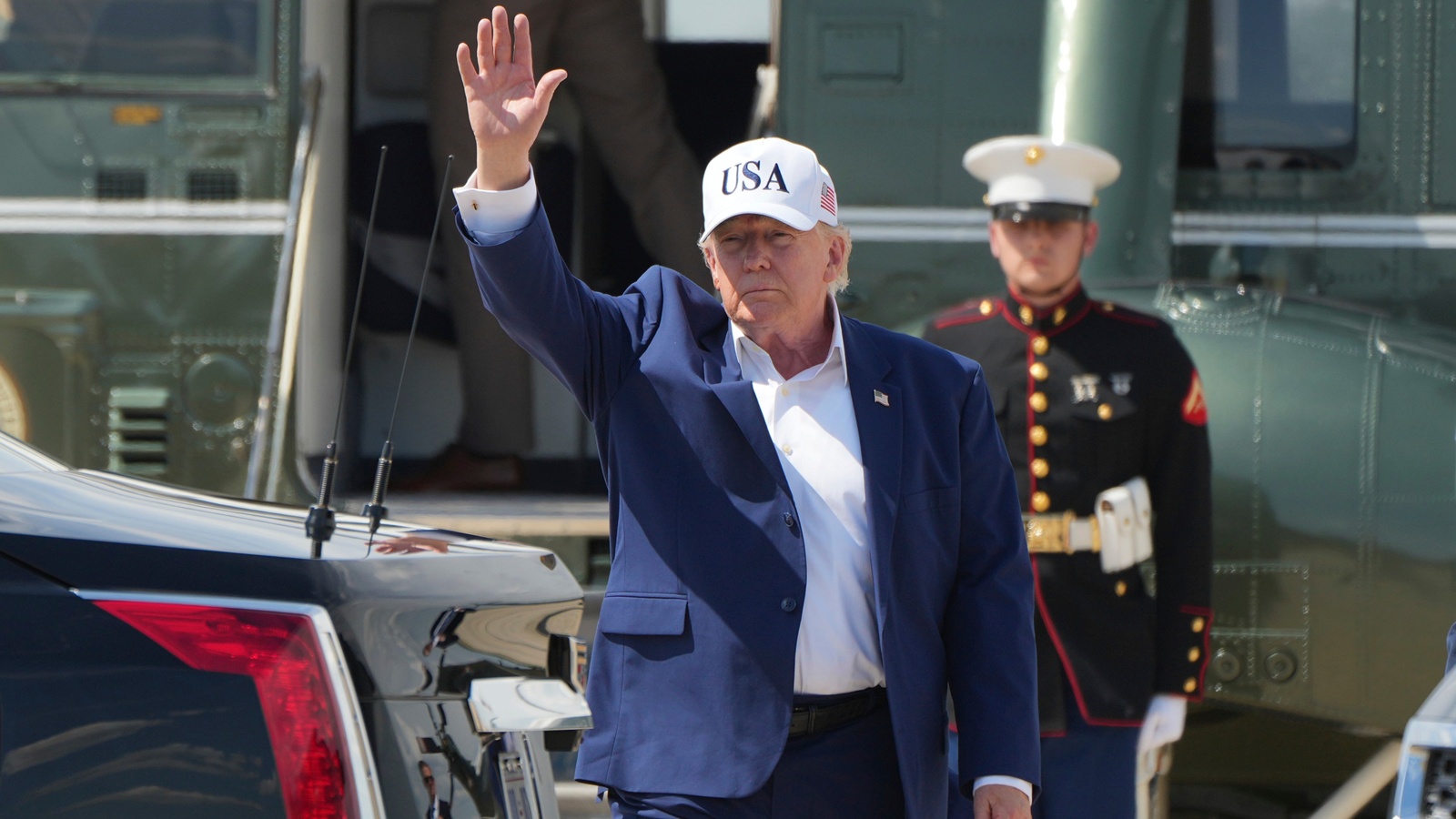
US President Donald Trump on Tuesday claimed that Iran has 'fully and completely agreed' to nuclear inspections as part of ongoing negotiations between Washington and Tehran, despite immediate denials from the Islamic Republic.
In a post on his social media platform Truth Social, Trump wrote that 19 million barrels of oil transited through the strategic Strait of Hormuz in a single day on Monday, and said oil prices were falling as tensions eased. He asserted that Iran had accepted 'the highest level nuclear inspections long into the future,' a move he argued would ensure what he called 'nuclear honesty.'
However, Iranian officials swiftly rejected the claim. Foreign Ministry spokesman Saeed Khatibzadeh told state media that 'no agreement has been reached on inspections,' and that discussions are ongoing. He emphasised that Iran's position remains unchanged: any inspections must be within the framework of the Nuclear Non-Proliferation Treaty (NPT) and its safeguards agreement with the International Atomic Energy Agency (IAEA).
The conflicting statements highlight the fragile nature of the talks, which aim to revive the 2015 nuclear deal formally known as the Joint Comprehensive Plan of Action (JCPOA). The US withdrew from the agreement in 2018 under Trump, reimposing sanctions that led Iran to breach many of its commitments. Since President Joe Biden took office, indirect negotiations have been held in Vienna, but progress has been slow.
Experts caution that Trump's remarks may be aimed at projecting a breakthrough before the November election, but they lack verification. 'There is no independent confirmation of any such agreement,' said Dr. Ali Vaez, Iran director at the International Crisis Group. 'Both sides have incentives to exaggerate, but the facts on the ground show a stalemate.'
The Strait of Hormuz, a vital chokepoint for global oil shipments, has been a flashpoint in US-Iran tensions. Trump's claim of 19 million barrels transiting in a day is unusually high, as typical daily flow is around 17 million barrels. Analysts suggest the figure may include crude, refined products, and liquefied natural gas.
Oil prices did dip slightly on Tuesday, but analysts attributed the move more to global demand concerns than to any easing of geopolitical risks. Brent crude fell 1.2% to $72 per barrel, while West Texas Intermediate dropped 1.4%.
As of now, the IAEA has not commented on Trump's statement. The agency has repeatedly reported that Iran is enriching uranium at levels far beyond the JCPOA limits, and that it has denied inspectors access to several sites. A senior US official, speaking on condition of anonymity, told reporters that 'we are not aware of any new agreement on inspections' and that the administration continues to pursue diplomacy.
Iran has consistently maintained that it seeks a peaceful nuclear programme and that its actions are reversible if sanctions are lifted. The back-and-forth underscores the deep mistrust between the two nations, a legacy of decades of hostility.