Supreme Court questions denial of welfare benefits after voter list deletion
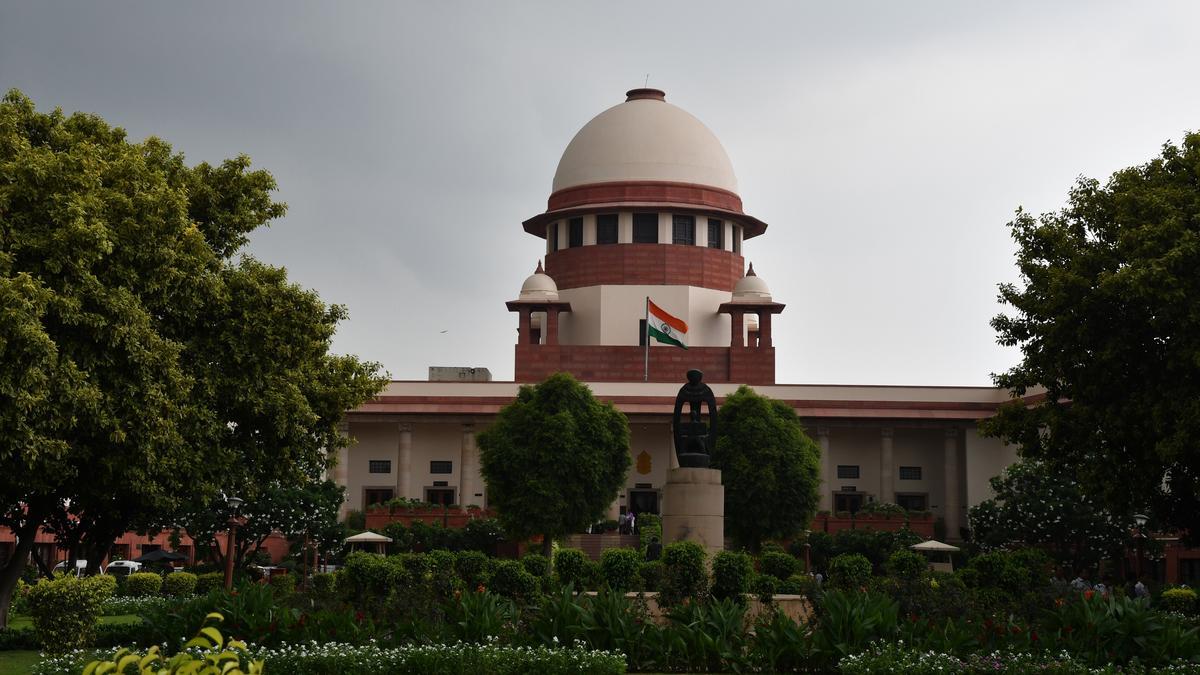
The Supreme Court on Friday issued notice to the Election Commission of India (ECI) and the West Bengal government regarding a plea seeking directions that individuals whose names are removed from electoral rolls after rejection of appeals by Special Tribunals under the Special Intensive Revision (SIR) exercise in West Bengal should not be deprived of welfare scheme benefits.
The petition, filed by Prasenjit Bose, argues that deletion from the electoral roll should not automatically lead to exclusion from schemes such as the Public Distribution System (PDS), the Annapurna scheme and other welfare programmes providing monetary and social benefits.
A Bench led by Chief Justice of India Surya Kant and comprising Justices Joymalya Bagchi and V. Mohana issued notice and indicated that the matter may be listed before July 25.
Senior Advocate Gopal Sankaranarayanan, appearing for the petitioner, submitted that approximately 34 lakh appeals are still pending before the Special Tribunals, while media reports indicate only about 38,000 appeals have been decided so far. He also noted that there are only 19 tribunals dealing with the appeals and that two judges have already resigned.
Sankaranarayanan argued that those affected are being excluded from public welfare schemes and entitlements. “The consequences of a deletion now... PDS, Annapurna, caste certificates, and verification,” he submitted, adding that people could be deprived of benefits even before issues relating to their status are finally resolved.
Justice Bagchi responded that the issue had already been addressed by the Supreme Court in its judgment concerning the Bihar SIR exercise. “We are aware of this. In our Bihar SIR judgment, we clarified that the ECI, as soon as it takes a decision over voting rights, cannot decide citizenship. The ECI has a corresponding duty to refer the matter to the Ministry for adjudication under the Citizenship Act,” Justice Bagchi observed.
Sankaranarayanan argued that despite the legal position, affected persons continued to face immediate hardship. “Neither you (Court) nor us apprehended that all these welfare schemes would be taken away from them,” he submitted. The Court replied that the legal position governing the ECI’s role was already settled. “Law is clear. ECI has control and superintendence over the electoral roll,” the Court observed.
The petitioner also sought greater transparency in the functioning of the Special Tribunals, urging the Court to direct that the tribunals maintain websites and upload their standard operating procedures and adjudication orders. “There should be a mechanism to ensure transparency. Tribunals should have websites, put out their SOPs and put up their orders,” Sankaranarayanan submitted. He also questioned the insistence on multiple documents for proving citizenship, stating, “If you have a passport, then it should be accepted. Why do you need other documents?”
The petitioner requested the Court to exercise its jurisdiction under Article 142 (power to do “complete justice”) by protecting affected persons from being denied welfare benefits while their citizenship-related issues remain unresolved.







