Supreme Court mandates opt-out option for parents in children's Aadhaar-linked academic registry
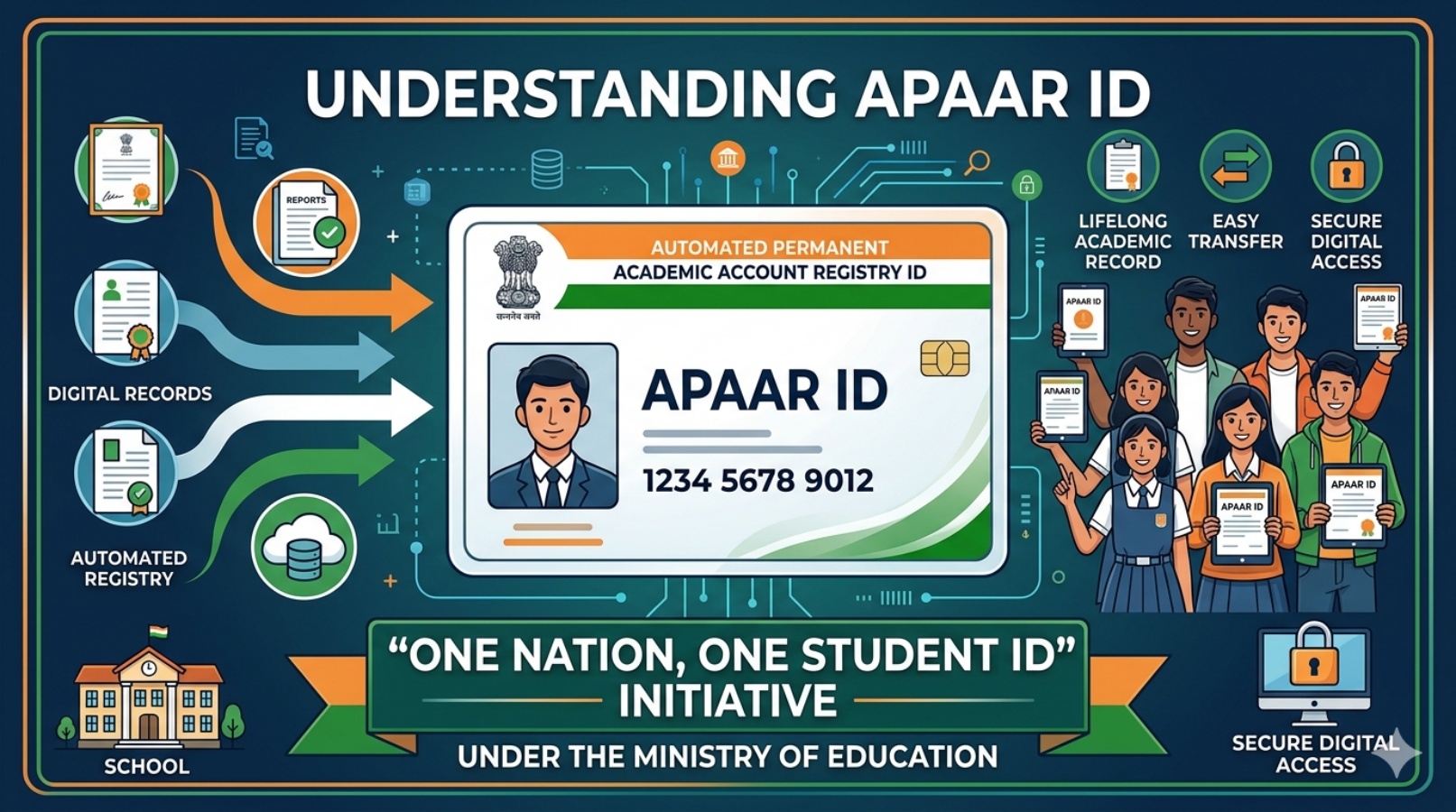
The Supreme Court of India has directed the Central Board of Secondary Education (CBSE) to implement across the country a decision by the Orissa High Court that allows parents to refuse consent to sharing their children's Aadhaar details for the creation of an Automated Permanent Academic Account Registry (APAAR) ID, or to opt out of the scheme entirely.
A bench comprising Chief Justice of India Surya Kant and Justices Joymalya Bagchi and V Mohana also ordered that any personal information collected under the APAAR Scheme must not be disclosed or shared with any private entity or third party except in accordance with the law.
The July 20 order, made available on Saturday, stated: “Having considered the attending circumstances and the submissions advanced on behalf of the petitioners, we are inclined to adopt the approach taken by the High Court of Orissa at Cuttack in Rohit Anand Das vs State of Odisha…wherein the state authorities were directed to consider suitably amending the model consent form prescribed under the APAAR Scheme so as to expressly provide an option enabling parents or guardians to withhold or refuse consent.”
The bench noted that “such a safeguard is essential to ensure that the requirement of consent is meaningful and informed. Accordingly, we direct that the directions contained in paragraph 19 of the aforesaid judgment shall be given effect to on a pan-India basis by the concerned authorities implementing the APAAR Scheme.” Paragraph 19 of the December 12, 2025 Orissa High Court judgment had asked authorities to amend the model consent form to include an opt-out or refusal of consent option.
The Supreme Court's order came in response to petitions filed by some parents challenging the constitutional validity of the APAAR Scheme. The petitioners argued that the scheme “effectively operates as a State-run surveillance mechanism within the education sector by enabling the long-term tracking, profiling and monitoring of children’s educational trajectories.” They said that “the extensive collection and retention of such data creates the potential for its use beyond the educational sphere, thereby raising serious concerns relating to informational privacy and data protection.”
The court termed as “misconceived” the concerns about possible misuse of personal information of those who voluntarily opted to enroll under the scheme. It said: “Merely because the collection of such information is undertaken pursuant to an administrative scheme and not under a statutory mandate does not absolve the authorities of their obligations in relation to the protection of personal data.”
The Supreme Court further clarified that “any collection, processing, storage, retention, sharing or use of personal information under the APAAR Scheme shall, therefore, be strictly governed by the provisions of the Digital Personal Data Protection Act, 2023, and the obligations cast thereunder upon data fiduciaries to ensure the lawful, secure and purpose-limited processing of personal data.”