First India-China Military Flag Meeting Held in Arunachal as LAC Tensions Persist
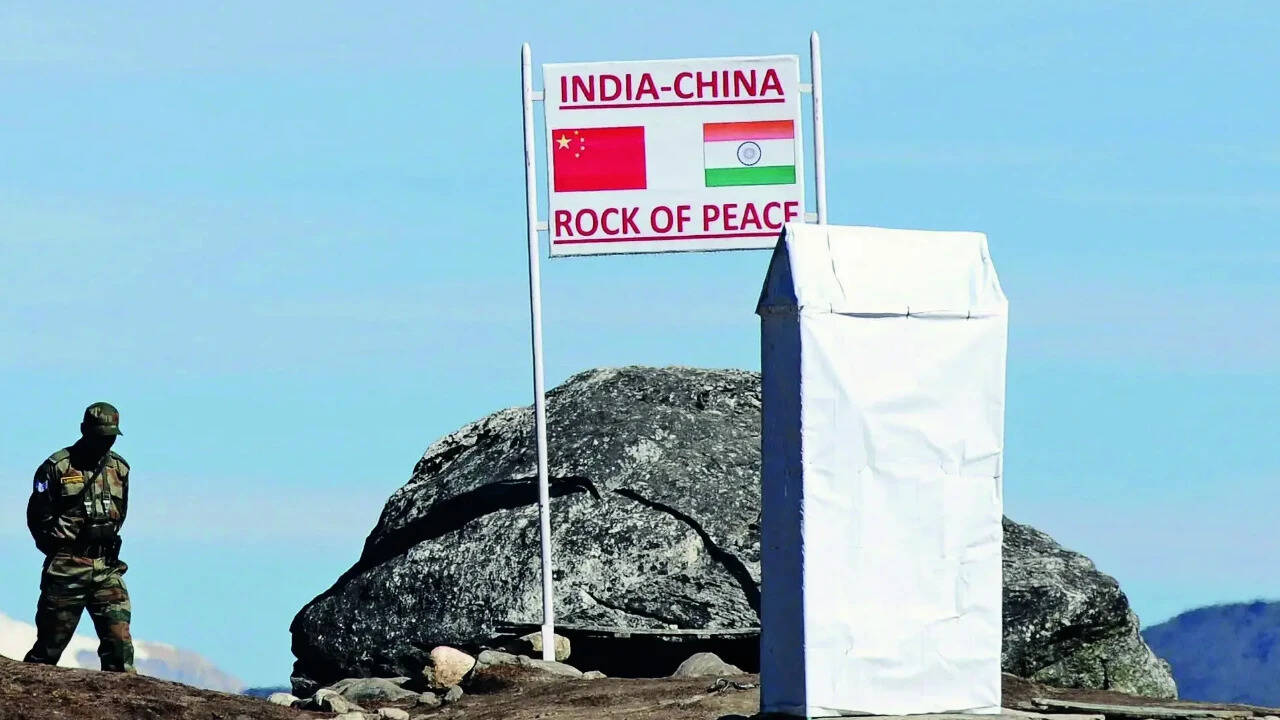
India and China have held their first Senior Highest Military Commander-Level Flag Meeting in the Arunachal Pradesh sector, providing a new platform for the two armies to address border-related issues along the Line of Actual Control (LAC). The meeting took place at Wacha on the Indian side on September 6 and at Damai on the Chinese side on September 7, the Ministry of External Affairs (MEA) confirmed.
MEA Spokesperson Randhir Jaiswal confirmed the development at his weekly briefing, explaining that the flag meeting followed the understandings reached between National Security Advisor Ajit Doval and Chinese Foreign Minister Wang Yi, who are the designated Special Representatives for the India-China boundary question. He said the two leaders met in August 2025 and again in August 2026. Subsequent consultations under the Working Mechanism for Consultation and Coordination were held in Beijing in May 2026 and New Delhi in August 2026, further preparing the ground for the military-level talks.
Jaiswal noted that a similar flag meeting mechanism already exists for the Western Sector of the LAC. He described the overall state of India-China relations as moving in a 'positive direction.' The announcement came amid media reports of continued Chinese military presence and patrol activity in the Upper Subansiri region of Arunachal Pradesh. The spokesperson did not directly respond to those reports.
A flag meeting is a military protocol used to manage incidents at the border without escalation. Designated commanders from both sides meet at a predefined location, often marked by flags, to discuss local issues or resolve misunderstandings. The introduction of this format in the eastern sector signals that both armies are willing to restore structured communication at the local level.
The eastern sector has been relatively calmer than the western sector in recent years, though areas such as Upper Subansiri have seen periodic friction. The Galwan Valley clash in June 2020 was the most severe military confrontation between the two countries in decades. Since then, a series of Corps Commander-level talks and diplomatic engagements have led to disengagement from several points along the LAC, though differences remain.
The Special Representatives mechanism, established in 2003, was created to provide a political framework for resolving the boundary dispute. India and China have never agreed on a clearly demarcated border. China claims Arunachal Pradesh as 'South Tibet,' a claim India rejects. The LAC itself is not a formally defined boundary but a line of actual control that has been subject to differing interpretations over its 3,488-km length.
During their last SR dialogue in Beijing, Doval and Wang discussed boundary delimitation, trans-boundary cooperation, and the need to maintain peace and tranquillity along the LAC. India has consistently held that peace on the border is essential for the wider relationship. The specifics of the September 6-7 flag meeting discussions were not publicly disclosed.
The flag meeting comes just before Chinese President Xi Jinping's expected arrival in New Delhi for the BRICS summit, scheduled for Saturday. His visit is seen as an opportunity for a possible meeting with Prime Minister Narendra Modi, though no bilateral engagement has been officially confirmed. The timing of the military talks suggests both sides recognise the importance of a stable border atmosphere ahead of political interactions.
Neither side has announced plans for a follow-up eastern-sector flag meeting. The frequency of such meetings will likely depend on the ground situation and the broader trajectory of bilateral ties. For now, the fact that the two armies agreed to meet in Arunachal Pradesh represents a mutual commitment to managing differences through dialogue rather than confrontation.
While the flag meeting does not signal a breakthrough in the boundary dispute, it is a practical step toward institutionalising communication in a sensitive region. It indicates that, despite strategic rivalry, India and China are willing to invest in procedural mechanisms to prevent conflict along one of the world's most heavily militarised frontiers.