Supreme Court Intervenes After Four Judges Recuse in Ex-Judicial Officer’s Case
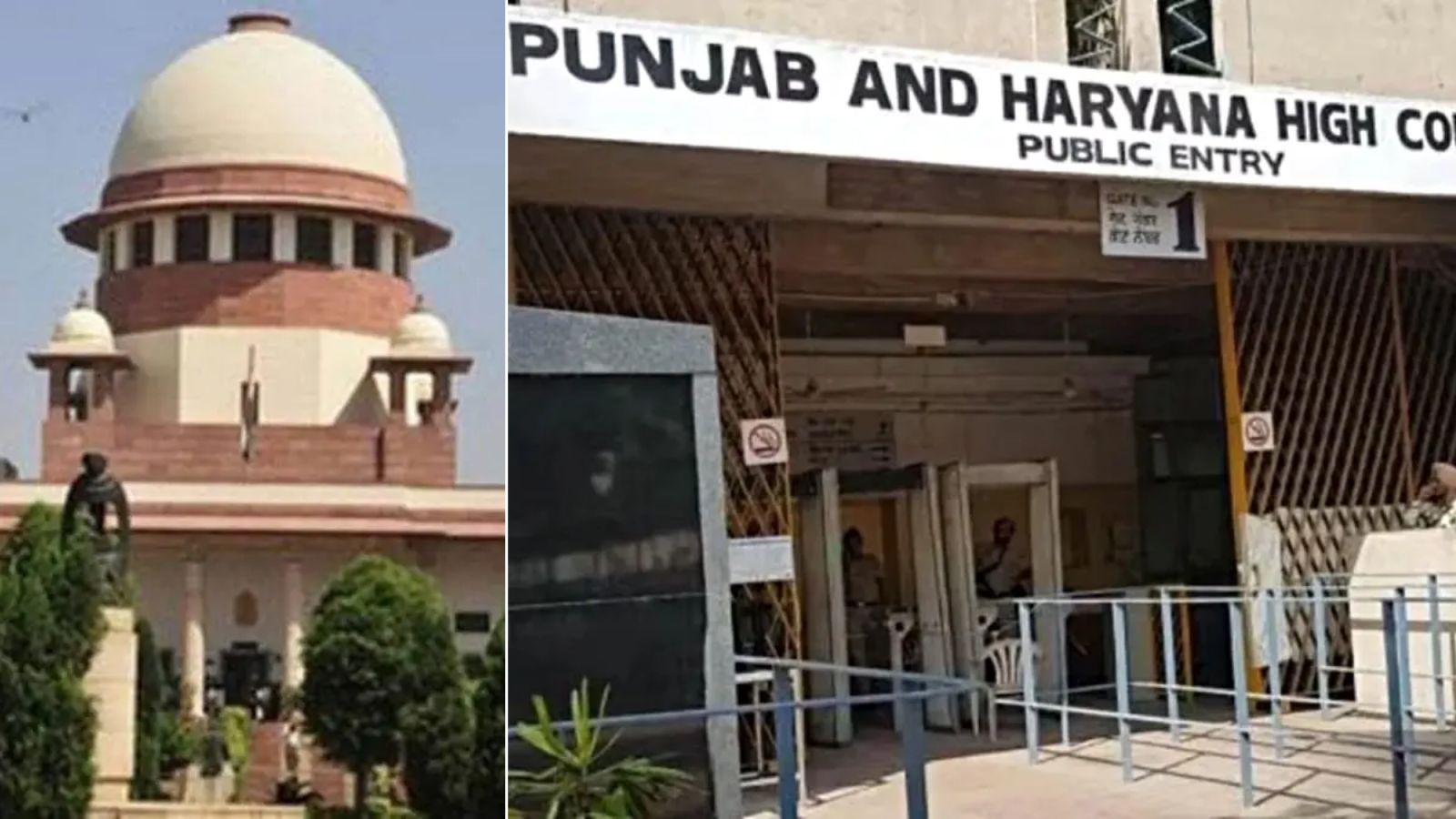
The Supreme Court on Wednesday directed the Acting Chief Justice of the Punjab and Haryana High Court to constitute a fresh two-judge bench to hear the petition of former judicial officer Amrish Kumar Jain, after four different High Court benches recused themselves from his case.
Jain, who joined the Punjab Civil Services (Judicial Branch) in November 2005 and served as a Civil Judge (Junior Division), was first terminated from service in 2009 based on recommendations from the High Court's administrative side. The termination followed adverse remarks in his Annual Confidential Report for 2007–08, which Jain claimed stemmed from bias by the then District and Sessions Judge at Jalandhar. After a prolonged legal battle, the High Court ordered his reinstatement in October 2018 with all consequential benefits—seniority, continuity of service, increments, and promotion rights—but without back pay. However, in 2022, he was again terminated on the administrative recommendations of the High Court, prompting the present challenge.
When Jain approached the High Court against the 2022 termination, the matter came up before several benches, each of which recused. According to Jain, Justice Lisa Gill was the first to recuse. The then Chief Justice, after reserving judgment for six months, also recused. Justice Ashwani Kumar Mishra and later a division bench headed by Justice Deepak Sibal similarly declined to hear the case. Jain stated that he had personally argued before two of these benches.
Frustrated by the repeated recusals, Jain moved the Supreme Court seeking a transfer of his case to the Delhi High Court. A bench comprising Chief Justice of India (CJI) Surya Kant and Justice V. Mohana, however, declined the transfer request. Instead, the apex court directed the Acting Chief Justice of the Punjab and Haryana High Court to form a division bench to hear the petition.
The Supreme Court further advised the judges to be nominated “not to recuse in the matter irrespective of the situations that may be created by anyone.” It ordered day-to-day hearing and stipulated that the case “must be heard finally in the week commencing July 13, 2026.” The Registrar General of the High Court was instructed to send a compliance report to the Supreme Court after the matter is heard and judgment is reserved.
During the proceedings, the CJI inquired about the identities of the judges who had recused, stating that he would examine what might be causing such developments. He expressed concern that some senior advocates might be working behind the scenes to influence the recusal process. “I know there are 4-5 senior advocates who are indulging in this kind of things. I am closely watching the thing,” the CJI observed, adding that these lawyers were “creating havoc.” He advised Jain to argue the case himself and not engage any counsel in the High Court. Jain agreed, noting that he had argued twice before earlier benches and was willing to do so again.
Jain also informed the court that a separate application filed in 2024 for the release of his pensionary benefits—needed to pay his son’s tuition fees for final-year LLB—had not been allowed. The Supreme Court’s order did not specifically address this issue but its overall direction is expected to facilitate an early resolution of the main case.
The development brings into sharp focus the challenges posed by frequent judicial recusals and the importance of ensuring timely adjudication. The Supreme Court’s intervention, while respecting the independence of the High Court, seeks to balance that with the litigant’s right to have his case heard without undue delay or procedural obstruction.