Skyroot Secures New Launch Deal After Vikram-1's Historic Maiden Orbit
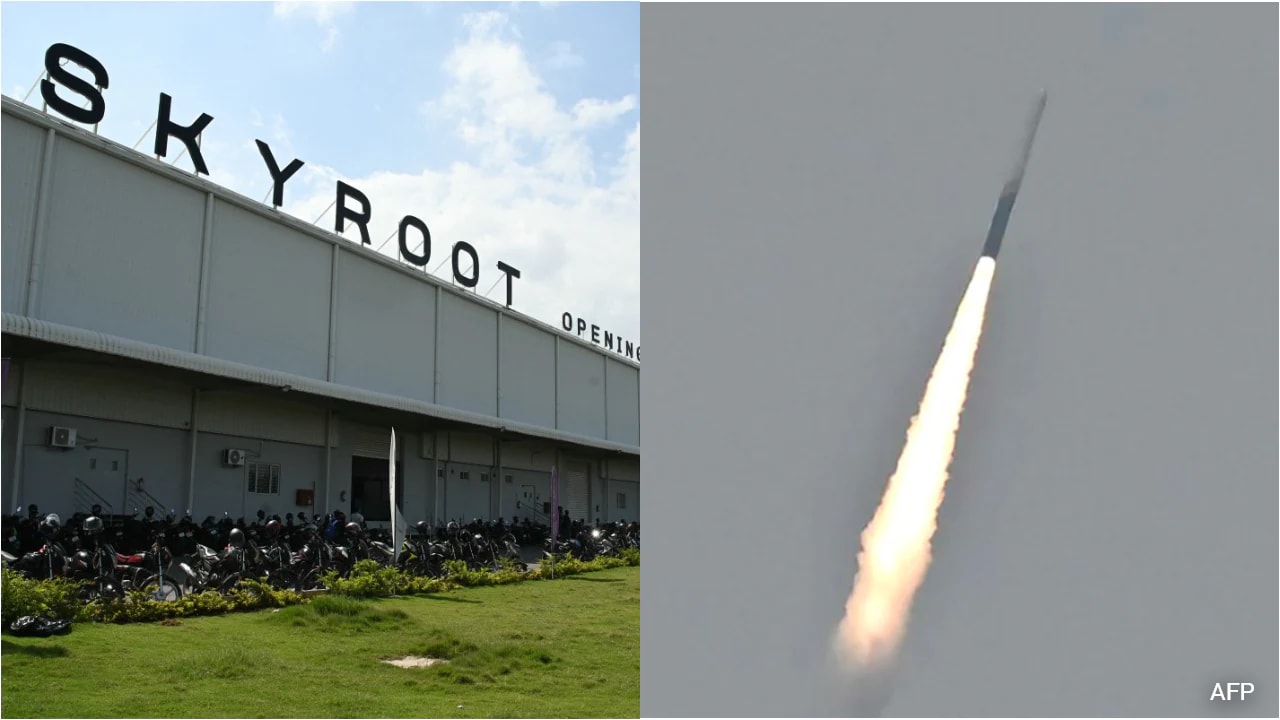
Skyroot Aerospace, the Hyderabad-based private space company, has announced a fresh commercial agreement following the successful maiden orbital flight of its Vikram-1 rocket. The company has signed a multi-launch contract with space technology firm HEX20 for three dedicated missions, with the first launch scheduled for late 2027.
The deal signals growing customer confidence in Vikram-1 after its debut mission on July 18, 2026, which made India's first privately developed orbital launch vehicle to reach orbit on its first attempt. According to Skyroot, the success has begun to translate into tangible business opportunities.
Alongside the commercial announcement, Skyroot also disclosed the performance of SCOPE, its in-house technology demonstrator satellite carried aboard Vikram-1. The 3U CubeSat, weighing 3.415 kilograms, was successfully deployed into orbit and established parts of its communications chain. However, it ultimately failed to deliver usable housekeeping telemetry, preventing engineers from verifying several important spacecraft systems, including its imaging payload.
Housekeeping telemetry is essential engineering data that reveals the health and status of a spacecraft's systems. Without it, engineers cannot confirm the performance of many onboard components. As a result, key capabilities intended for testing during the mission remain unconfirmed.
The contrasting outcomes offer a realistic view of spaceflight. The launch vehicle performed exceptionally well, achieving its primary objective of delivering payloads into orbit. Some payloads met their goals, while others, including SCOPE and a space debris-related technology payload, fell short of complete mission success. For a maiden orbital launch, the performance of the launch vehicle itself is often considered the defining measure of achievement.
Vikram-1's successful first flight is widely recognized as a landmark for India's private space industry. Achieving orbit on a first attempt is a significant accomplishment in global rocketry, as many debut missions face technical setbacks. The success validated Skyroot's launch systems, propulsion technologies, and vehicle integration capabilities, which were developed over several years.
The mission has strengthened confidence among satellite operators, investors, and customers seeking dedicated access to space. The HEX20 agreement is an early sign of that confidence. Skyroot now aims to scale up its launch cadence to up to twelve missions per year to meet growing global demand for small satellite launches.
SCOPE was built entirely by Skyroot to demonstrate a range of spacecraft technologies, including power systems, communications, attitude determination and control, onboard data handling, thermal management, and imaging. Following deployment, the satellite executed its pre-programmed sequence, and communication windows occurred close to expected times, validating aspects of onboard timing and mission sequencing. Ground stations around the world detected the spacecraft's radio frequency carrier and achieved PCM frame synchronization during multiple passes, suggesting part of the communications architecture was functioning.
However, the inability to decode telemetry meant that the full functionality of several systems could not be verified. Skyroot has not yet indicated whether any further attempts will be made to communicate with SCOPE or if the mission's objectives will be considered partially fulfilled.
The Vikram-1 mission marks a significant step for India's private space sector, demonstrating that a privately built rocket can place payloads into orbit. As the sector evolves, such missions provide critical learning opportunities, both for the companies involved and for the broader space ecosystem.