India, Liberia Launch Shipping Safety Group; Jaishankar Calls Red Sea Attacks 'Indefensible'

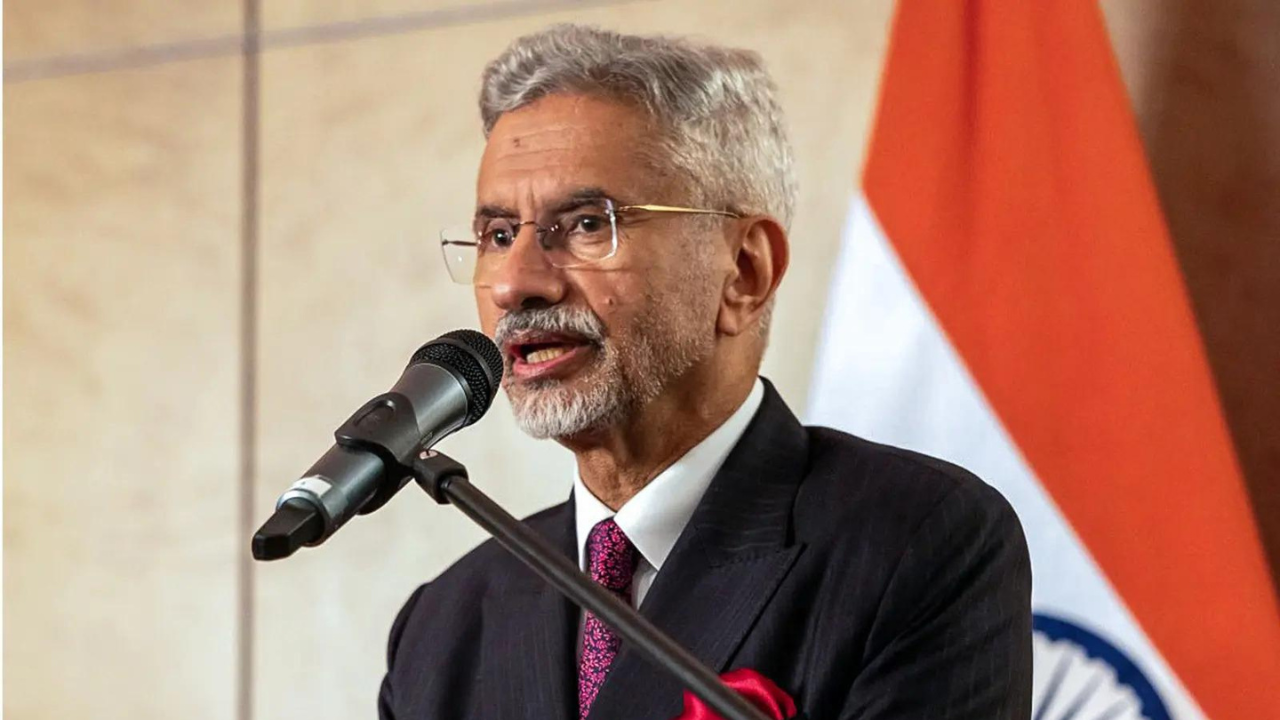
External Affairs Minister S. Jaishankar has described recent attacks on commercial shipping and on seafarers as “simply indefensible”, noting that such incidents are “regrettably” no longer exceptional. He was speaking at a ministerial-level meeting in New York on Friday, held on the sidelines of the 81st session of the United Nations General Assembly.
At the meeting, India and Liberia announced the establishment of a “Group of Friends” on the safety and security of shipping and seafarers. India is one of the largest sources of seafarers in the world, while Liberia runs the largest ship registry. Both countries said the grouping is intended to keep international attention focused on the risks facing merchant vessels and the people who crew them.
“India, as a major source of seafarers, and Liberia, as the largest shipping registry, have come together to highlight the safety and security of shipping and seafarers,” Mr. Jaishankar said at the meeting.
Referring to incidents in recent months, he said: “In the last few months, commercial shipping and marinas have been subjected to repeated attacks in the Gulf, the Red Sea and its vicinity… These actions that disrupt maritime commerce and cost innocent lives are simply indefensible.” The minister did not attribute the attacks to any particular group or country.
Merchant shipping currently faces heightened risk in several regions, including the Strait of Hormuz, the Gulf of Oman, the Red Sea, the Gulf of Aden, Bab-el-Mandeb, the Black Sea and waters off Somalia. These routes carry a large share of the world’s oil and container traffic, and disruption to shipping raises insurance costs, lengthens voyage times and eventually feeds into prices paid by consumers far from the region.
A significant number of Indian seafarers serve on board Indian-flagged and foreign-flagged vessels that operate in or transit through these waters, exposing them to maritime security risks. Seafarers are civilians, and attacks that endanger them have drawn concern from shipping associations and labour groups internationally.
The meeting was followed by a sharp exchange outside the hall. A Pakistani journalist shouted a question at Mr. Jaishankar, asking when his government would stop “sponsoring terrorism in Pakistan”. Mr. Jaishankar replied: “A terrorist country is asking me that question. Come on.”
India’s Permanent Representative to the United Nations, Harish Parvathaneni, later told the journalist: “You have heard your reply. You have heard your response, loud and clear.”
The exchange came a day after an Indian journalist asked Pakistan Prime Minister Shehbaz Sharif, as he entered the UN building, when Pakistan would stop “harbouring terrorists”. Pakistan has consistently rejected allegations that it supports militant groups, and the two neighbours have for years traded accusations of cross-border militancy.
The launch of the Group of Friends places maritime security alongside these long-running diplomatic tensions at this year’s General Assembly. The initiative brings together a major supplier of seafarers and the world’s largest ship registry, two sets of stakeholders whose interests converge when shipping lanes become unsafe. Whether other states join the grouping, and what practical steps it agrees on, remains to be seen.