'A terrorist country is asking me': Jaishankar's pointed reply to Pakistani journalist
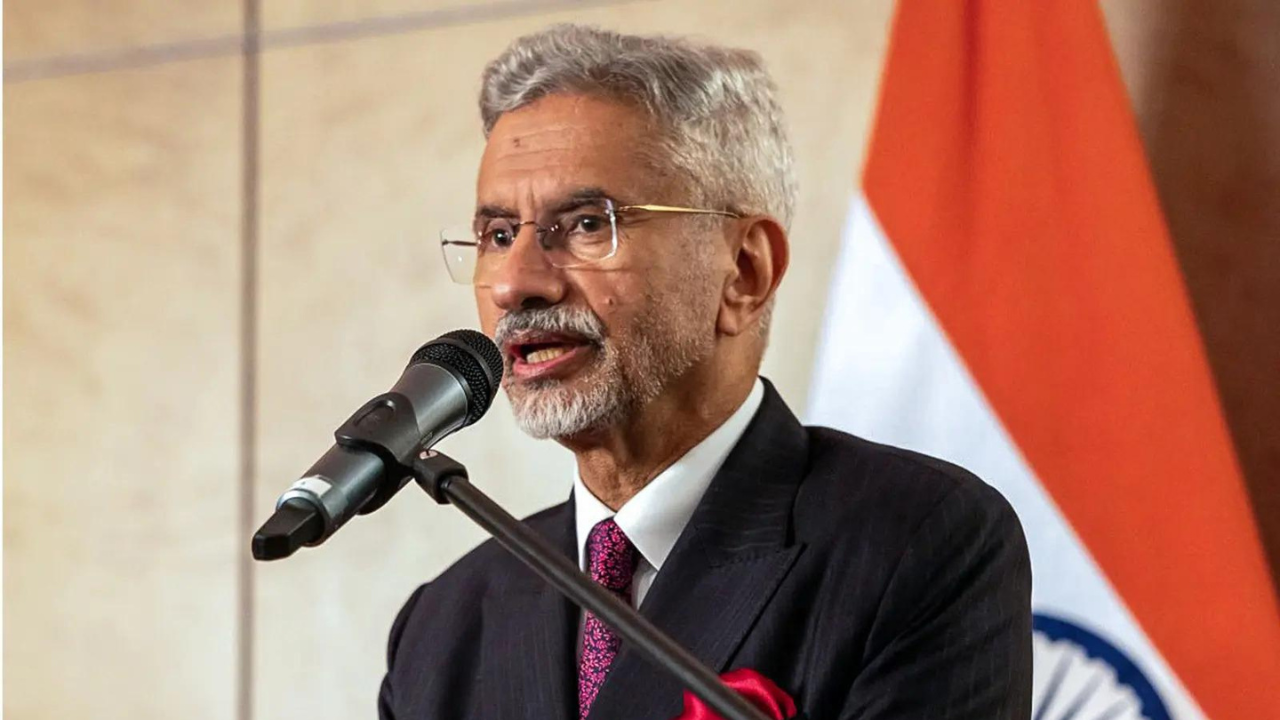
External Affairs Minister S. Jaishankar has responded sharply to a question from a Pakistani journalist, saying the query was coming from "a terrorist country." The exchange, reported by several media outlets and circulated widely on social media, has renewed attention on the state of India-Pakistan relations.
According to accounts of the interaction, the Pakistani journalist put a question to the minister relating to India's position on cross-border terrorism. Mr Jaishankar's reply — "a terrorist country is asking me" — was brief and pointed, and drew a reaction from those present. The full transcript of the exchange was not immediately available, and much of the reporting has rested on video clips shared online. Readers should treat the exact wording of the question and the surrounding context as reported, not confirmed.
The remark reflects a position New Delhi has held for years: that Pakistan's security establishment provides shelter, funding and training to groups that carry out attacks on Indian soil. Indian officials across governments have repeatedly argued that "talks and terror cannot go together," a formulation used to justify the absence of a structured bilateral dialogue.
Pakistan has consistently rejected these allegations. Its governments have denied that the state supports militant groups, and have in turn accused India of backing unrest in Balochistan and of using terrorism charges to avoid negotiations over Kashmir. Pakistan has also described the international discourse on terrorism as unfairly one-sided.
India has frequently cited the 2016 attack on an army base in Uri and the 2019 Pulwama bombing to press its case that Pakistan-based groups continue to operate with impunity. Pakistan denies involvement in both.
Relations between the two nuclear-armed neighbours have been severely restricted for several years. Diplomatic representation has been downgraded, bilateral trade remains largely suspended, and sporting and cultural exchanges have been curtailed. Mr Jaishankar has made similar remarks at international forums, arguing that countries which host or sponsor terrorism cannot expect normal diplomatic relations.
The minister's comment has drawn a mixed response. Supporters describe it as an honest reflection of public sentiment in India and a fitting reply to what they see as hostile questioning at international events. Critics argue that diplomatic office demands measured language, and that blunt dismissals can close off channels that may be needed later.
Officials on both sides say they remain open to dialogue, but only on terms acceptable to them. India insists that meaningful engagement requires an end to cross-border terrorism. Pakistan insists that Kashmir must be part of any discussion. Neither condition has been met, leaving the relationship in a prolonged freeze.
The practical cost of that freeze is felt most by ordinary people on both sides: separated families, traders who once depended on cross-border commerce, and patients who relied on medical visas. Officials say easing those restrictions is difficult while the underlying security concerns remain unresolved.