Punjab's Three Regions: Why PM Modi's Project Distribution Matters Beyond Infrastructure
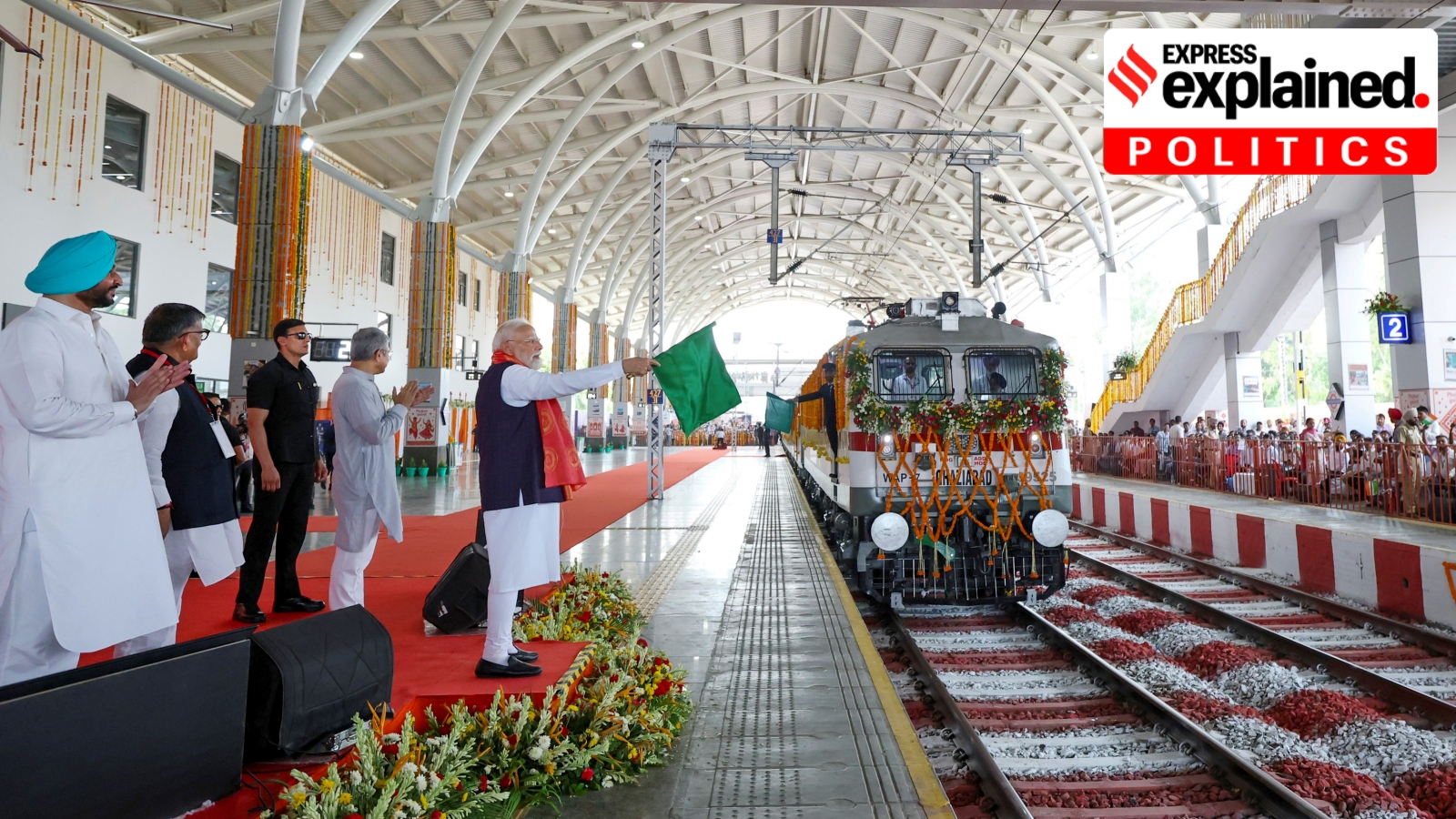
Prime Minister Narendra Modi's visit to Punjab on Friday was officially centred around infrastructure. He inaugurated and laid foundations for over a dozen projects worth Rs 5,470 crore. But rather than concentrating investments in one politically important pocket, the projects were spread across Punjab's three regions — Malwa, Doaba and Majha.
Carved out by the rivers flowing through the state, Malwa, Majha and Doaba are not just geographically distinct but politically and culturally diverse as well. All three have their own distinct Punjabi dialects. For a state where politics has traditionally revolved around regional identities, caste equations and religious influence, the geographical distribution of projects itself becomes politically significant, especially ahead of the Assembly election in 2027.
What are Punjab's three regions?
Punjab does not vote as one homogeneous state. Each of its three regions has a distinct political character.
Malwa: This is the largest of the three regions, with 69 of Punjab's 117 Assembly seats spread across 12 of the state's 23 districts. Any party aspiring to form a government must perform well here. Nestled between the Satluj and Ghaggar rivers, this belt has had a monopoly in state chief ministers for the last three decades.
Majha: With the Ravi river flowing to its west, Beas in the east and Satluj in the south, Majha means 'in the middle', and it used to be the centre of undivided Punjab before Partition. Majha, which has 25 seats, carries strategic importance because it includes the border districts of Amritsar, Tarn Taran, Pathankot and Gurdaspur. It has a profusion of historic gurdwaras, including the Golden Temple, and the Kartarpur corridor that leads to a revered shrine across the border in Pakistan.
Doaba: With its 23 Assembly seats, Doaba has the state's largest Scheduled Caste population and remains politically important because Dalit voters significantly influence election outcomes in many constituencies. Lying between the Satluj and Beas, Doaba (meaning between two rivers) is a buffer between Malwa and Majha.
The Centre's latest projects touch all three regions instead of concentrating resources in a single electoral belt. That broad spread enables the BJP to argue that its development agenda extends across Punjab rather than targeting only selected constituencies.
How were the projects distributed and what has each region received?
Malwa, the largest region, got seven projects. Doaba and Majha, meanwhile, got five and three projects each. All these projects affect more than a dozen of the state's 23 districts. They include railway redevelopment, highway expansion, expressways, new rail connectivity and station modernisation.
Unlike election-time announcements that often favour one region, Friday's package appears designed to ensure that every part of Punjab finds representation. The largest share naturally went to Malwa. Projects include the Southern Ludhiana Bypass, sections of the Delhi-Katra Expressway, IT City-Kurali highway connectivity and redevelopment of railway stations such as Anandpur Sahib, Muktsar Sahib and SAS Nagar. These are long-term infrastructure investments affecting industrial, urban and agricultural districts simultaneously.
For the panthic belt of Majha, the projects include redevelopment of railway stations in Pathankot and Batala under Amrit Bharat, besides the launch of the Chhehrta (Amritsar)-Varanasi train. Although fewer in number, these projects carry symbolic importance because they strengthen connectivity in Punjab's border belt while also linking Amritsar directly to Varanasi.
For Doaba, the PM announced railway station redevelopment at Jalandhar Cantonment and Phagwara, highway improvements and the Daulatpur Chowk-Kartoli railway line.
The distribution reflects a careful political calculus. By spreading projects across all three regions, the central government signals its commitment to balanced development, while also appealing to diverse voter bases. With the 2027 Assembly elections on the horizon, such gestures may influence regional loyalties.