DMK signals strategic shift: From automatic opposition to conditional support
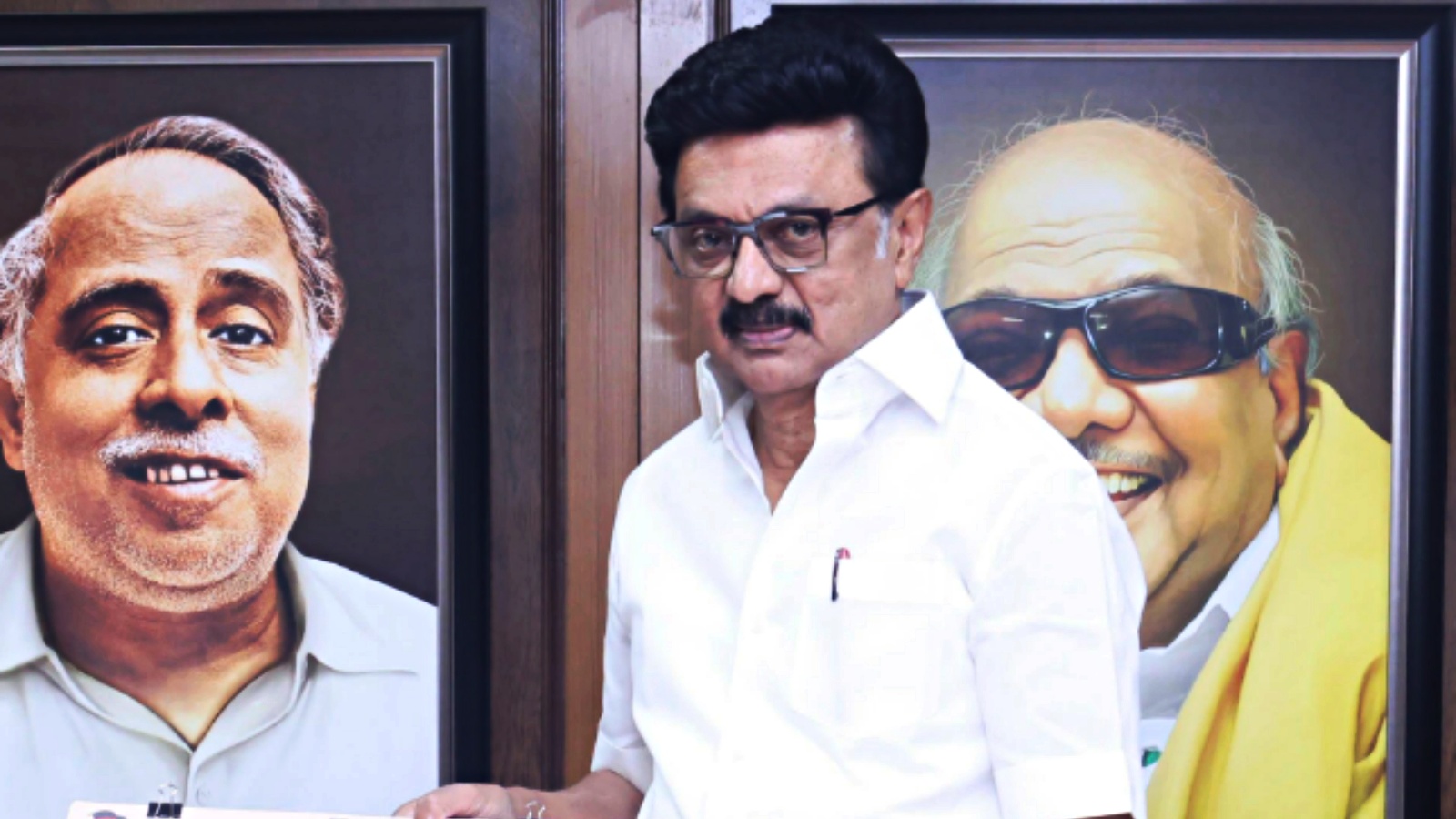
When M K Stalin addressed the DMK’s MPs through a video conference from London on July 16, the resolutions formally adopted spoke of Cauvery water, the Mekedatu dam, state autonomy, and constitutional values. Yet, the most consequential message was contained not in the resolutions but in what the party carefully chose not to commit itself to. The DMK is no longer promising automatic opposition and instead is assuring careful examination of issues.
For a party that only three months ago burnt copies of the proposed Delimitation Bill in protest, organised demonstrations across Tamil Nadu, and stood shoulder to shoulder with the INDIA bloc against the proposed legislation, the new language marks a striking shift.
“We will study the final text of the Bill before taking a decision,” DMK organising secretary R S Bharathi said, adding that if the Centre incorporates the party’s recommendations, “there is no need for the DMK to oppose it.” The remark may prove to be one of the most important political recalibrations the party has made since losing power a couple of months ago.
The DMK insists it has not softened its commitment to federalism or Tamil Nadu’s rights. Party leaders argue that if New Delhi changes its position, it is only logical for the DMK to respond accordingly. Yet, politically, the message is unmistakable: the party is keeping its options open.
A different terrain has emerged. Neither the BJP nor the Congress will receive the DMK’s blind loyalty, and the yardstick, Stalin told his MPs, would be “state autonomy” and the Constitution. The timing is hardly accidental, given how much has changed in recent months.
The DMK has lost the Assembly election. Almost every major ally that once formed the backbone of its coalition — the Congress, the Left, the VCK, and the IUML — has crossed over to support the Tamilaga Vettri Kazhagam (TVK) government. The party has skipped an INDIA bloc meeting, sought a new seating arrangement in Parliament away from the Congress, and now finds itself occupying an unusual political space: outside government in Chennai, outside the Opposition bloc in Delhi, and possessing one of the largest regional contingents in the Lok Sabha.
With 22 MPs, the DMK remains a significant force in Parliament. That makes it valuable to both sides. Should the BJP-led government seek to reintroduce contentious legislation — whether on delimitation, simultaneous elections or other constitutional questions — the DMK’s support or abstention could substantially influence the arithmetic in the House.
The party, however, appears determined to maximise that leverage rather than spend it in advance. Thursday’s resolutions reflected that approach. The MPs resolved to forcefully raise Tamil Nadu’s concerns on the Cauvery dispute, demand a tribunal on the Mekedatu project, and continue championing federalism and state rights.
An emerging doctrine may be taking shape. Stalin later wrote that every DMK MP would function as the “voice and conscience” of Tamil Nadu. That formulation perhaps best captures the party’s emerging doctrine: allowing regional interests to define national alignments, rather than being defined by national alliances. Whether that proves sustainable remains uncertain.
The political pressures confronting the DMK are unlike any it has experienced in recent decades. At home, it is preparing for what could become its most difficult electoral cycle. Local body elections are approaching, and the 2029 Lok Sabha election looms beyond them. The TVK, meanwhile, continues to consolidate its position, drawing former allies from the DMK while simultaneously attracting influential leaders and legislators from the AIADMK.
For the first time in decades, the DMK is being squeezed simultaneously from multiple directions rather than confronting a single principal rival. It is against this backdrop that Stalin, before leaving on his personal visit to London, urged cadres not to lose heart. The party’s strategic recalibration reflects a careful balancing act between regional interests and national political realities.