PM Modi at G7: Calls for Global Skills Partnership, Says Global South Must Not Bear Crises Alone
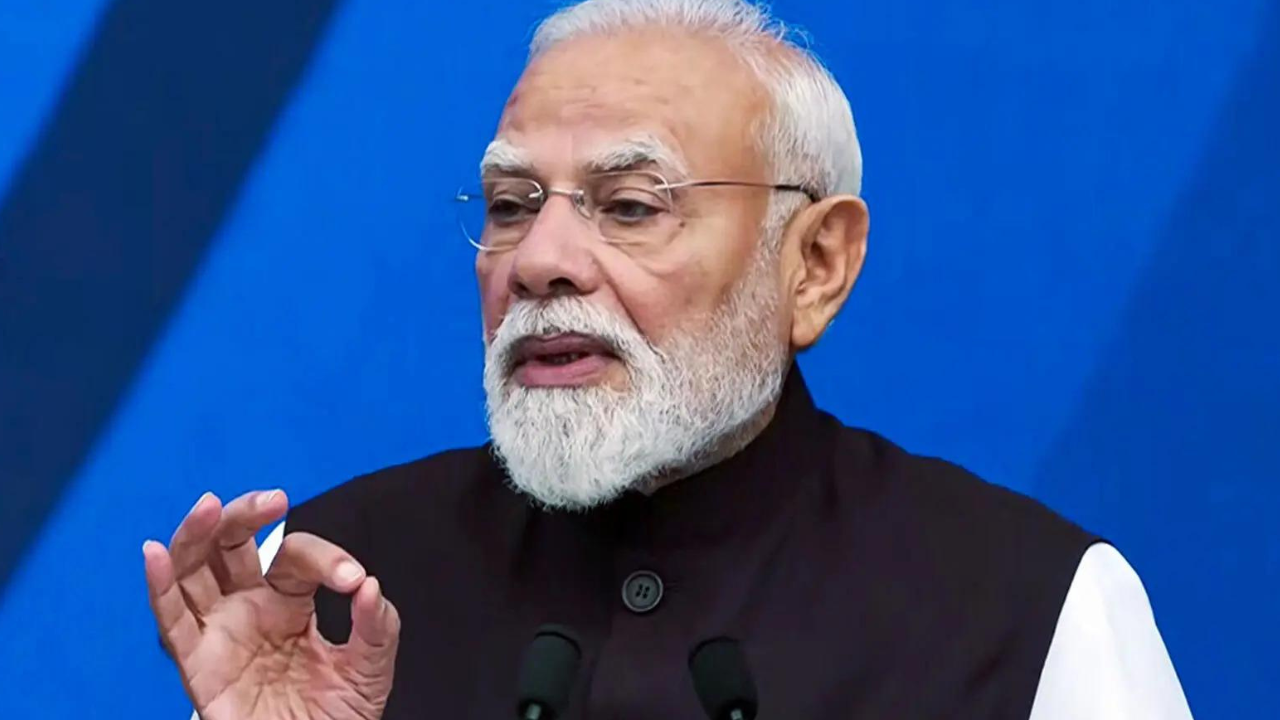
Prime Minister Narendra Modi addressed an outreach session of the G7 summit focused on shared and balanced growth. The session provided a platform for leaders from major advanced economies to engage with partner nations from the developing world. In his remarks, the Prime Minister highlighted the disproportionate impact of global crises on vulnerable countries and offered concrete proposals to foster equitable economic resilience.
The Prime Minister drew attention to the ongoing disruptions in fuel, fertiliser, and food supply chains resulting from the crisis in West Asia. He cautioned that these disruptions would continue to affect the Global South for an extended period. Emphasising the need for international solidarity, he stated, "If we are truly committed to strengthening international solidarity, the most vulnerable countries should not be left to bear the burden of these crises alone." He urged the global community to ensure that developing nations are not left to absorb such shocks without adequate support.
A key proposal put forward by Prime Minister Modi was the establishment of a Global Skills Partnership. He noted that while developed countries face the challenge of ageing societies, India and other nations of the Global South possess immense potential in terms of young talent, enterprise, and skills. "To harness this natural complementarity, we may consider establishing a Global Skills Partnership. Under this framework, we can work together on skill mapping and promoting trusted skilled mobility," he said. This initiative aims to create a mutually beneficial exchange of human capital and expertise.
In addition, the Prime Minister proposed a new connectivity initiative called the International Mobilisation Partnership for Accelerating Connectivity and Trade (IMPACT). This framework seeks to create trade, technology, and energy corridors by combining G7 capital, India's talent, and the ownership of Global South countries. He drew inspiration from the India-Middle East-Europe Economic Corridor (IMEC), which he described as a strategic corridor connecting Asia, the Middle East, and Europe to accelerate trade, strengthen supply chains, and generate opportunities for investment and employment. He stated that there is now a need to advance similar initiatives characterised by local ownership, transparent financing, and a clear vision for long-term sustainability, with a particular focus on connectivity projects in Africa, Latin America, and the Pacific Island region.
Prime Minister Modi also called upon international financial institutions to develop support mechanisms that help developing countries absorb external shocks, such as those arising from the West Asia crisis, and to sustain their economic resilience. He stressed that shared prosperity cannot be achieved if the most vulnerable are forced to shoulder crises alone.
Highlighting India's own commitment to global integration, the Prime Minister noted that India has concluded trade agreements with most of the countries represented at the G7 meeting. "This reflects India's belief not in fragmentation but in integration, not in protectionism but in partnership, and not in uncertainty but in shared prosperity," he said. He reaffirmed that India would continue working with all partners to strengthen shared economic resilience and build a more stable, reliable, and prosperous global economy.
The outreach session underscored the growing recognition that inclusive growth and international cooperation are essential to addressing transnational challenges. By proposing concrete mechanisms for skills mobility, connectivity, and financial support, Prime Minister Modi emphasised the importance of democratic participation and mutual benefit in shaping a fairer global economic order.