All 13 dead as tourist plane crashes over Nazca Lines in Peru
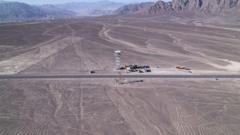
A small tourist plane carrying 11 passengers and two pilots crashed on Saturday over the Nazca Lines in southern Peru, killing all 13 people on board. The aircraft, operated by Peruvian airline Aerodiana, came down in the Pueblo Viejo region, about 30 minutes after departing from the coastal city of Pisco. Local authorities announced the deaths in a brief statement, confirming that no survivors had been found.
Police Major Jorge Andrade, who is leading the response at the crash site, told the AFP news agency, “Given the severity of the accident, there are no survivors. We have recovered four bodies so far.” He said emergency crews were still working to extract the remains of the remaining victims from the wreckage. The site has been sealed off to allow for an investigation.
In a separate message posted on its official Facebook page, the Municipalidad Provincial de Nasca, the local governing body, expressed “deep sorrow” over the accident and sent “heartfelt condolences to the families of the deceased.” The statement also confirmed that the plane belonged to Aerodiana, a Peruvian carrier based in the region. The airline has not yet issued any comment; the BBC has contacted the company for a response.
The cause of the crash is not yet known. Investigators have not offered any preliminary explanation, and there is no official word on whether the aircraft encountered technical problems or adverse weather conditions. The identities of the passengers and crew have not been released, pending family notification.
The Nazca Lines, located in the desert of the Ica Region in southern Peru, are a series of enormous ancient geoglyphs depicting animals, plants, and geometric patterns. They were created by the Nazca people between 200 BC and 700 AD. The site is a UNESCO World Heritage Site and one of Peru’s most important archaeological attractions.
Due to the scale of the drawings, which can stretch for hundreds of metres, the lines are best viewed from the air, making overflights a standard tourist activity. Most of these flights depart from the city of Pisco or the town of Nasca, and typically last around 30 minutes. The plane involved in Saturday’s crash was on such a flight, according to local officials.
Saturday’s accident is the latest in a series of fatal crashes involving tourist flights over the Nazca Lines. In 2022, a small plane crashed during an overflight, killing all seven people on board. In 2010, a similar incident claimed six lives. The repeated tragedies have periodically drawn attention to aviation safety in Peru’s tourism sector.
The scene remains under police control, and officials have asked the public to keep clear of the area. A formal investigation is expected to be carried out by Peru’s civil aviation authority. No timeline has been given for when more information will be made available.