‘Peaceful protest is hallmark of democracy’: Madras High Court quashes case against farmer leader
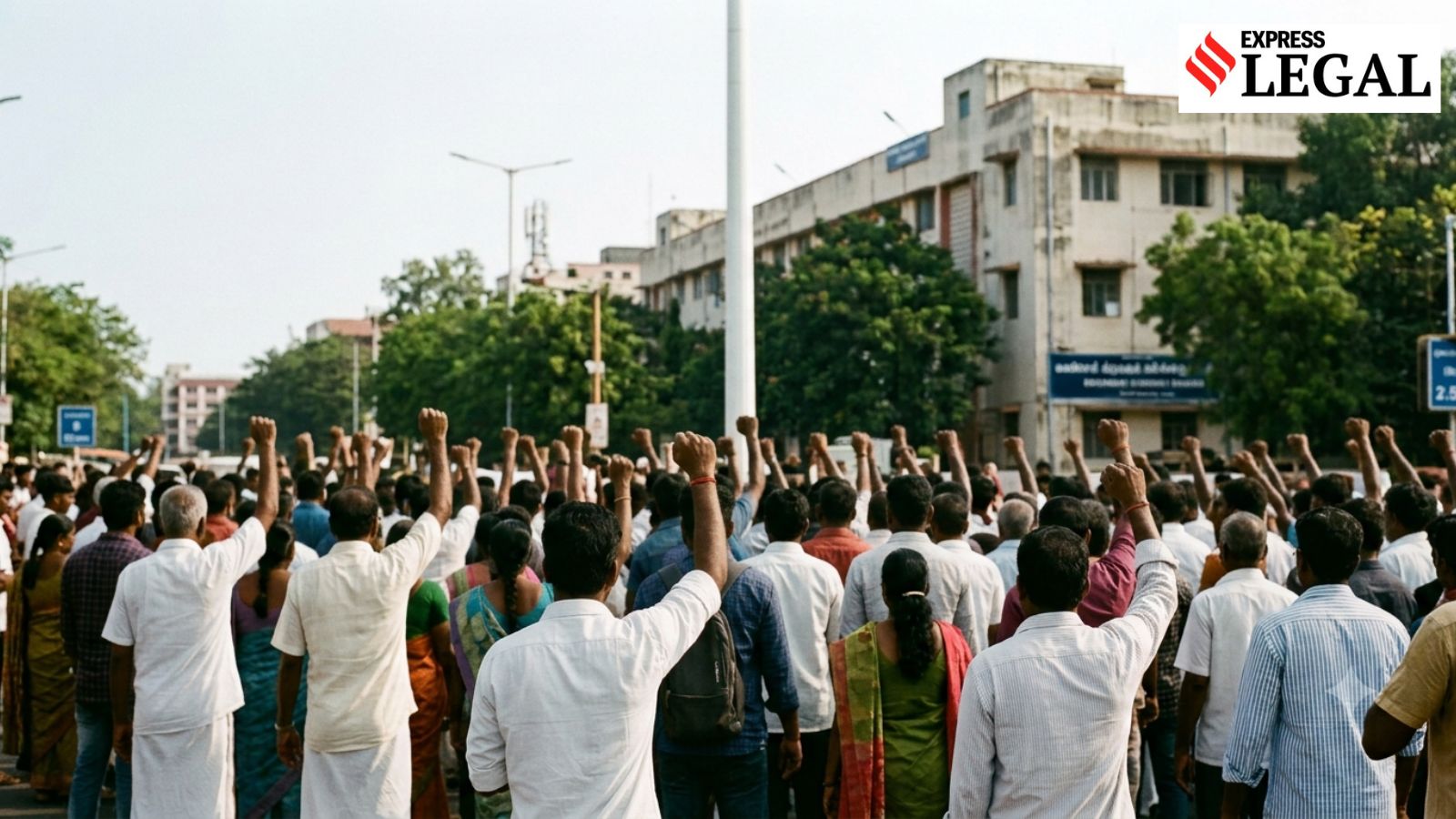
The Madras High Court has quashed criminal proceedings against a farmer leader, ruling that a peaceful protest cannot be considered a criminal offence merely because anti-government slogans were raised. In its order dated June 18, the court affirmed that the right to protest is a fundamental right guaranteed under the Constitution of India.
Justice M Nirmal Kumar was hearing a petition filed by Krishnamoorthy, an office-bearer of the Tamil Nadu Farmers Protection Association, seeking dismissal of a chargesheet filed before the Judicial Magistrate in Palladam, Tiruppur district. The case originated from a January 18, 2026, hunger strike organised by the association to demand the withdrawal of criminal cases against its founder, advocate and farmer leader M Easan.
“Showing protest is the hallmark of Democracy, which is a fundamental right guaranteed under the Constitution of India,” the court observed, adding that merely raising slogans and staging a protest does not, by itself, amount to commission of a criminal offence.
The police had alleged that the protest was held without prior permission and caused inconvenience to the public. Accordingly, they registered offences under Sections 189(2) (being a member of an unlawful assembly), 226 (attempt to commit suicide to compel or restrain exercise of lawful power by a public servant), and 193(1) (liability of owner or occupier of land where an unlawful assembly or riot takes place) of the Bharatiya Nyaya Sanhita.
However, the court noted that the prosecution could not point to any complaint from the public claiming to have been affected by the protest. The court also observed that the gathering was held on private property, not on a public road or prohibited area.
Senior counsel for the petitioner argued that Krishnamoorthy was exercising his constitutional rights under Articles 19(1)(a) (freedom of speech) and 19(1)(b) (freedom to assemble peaceably) of the Constitution. The petitioner further contended that there was no evidence of any prohibitory order in force on the date of the protest and that the police had ignored earlier high court judgments, particularly the case of Jeevanandham vs State, which laid down safeguards against indiscriminate prosecution of peaceful protesters.
The state opposed the petition, submitting that the protest was conducted without prior permission from authorities. However, the court found merit in the petitioner's arguments and quashed the criminal proceedings.
The ruling reinforces the constitutional protection of peaceful assembly and protest, and serves as a reminder that the government must not treat dissent as a crime unless it involves violence or unlawful activity.