Mumbai's Tulsi Lake Overflows Days After Vihar Lake, Boosting Water Reserves
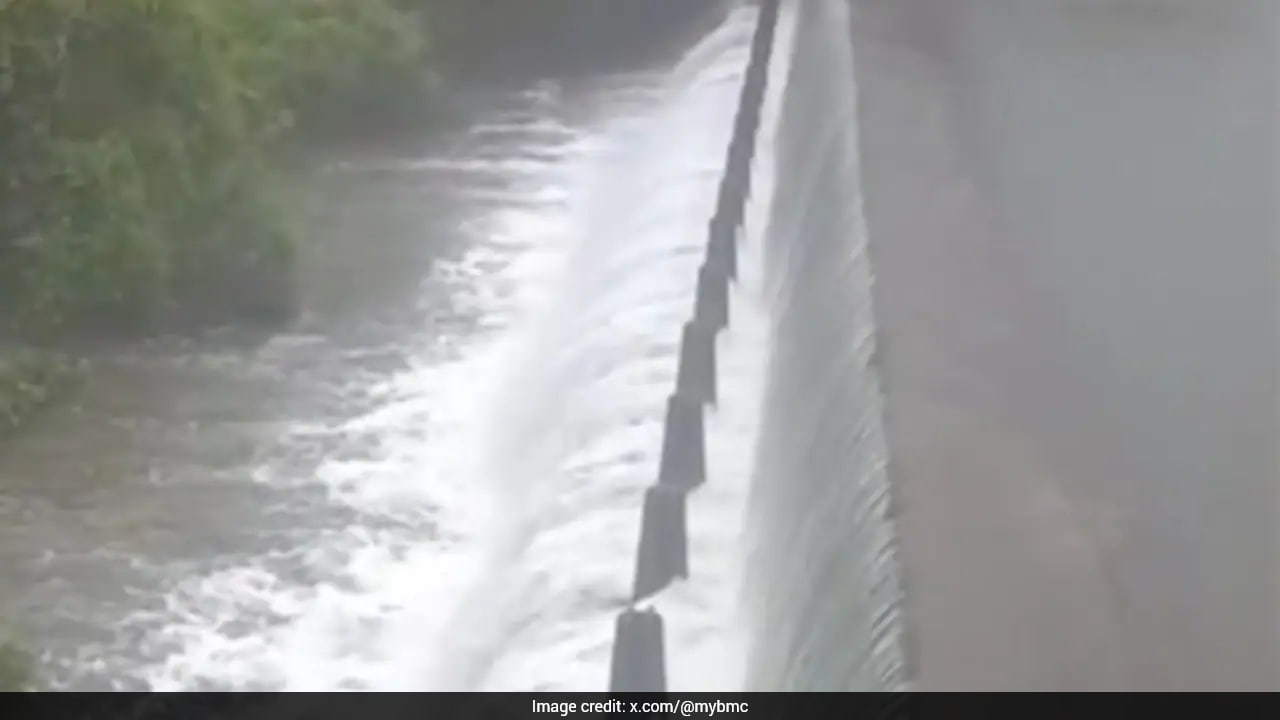
Tulsi Lake, the smallest of the seven reservoirs that supply drinking water to Mumbai, began overflowing on Tuesday night following continuous rainfall in the city and its catchment areas. The Brihanmumbai Municipal Corporation (BMC) confirmed that the lake started overflowing at 11:43 pm, just hours after Vihar Lake had reached full capacity at 9:00 pm on the same day.
These two are the first reservoirs in Mumbai's water supply system to overflow this monsoon season. Despite the overflow, the total water stock across all seven reservoirs stands at 41.43% of their combined storage capacity as of Wednesday morning. The BMC reported that water levels rose by 12.44% in the 24 hours ending at 6:00 am on July 8, and by 24.44% over the previous 48 hours.
Tulsi Lake, located within the Sanjay Gandhi National Park, is one of only two reservoirs inside the BMC limits. It has a live storage capacity of 8,046 million litres and supplies an average of 18 million litres of drinking water daily. Built in 1879 at a cost of Rs 40 lakh, the lake has a catchment area of 6.76 square kilometres and a water spread area of 1.35 square kilometres when full.
An important feature of Mumbai's reservoir network is that water overflowing from Tulsi Lake naturally flows into Vihar Lake, maintaining an interconnected system that supports the city's water management. This year's overflow is notably earlier than in previous years—Tulsi Lake overflowed on August 16 in 2025 and on August 4 in 2024—reflecting favourable rainfall conditions in the catchment area during the early monsoon.
The India Meteorological Department (IMD) has forecast generally cloudy skies with intermittent light to moderate rain over Mumbai and its suburbs. A high tide of 3.77 metres is expected at 5:17 pm on Wednesday, followed by another high tide of 3.49 metres at 7:00 am on Thursday.