India's Major Reservoirs at 27.5% Capacity Amid 40% Rainfall Deficit
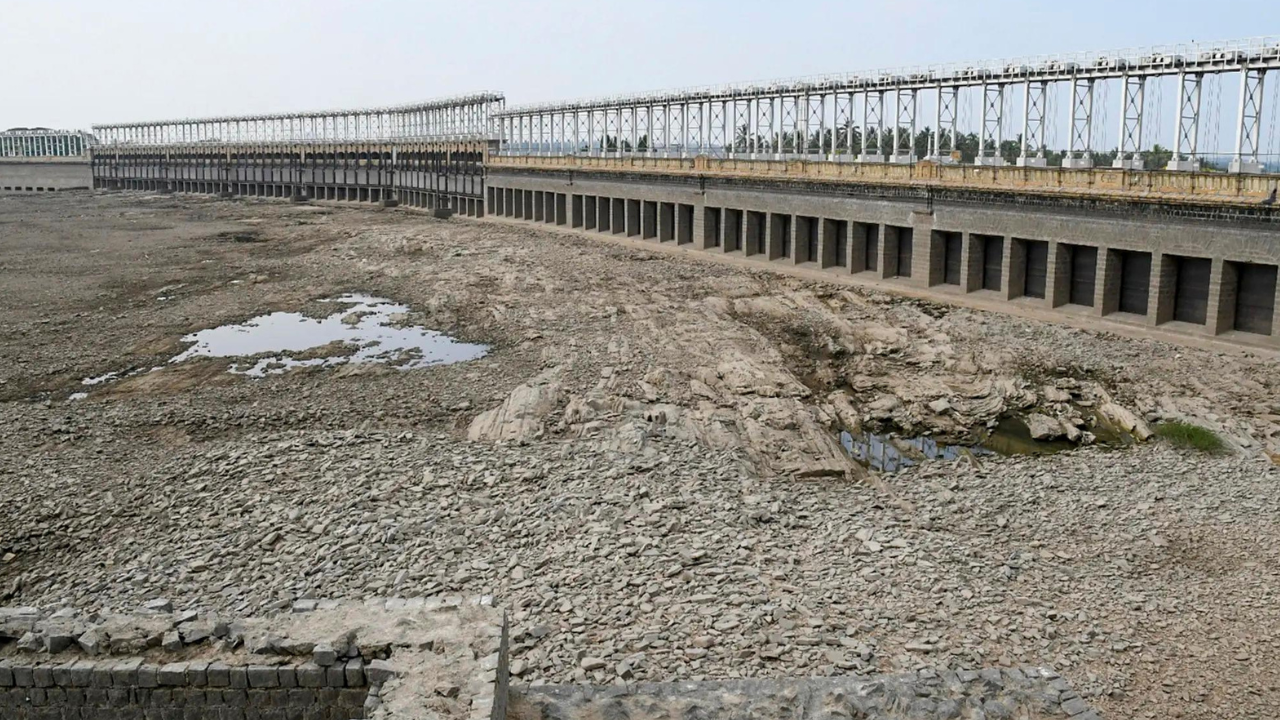
India's 166 major reservoirs currently hold only 27.5% of their total live storage capacity, according to data from the Central Water Commission. This decline follows a 40% deficit in cumulative monsoon rainfall across the country, attributed to the El Nino weather pattern.
Despite the low levels, the current storage is still above the 10-year average for this period. However, the slow progress of the monsoon raises concerns for irrigation, domestic water supply, and hydroelectric power generation. Twenty of these reservoirs are part of hydro-electric projects, including Gobind Sagar, Thein Dam, Rana Pratap Sagar, Hirakud, Panchet Hill, Ukai, Sardar Sarovar, and Pench.
Regional data shows that reservoirs in the northern and central regions have better storage than the corresponding period last year, while those in the eastern, southern, and western regions have lower levels. State-wise, reservoirs in Assam, Bihar, Chhattisgarh, Gujarat, Himachal Pradesh, Madhya Pradesh, Nagaland, Odisha, Punjab, Uttar Pradesh, and Uttarakhand have improved storage compared to last year. In contrast, reservoirs in Andhra Pradesh, Goa, Jharkhand, Karnataka, Kerala, Maharashtra, Meghalaya, Mizoram, Rajasthan, Tamil Nadu, Telangana, Tripura, and West Bengal have declined.
The total live storage capacity of these 166 reservoirs is about 183.6 billion cubic metres (BCM), representing over 71% of the estimated 257.8 BCM created across the country. The situation underscores the importance of monsoon performance for water security in India.