India-US Trade Deal: 99% Complete, But Is It Durable?
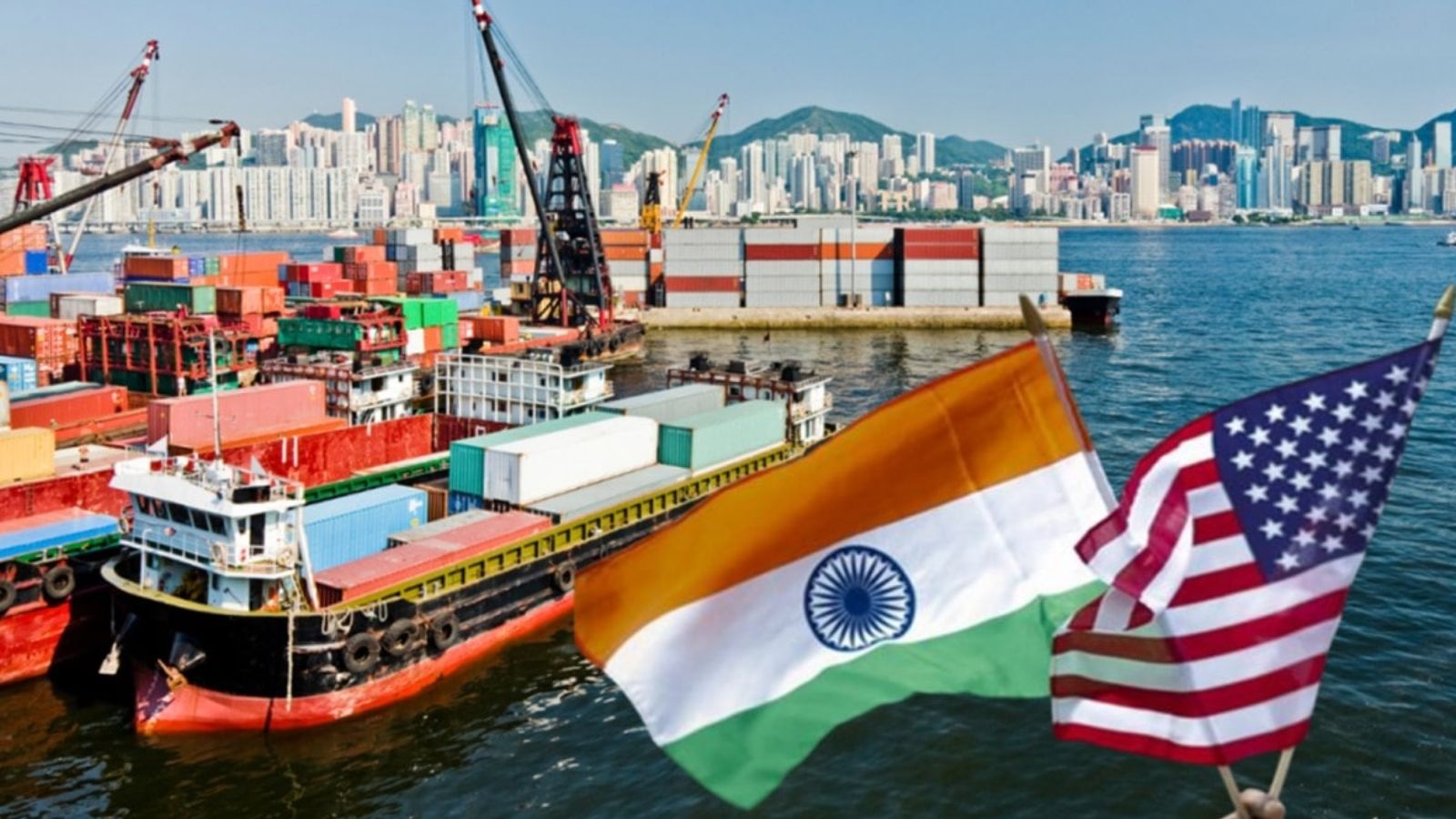
At the G7 summit in Evian last week, US President Donald Trump reached across to clasp Prime Minister Narendra Modi's hand and called him a tough negotiator, even a 'killer', before stating that the India-US trade deal was 'very close'. The gesture was warmly received in New Delhi. However, this came only weeks after a US strike linked to the war with Iran killed three Indian sailors. In the same news cycle, Washington dropped 'Indo' from the name of its Indo-Pacific Command, and its trade office proposed fresh duties of up to 12.5 per cent on 60 economies, including India. The bonhomie is real, but so is the underlying baseline. The gap between the two tells the actual story of this deal.
In early June, India's commerce minister stated that the first tranche of the trade deal was about 99 per cent complete; a fortnight later, the US ambassador echoed the same figure. The missing 1 per cent, relating to agriculture and dairy, is not the hardest part. What has quietly changed is what the full 100 per cent now refers to.
Rewind to February. After months of tariffs rising to 50 per cent, Washington cut India's rate to 18 per cent, with India pledging to buy a reported $500 billion in American goods. Then the foundation shifted. On February 20, the US Supreme Court ruled 6-3 that the statute behind the reciprocal tariffs did not authorise tariffs at all; that power, it said, belongs to Congress. The decision voided roughly 70 per cent of the US tariff structure, including the mechanism by which India's 18 per cent had been set. Within days, the duties were terminated. The number India had negotiated for did not fall so much as dissolve.
What replaced it is where the economics become interesting. Stripped of its emergency tool, the administration fell back on a time-limited baseline near 10 per cent on almost everyone, plus new unfair-trade investigations that could yield fresh, uncapped levies later. On paper, India now faces a lower baseline than the 18 per cent it celebrated. But a duty applied to all comers is not the same asset as a bilaterally negotiated, India-specific rate. The latter was meant to be something India had bargained for and could rely on. The deal is still '99 per cent' complete, yet what it completes has been re-priced, and that re-pricing affects behaviour. The $500 billion pledge now rests on a shakier exchange, as India is being asked to lock in long-dated import commitments against a tariff promise the other side cannot presently guarantee.
Reporters in Washington, speaking to people across think tanks, congressional offices, government bureaus, and the private sector, have tested how India's choices are viewed from this side. Coming from the Indian policy community, what stands out is how consistent the through-line is: the tariff number is the least durable part of the relationship. Beneath every headline rupture, working-level cooperation has largely continued. The trajectory is described less as linear convergence than as an upward-sloping sine curve, full of dips that rarely prove structural.
The deeper point concerns China, and it cuts both ways. India's strategic value to Washington is, at bottom, downstream of America's competition with China. The tariff relief, the courtship, the talk of India as a manufacturing alternative, all flow from a bet that India can help reduce American dependence on Chinese supply chains in critical minerals, electronics, pharmaceuticals, and defence inputs. India tends to command sustained American attention precisely when China becomes a problem; that is the real ballast under this deal, far steadier than any tariff line.
The sharpest version of the China problem is not mining but processing: Beijing's dominance lies in the refining and component nodes of these chains, where a single export restriction can ripple through factories worldwide. For India to serve as a credible alternative, it must build not just capacity but also regulatory predictability and trade reliability. The current deal, even at 99 per cent, does not guarantee such predictability. The missing 1 per cent may be small in scope but large in consequence, as it touches on sensitive domestic sectors. Moreover, the legal uncertainty in the US means that even a completed deal could be undermined by future court rulings or executive actions.
In conclusion, the India-US trade deal is indeed close to completion in terms of negotiations, but its durability is questionable. The shifting legal and geopolitical landscape suggests that both sides must view this agreement not as an endpoint but as a foundation for deeper, more resilient economic engagement. The real test lies in whether the deal can withstand domestic legal challenges and adapt to the evolving global trade environment.