India urged to develop national strategy for affordable cancer care access
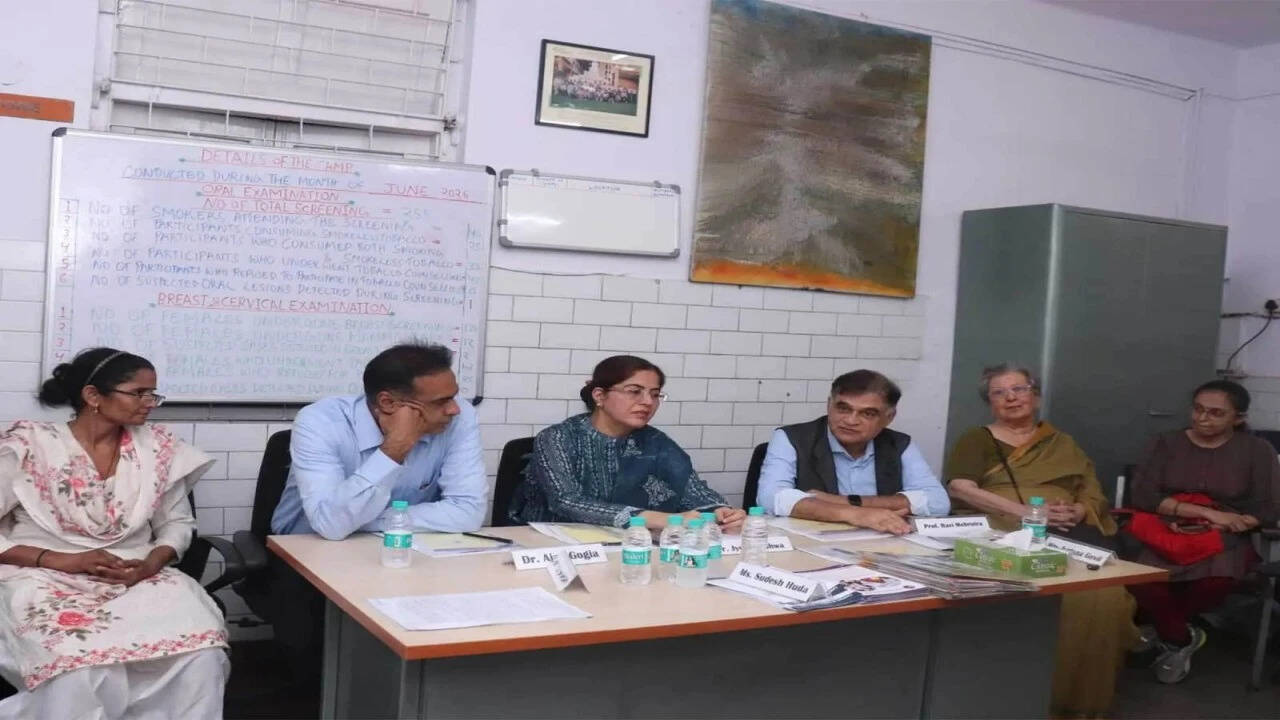
NEW DELHI: A group of leading oncologists, cancer survivors, and public health experts has called for a coordinated national strategy to improve access to new cancer therapies in India. Speaking at a media roundtable organised by the Indian Cancer Society (ICS) during Cancer Survivor Month, the experts highlighted that while cancer treatments have advanced significantly, many patients remain unable to benefit due to high costs, inadequate insurance coverage, limited diagnostic facilities, and unequal healthcare infrastructure.
Jyotsna Govil, chairperson of the Indian Cancer Society, said that cancer care is entering a new era of scientific innovation, but the challenge lies in ensuring these advances reach every patient who can benefit. She stressed the importance of informed public conversations to improve access to quality cancer care while keeping patients at the centre of every decision.
The experts emphasised that India does not have to choose between innovation and affordability. Instead, they called for public resources to focus on therapies that offer the greatest public health benefit. Wider adoption of new cancer treatments should be based on strong clinical evidence, improvements in survival and quality of life, cost-effectiveness, and relevance to India's disease burden.
Dr Ravi Mehrotra, a management committee member of the Indian Cancer Society and former director of the National Institute of Cancer Prevention and Research, advocated for evidence-based prioritisation of cancer therapies. He noted that evidence-based prioritisation, supported by scientific evaluation and real-world evidence, can help ensure that scientific advances translate into meaningful health gains for the largest number of patients.
The roundtable also stressed the need to strengthen scientific evaluation systems, including Health Technology Assessment, to support decisions on adopting innovative therapies under publicly funded healthcare programmes. Experts suggested that proven treatments could gradually be included under schemes such as Ayushman Bharat to reduce patients' out-of-pocket expenses.
Dr Ajay Gogia, Professor of Medical Oncology at Dr B.R.A. Institute Rotary Cancer Hospital, AIIMS New Delhi, said the future of cancer treatment lies in providing the most suitable therapy for each patient. He explained that precision medicine, supported by scientific evidence and appropriate patient selection, can improve outcomes while making better use of healthcare resources. Evidence-based optimisation of treatment can also help improve affordability, he added, noting that innovation achieves its true value only when patients can access it.
Dr (Prof) Jyoti Wadhwa, principal lead of Medical and Precision Oncology at Apollo Athenaa Women's Cancer Centre and Apollo Hospital, Delhi, said India has the potential to become a global leader in cancer research due to its clinical expertise and diverse patient population. She called for greater collaboration in clinical research to improve future standards of care while generating evidence that reflects India's healthcare realities and expands access to innovative therapies, including biosimilars.
Dr Pragya Shukla, head of Clinical Oncology at Delhi State Cancer Institute, stressed the need to strengthen public financing, evidence-based reimbursement systems, and healthcare infrastructure. She stated that the fight against cancer cannot be considered successful until the recommended treatment reaches even the poorest of the poor, and that scientific advances achieve their true purpose only when they are accessible to all.