India enters private space race: Vikram-1 puts nation in elite club
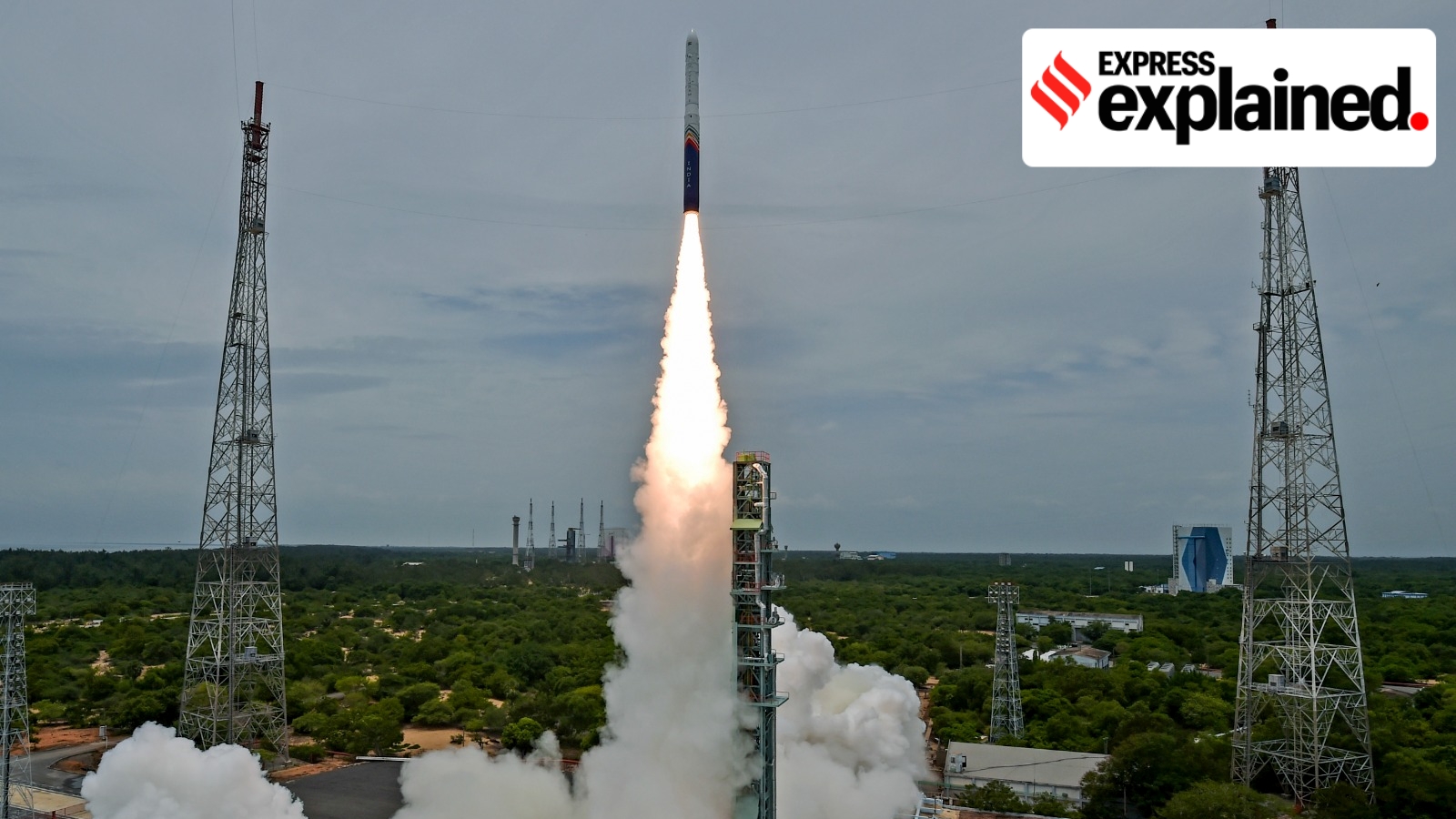
India's first privately developed launch vehicle, Vikram-1, successfully placed several technology demonstration satellites in Low Earth orbit (LEO) on Saturday (July 18) morning. The launch from Sriharikota by Hyderabad-based Skyroot Aerospace marks India as the third country after the United States and China to have private launch capability.
This milestone follows the government's decision in 2020 to open the space sector to private companies, formalised under the Indian Space Policy of 2023. Vikram-1 can carry payloads of up to 350 kg to LEO, making it a significant player in the growing commercial space market.
The true significance of this launch lies not just in the achievement of a private company entering the Indian aerospace ecosystem, but in the region of space it targets—Low Earth orbit. LEO is the zone between 160 km and 2,000 km above Earth's surface, where satellites typically circle the planet every 90 to 120 minutes. Its proximity to Earth reduces signal latency, making it ideal for communications and Earth observation satellites.
However, LEO is becoming increasingly crowded. Under current international frameworks, orbital slots are allocated on a first-come, first-served basis. The International Telecommunication Union (ITU), a UN agency, manages radio frequencies but does not distribute orbital slots. This has led to a de facto 'gold rush,' with countries and corporations rushing to claim orbital shells and radio-frequency slots.
Unlike geostationary orbit, satellites in LEO are not fixed relative to Earth's surface; they orbit the planet multiple times a day. This complicates equitable benefit-sharing and incentivises speculative 'squatting,' where entities launch satellite constellations to occupy orbital shells without immediate need. Projects like China's Guowang and Qianfan megaconstellations, as well as Starlink, are examples of this trend.
Under the 1967 Outer Space Treaty, no nation or corporation can legally claim ownership of an orbit. As Khyati Singh, Research Analyst at MP-IDSA, explained, 'What states are actually competing for is access to preferred orbital shells and advantageous radio-frequency slots managed by the ITU.' This competition is driving the design of satellite megaconstellations that effectively reserve space for future use.
India's entry into private launch capability places it in a strategic position to participate in this race. With Vikram-1, India can offer commercial launch services and potentially deploy its own constellations for communication and observation. However, the success of the Indian private space sector will depend on sustained policy support, technological advancement, and the ability to navigate the complex international regulatory environment.