India clashes with WTO members over plurilateral trade pacts, holds ground on e-commerce and investment
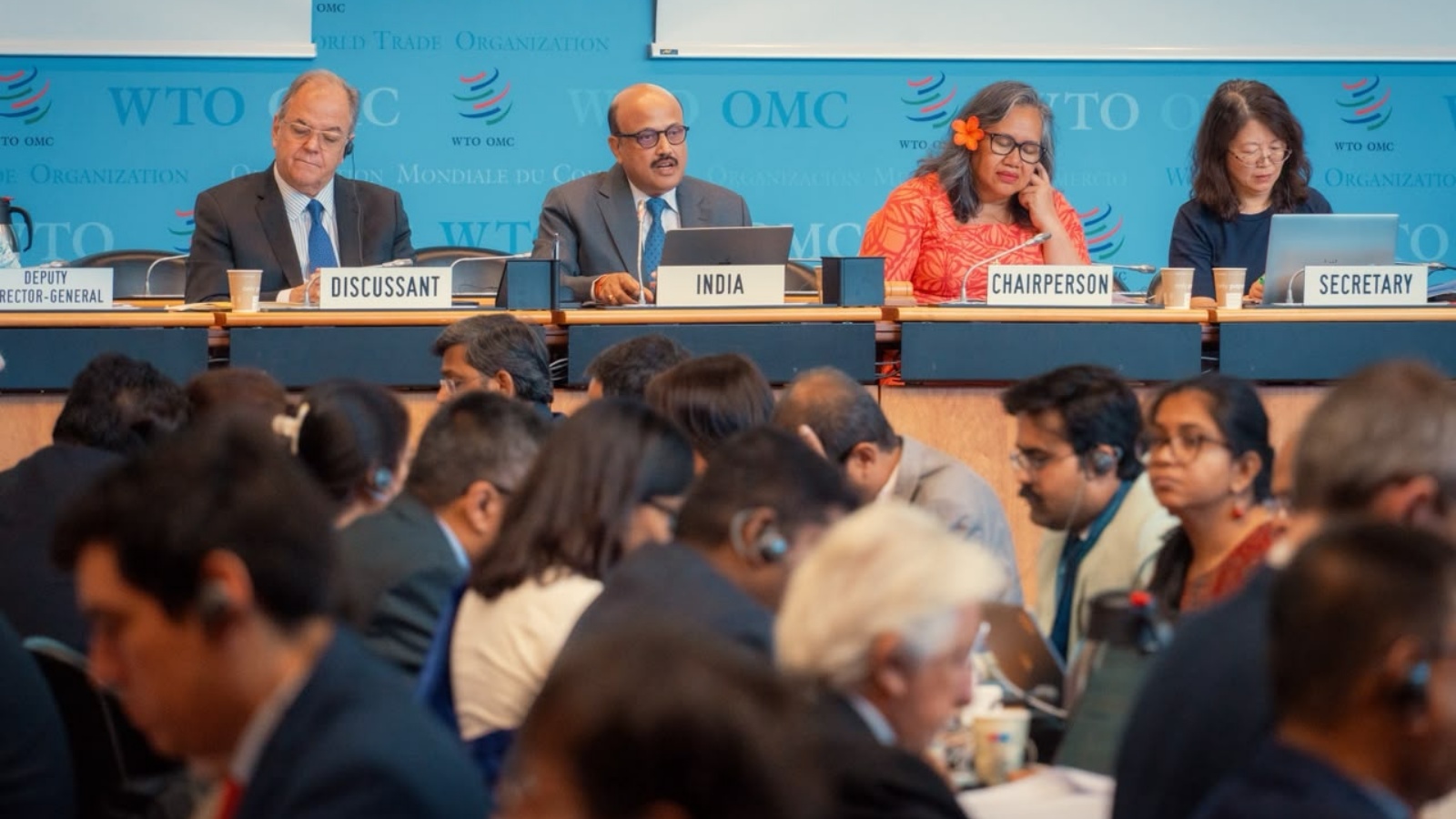
India and a majority of World Trade Organisation (WTO) members remain at odds over the inclusion of plurilateral agreements in the global trade body's reform process. During India's trade policy review on Tuesday, several countries, including Canada, the European Union, and the United Kingdom, questioned New Delhi's opposition to such pacts, arguing that it hampers WTO modernisation.
Plurilateral agreements are negotiated and implemented by a subset of WTO members rather than the entire membership. They have gained prominence in reform proposals backed by major trading powers such as the United States, the European Union, and China. India, however, maintains that these agreements violate the WTO's core principle of consensus-based decision-making, which requires all members to agree on new rules.
Canada led the criticism, while the EU noted that India has benefited significantly from global trade integration and urged it to view plurilaterals as an opportunity to shape the WTO agenda. The EU representative stated, as per sources, that such agreements are not a threat to multilateralism if properly structured. Gambia and Costa Rica specifically asked India to withdraw its opposition to the Investment Facilitation for Development (IFD) agreement, which has 129 supporters but remains opposed by India on grounds that investment is not a core trade issue and that plurilaterals pose systemic risks.
Several countries also encouraged India to join negotiations on other plurilateral initiatives, including fossil fuel subsidy reform, plastics pollution, and environmentally sustainable plastics trade. India, however, has not changed its stance.
The disagreement extends to the e-commerce front. After failing to include e-commerce plurilaterals during the 14th Ministerial Conference (MC14) in Yaoundé, Cameroon, proponents adopted interim arrangements without formal WTO approval. Sixty-six members, covering about 70% of global trade, have agreed to implement the WTO Agreement on Electronic Commerce through these interim steps, which prohibit customs duties on electronic transmissions. India has challenged this move, questioning the legal basis for WTO Director-General Ngozi Okonjo-Iweala acting as depositary of the agreement. In a July 9 letter, India argued that the Marrakesh Agreement requires consensus to add an agreement to Annex 4, and such consensus was not reached.
An anonymous trade expert noted that the proponents' strategy of bypassing WTO rules undermines the institution. India has consistently opposed the IFD agreement's inclusion as an Annex 4 agreement at MC14, remaining the sole holdout among 164 members.
The standoff reflects deeper tensions between India's insistence on consensus-based multilateralism and the push by many WTO members for more flexible, issue-specific agreements to address modern trade challenges. The outcome will shape the future of WTO reform and global trade governance.