How India's Steel Industry Rose to Become World's Second-Largest Producer
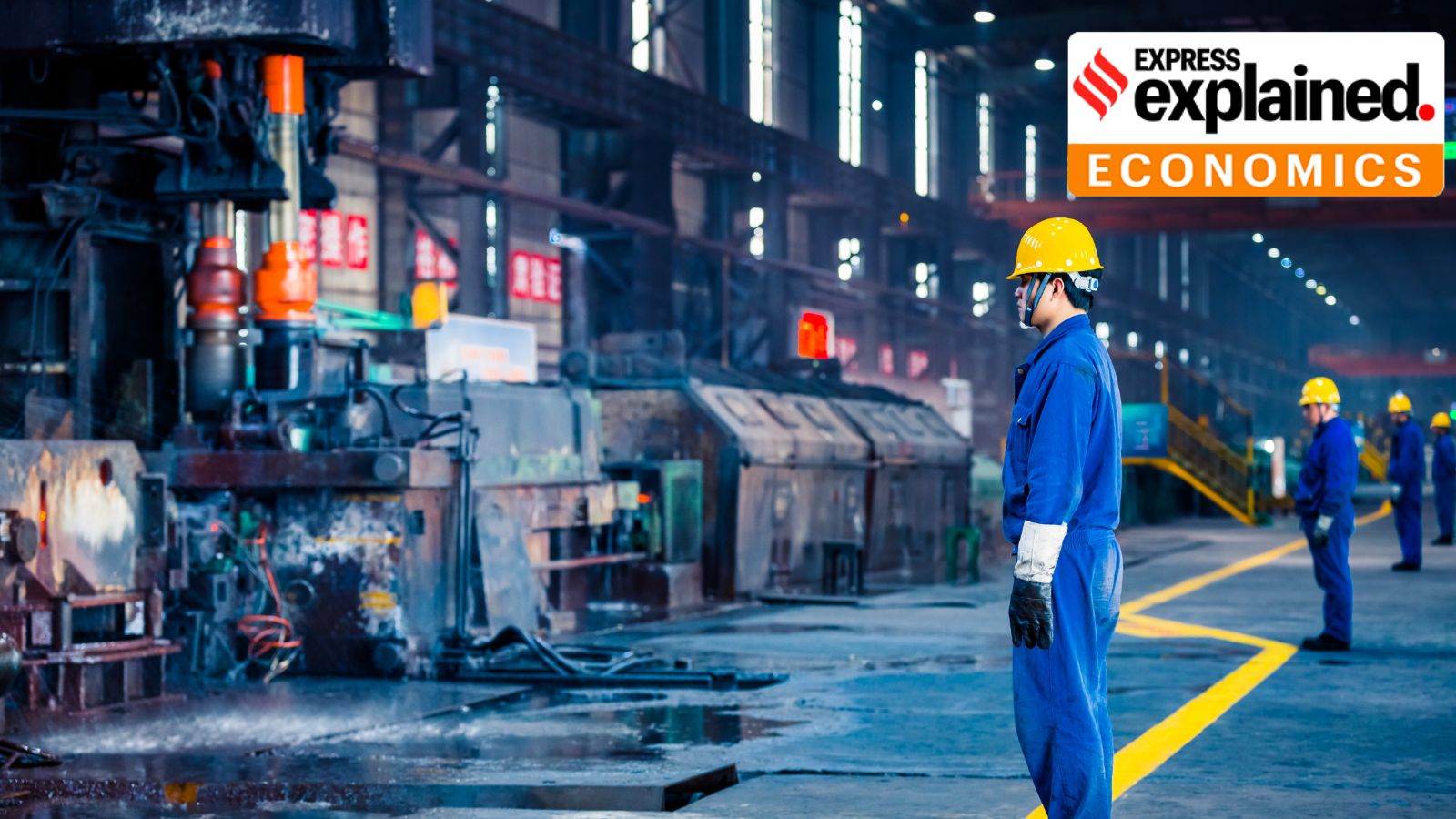
Over the past two decades, India's steel industry has undergone a remarkable transformation. From producing less than 1% of global steel output and ranking ninth in 2000, India became the world's second-largest producer by 2023, accounting for nearly 9% of global output. Only China produces more, at about half of the world's steel.
India's crude steel production expanded from 28 million tonnes in fiscal year 2002 to 152 million tonnes in fiscal year 2025. This growth is driven by robust domestic demand, which grew at an annual rate of 7.6% between 2002 and 2025. As a developing country undergoing rapid urbanisation, India's large-scale infrastructure projects require substantial steel consumption.
Despite meeting overall volume requirements, India imports speciality steel. Domestically, the industry primarily produces basic steel for infrastructure. However, evolving needs in automotive and construction sectors demand speciality steel with niche properties. To meet this demand, industries import premium steel from Japan and South Korea. Moving forward, scaling up domestic production of speciality steel is essential to correct the trade imbalance.
The steel industry's growth is led by large private manufacturers. The top five firms—Tata Steel, JSW Steel, SAIL, Jindal Steel & Power, and ArcelorMittal Nippon Steel India—account for 40-45% of domestic output. As of 2024, Tata and JSW each hold about 12% of market sales, followed by SAIL at 9%. JSW's market share rose from 1% in 2000 to 11.6% in 2024, while SAIL's declined from 29% to 9%. All five have captive iron ore mines, providing a significant cost advantage—iron ore from captive mines costs 40-50% less than market prices.
Policy changes have shaped the industry in two distinct phases. The early 1990s saw delicensing and liberalisation, with automatic approval of foreign equity investment up to 51%. Between 1990 and 2007, import tariffs were cut from 93% to 7%. Thereafter, protectionist measures increased. In 2007, an export duty on iron ore was imposed, initially at 15% and later raised to 30%, to ensure domestic supply. In 2017, the government mandated the use of domestically manufactured steel for government projects. Currently, quality control orders apply to 556 eight-digit HS codes of steel. In 2025, an additional 12% duty was applied on certain steel products, set to reduce by 0.5% annually over three years.
Recent government programmes include a product-linked incentives (PLI) scheme for speciality steel launched in 2021, offering financial incentives for production, technology upgradation, and capacity expansion. In 2024, the Ministry of Steel released a roadmap for greening the sector, aligning with India's net-zero target for 2070, with ₹455 crore allocated for pilot projects until 2029-30. In 2025, Niti Aayog proposed reforms to ease imports for downstream industries, including removal of quality control orders on 100 items.