Delhi Rains: 81 Waterlogging Complaints, 32 Tree Falls as Roads Snarl
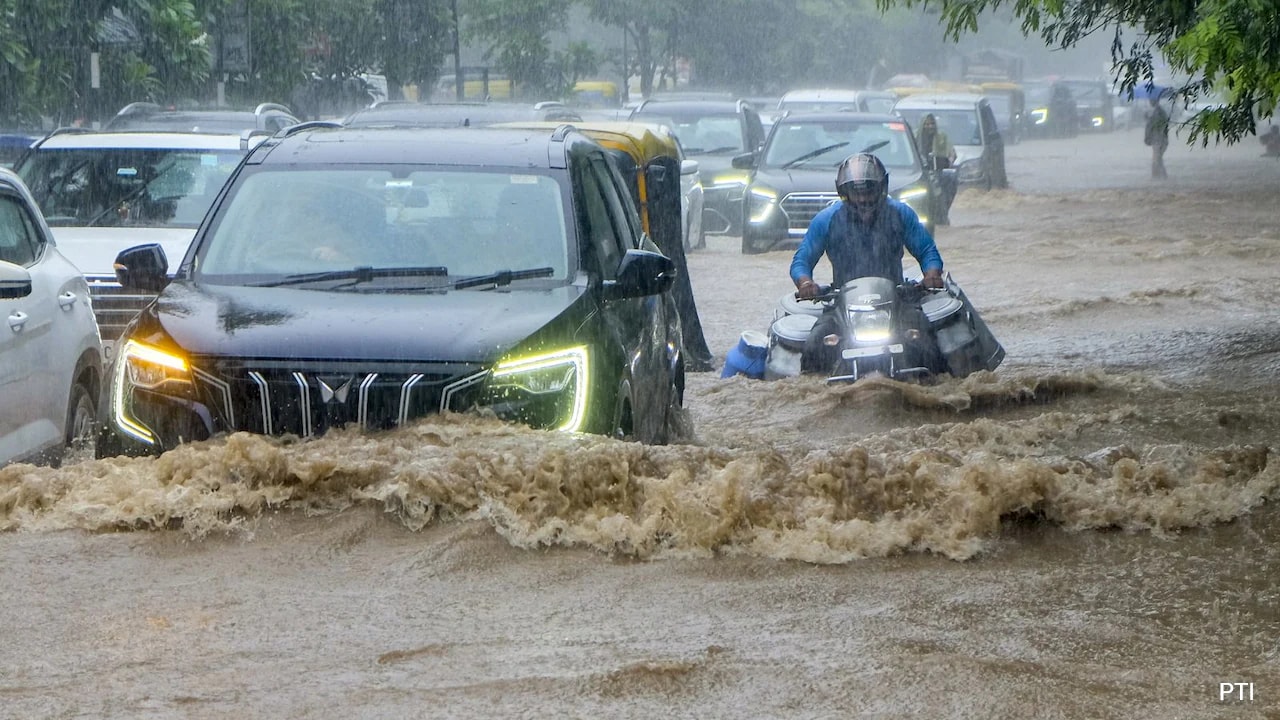
Hours of heavy rain on Friday turned several of Delhi's arterial and connecting roads into choke points, with waterlogged stretches, fallen trees and long traffic queues slowing movement across large parts of the national capital.
From Mahipalpur and Dhaula Kuan to MB Road, Ring Road, ITO and parts of east Delhi, commuters faced prolonged delays as multiple bottlenecks emerged almost simultaneously.
By the end of the day, the scale of the disruption was reflected in complaint registers. The Public Works Department (PWD) received 66 complaints of waterlogging and 17 complaints of fallen trees, while the New Delhi Municipal Council (NDMC) received 15 waterlogging complaints and 15 tree-fall complaints. That means 81 waterlogging calls and 32 complaints of fallen trees across the two agencies alone.
South and southeast Delhi were among the worst-hit parts of the city. Waterlogging was reported from Mahipalpur, Chhatarpur, Okhla, Sangam Vihar, Sainik Farms, Vasant Kunj, Vasant Vihar, Malviya Nagar and Greater Kailash-II, among other areas. The Mehrauli-Badarpur Road emerged as a major trouble spot, with traffic slowing sharply as water accumulated on parts of the stretch. Commuters travelling through Khanpur, Sangam Vihar, Deoli and Ambedkar Nagar also faced delays. At Mahipalpur and on roads leading towards Dhaula Kuan, long queues formed as the rain coincided with peak traffic hours.
The problem soon moved beyond individual waterlogged roads. Traffic slowed on parts of Ring Road, NH-48 and Mathura Road, while congestion was also reported around Dhaula Kuan, Ashram, ITO and several central Delhi stretches. The Gurugram-Dhaula Kuan route, one of the busiest entry corridors into Delhi, saw long queues of vehicles. With several key roads choking at the same time, motorists trying to avoid one jam often ran into another.
East Delhi was affected too. Waterlogging and slow traffic were reported from parts of Shakarpur, Mandawali, Mayur Vihar, Gandhi Nagar and Krishna Nagar, adding to the list of bottlenecks across the city.
The traffic chaos came after an intense spell of rainfall, particularly over south Delhi. Between 8.30 am and 5.30 pm on Friday, Pushp Vihar recorded 111.5 mm of rain, while Chhatarpur received 104.5 mm. Ayanagar recorded 87.4 mm, Palam 73.5 mm, Janakpuri 68 mm, Pusa 59.5 mm and Safdarjung 57.3 mm during the same period. The heavy downpour meant drains and roads in some parts of the city had to deal with a large volume of water within a relatively short period.
Delhi PWD Minister Parvesh Verma said many of the locations where problems were being reported were areas where drainage or other infrastructure work was underway. Responding to the Opposition's allegations over waterlogging, Mr Verma said, "There are many places in Delhi where our work is going on, where new drain works are going on, where many other works are going on. So, wherever the work will go on, there will be problems."
He also accused the Opposition of circulating videos of problems that, according to him, predated the current government. "The videos the Opposition is sharing are not about today's problems. They are highlighting issues that remained unresolved during their own 10 or 11 years in power," he said.
The Delhi government has maintained that several traditional waterlogging hotspots have performed better this monsoon after drainage and desilting work. Mr Verma has also pointed to stretches such as Minto Bridge and other traditionally vulnerable underpasses to argue that preparedness measures are showing results.
But Friday's rain produced a different challenge. Instead of one or two familiar flooding hotspots bringing traffic to a halt, waterlogging and congestion surfaced across several corridors at once, turning Delhi's road network into a web of delays.