Delhi colony processes 10 lakh kg waste in 8 years, offers zero-waste model
In February 2017, shortly after moving into Navjeevan Vihar in New Delhi, Dr Ruby Makhija’s car was stolen. When she approached the colony’s Residents’ Welfare Association (RWA) for better security, her ideas impressed them enough to appoint her secretary. Around that time, the Municipal Corporation of Delhi (MCD) was pushing for implementation of Solid Waste Management rules and consulting RWAs. For Makhija, the timing felt significant. “We are privileged. We see the contrast between cleanliness abroad and in India. I wanted to change that,” she said.
What began as governance discussions evolved into a larger question: Could a residential colony manage its own waste instead of adding to Delhi’s overflowing landfills? That question led Navjeevan Vihar’s 280 households to attempt something rare in Delhi — becoming a zero-waste colony where residents segregate and process most waste within the community. Eight years later, the colony claims to have diverted more than 10 lakh kilograms of waste from landfills. Following a visit by Lieutenant Governor Taranjit Singh Sandhu this week, the model is now being discussed as a potential template for other parts of the city.
Makhija says early institutional support from MCD helped. “The Deputy Commissioner at MCD helped us a lot. He said he’d go the extra mile if our RWA took up the initiative. That gave us the boost we needed.” The team then spent months studying waste management models in India and abroad, noting why many failed. The project formally began in 2019. Funding largely came from the RWA’s maintenance pool: Rs 1,200 per household monthly, with 95% of residents paying upfront for the year, easing budgeting.
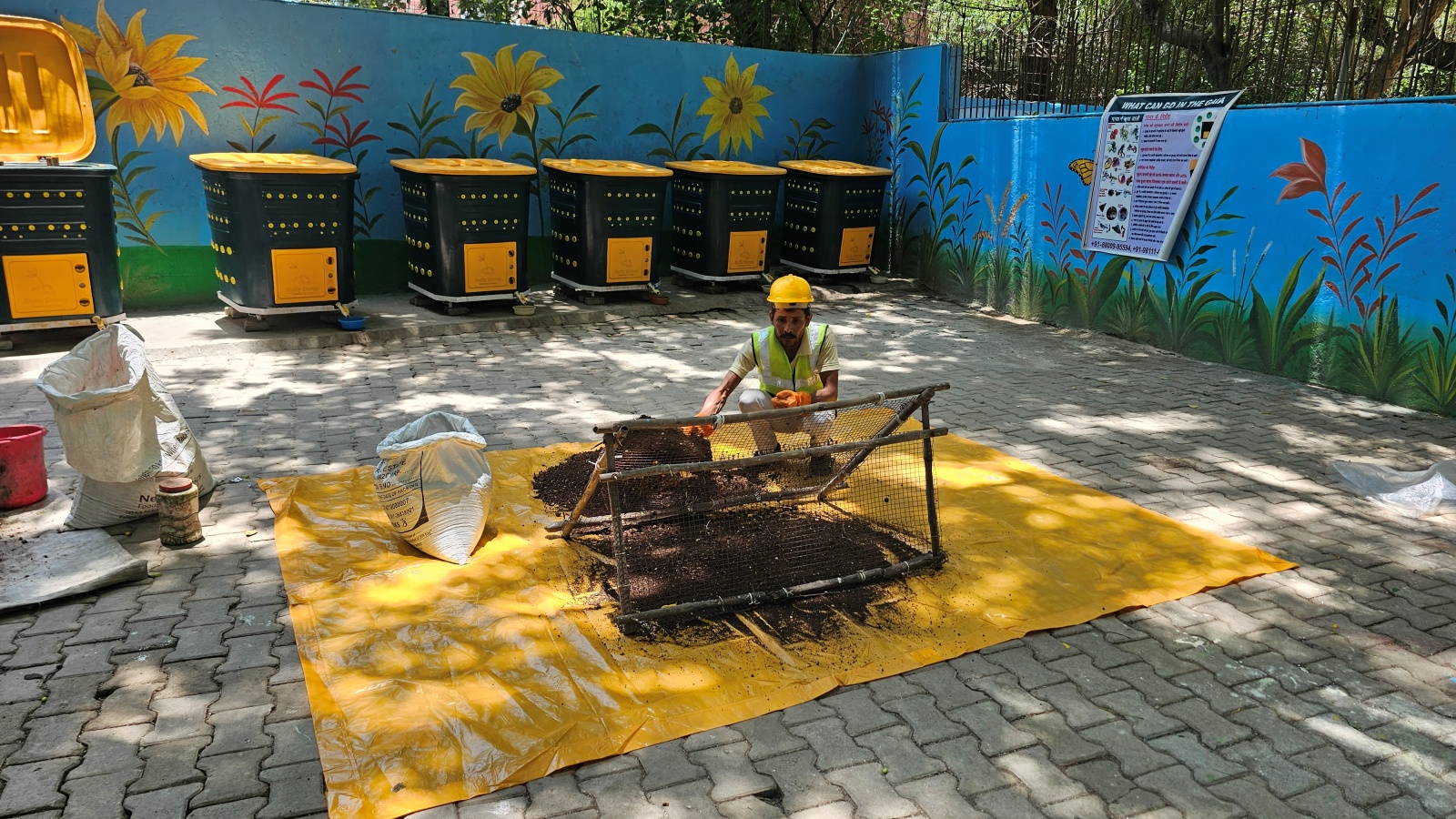
Residents were asked to segregate waste at source using separate bins for wet, dry, and hazardous waste. Wet waste was composted within the colony. Dry waste was stored at an RRR (Reduce-Reuse-Recycle) centre before being sent for recycling. Compost generated was reused in the colony’s green spaces. Currently, the colony generates around 250–275 kg of waste daily: dry waste accounts for about 105–110 kg, wet waste 120–125 kg, and the rest is sanitary and hazardous waste. The compost bins purchased four years ago cost Rs 6 lakh, including a year of consumables; today they cost less.
The biggest obstacle was not infrastructure but behaviour. Daily segregation remained inconsistent despite broad support. Makhija’s core team responded with accountability and community pressure. Residents who repeatedly failed to segregate were identified in colony groups. Children became ambassadors, learning about waste management in schools and through door-to-door campaigns, then encouraging parents to comply. Another hurdle was resistance from domestic workers, who viewed segregation as additional labour. The RWA introduced incentives, including monthly distribution of biodegradable sanitary napkins for workers and their daughters. Garbage collectors became stakeholders after being allowed to retain earnings from recyclable dry waste.
Infrastructure adjustments were also needed. Early compost pits created odour complaints from nearby homes, prompting a shift to enclosed units. Over time, Makhija says the project became less about waste and more about participation. “The lesson is that waste systems succeed only when communities feel ownership.” The RWA’s framework now focuses on sustained engagement and replicability. The model, with its emphasis on source segregation, community involvement, and economic incentives, offers lessons for urban waste management across India.