Bombay HC Denies Bail: Article 21 Not Absolute When Public Safety at Risk
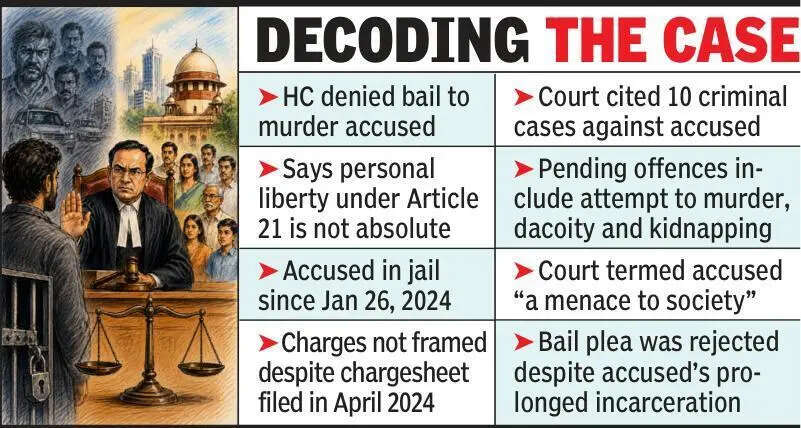
The Nagpur bench of the Bombay High Court has denied bail to a murder accused from Chandrapur, holding that the fundamental right to personal liberty under Article 21 of the Constitution is not absolute and cannot outweigh the broader interests of public safety.
Justice M.M. Nerlikar rejected the bail application of the accused, who has been in judicial custody since January 26, 2024, in connection with a murder case registered at Ramnagar police station in Chandrapur. The court acknowledged that the accused had been incarcerated for over two years and four months, and that charges had not yet been framed. However, the bench noted the accused's extensive criminal record, with 10 pending cases including attempted murder, grievous hurt, kidnapping, rioting, and assault on public servants.
“Personal liberty is a cherished constitutional value, but it is not absolute. No individual can assert a freedom that imperils the life or liberty of others,” the court observed in its order.
The case stems from the murder of a contractor allegedly over a dispute regarding a two-wheeler purchased in the deceased's name and unpaid loan instalments. The prosecution submitted that the accused inflicted 14 injuries on the deceased. The accused’s counsel argued that the delay in framing charges violated the right to a speedy trial, citing recent Supreme Court judgments granting bail in cases of prolonged incarceration.
Opposing the plea, the Assistant Government Pleader A.M. Kadukar highlighted that the accused had 10 criminal cases against him, with four acquittals but six still pending. The court noted that the accused had previously been granted bail in other cases but continued to commit offences. The bench also noted that an earlier bail application had been rejected on merits, and the Supreme Court had declined to interfere.
Justice Nerlikar concluded that the petitioner was “a menace to society” and did not deserve relief, despite the long period of custody and delay in trial.