Balochistan's Enduring Conflict: History, Resources, and Grievances
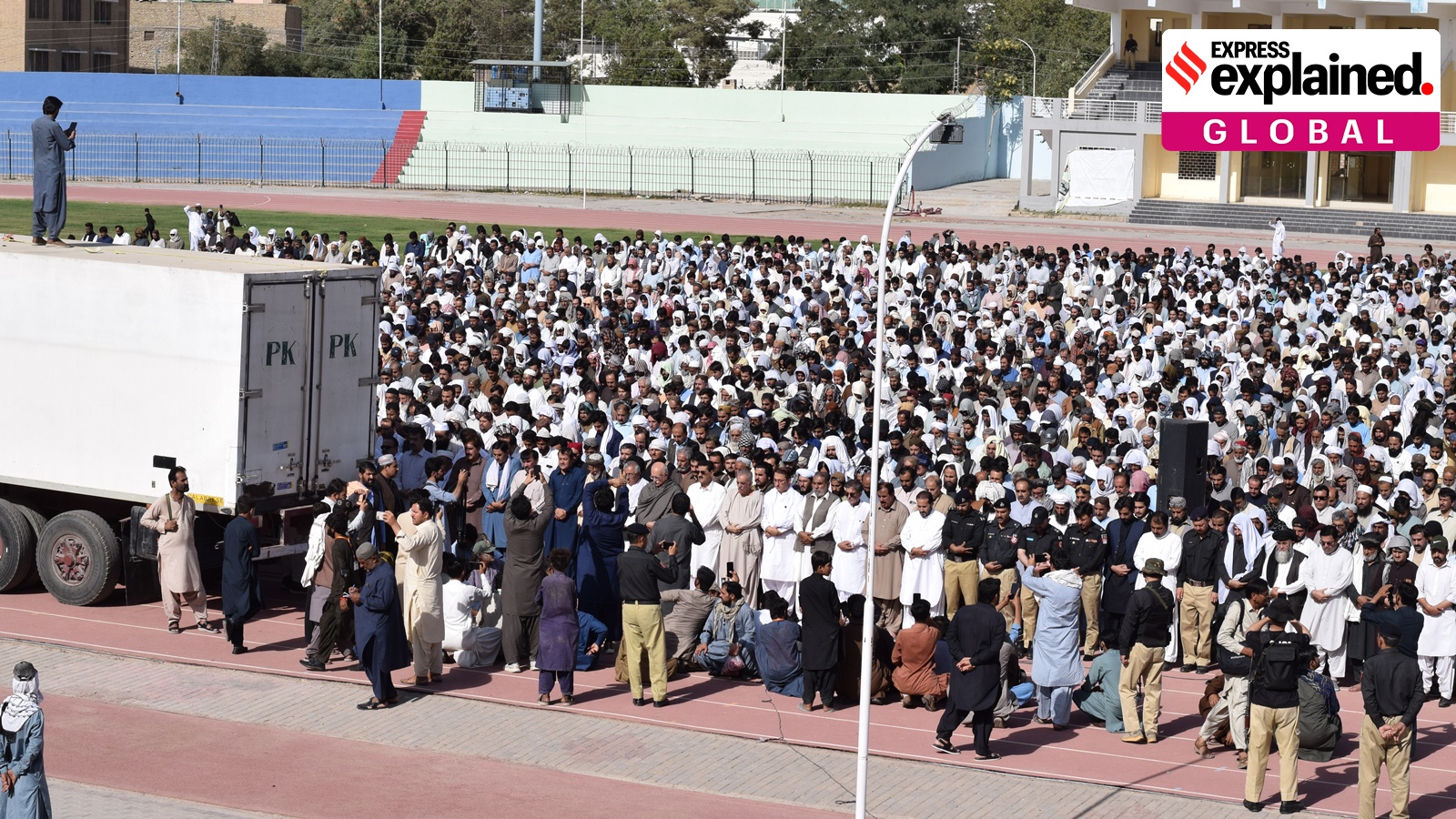
For 10 days in Pakistan, families of 27 policemen killed in Balochistan refused to bury their dead until the government accepted their demands. The sit-in ended last week after authorities agreed to set up a judicial commission to investigate two recent attacks—in Ziarat on July 6, where the policemen were killed, and in Hanna Urak a day earlier, where five civilians died. These attacks were allegedly carried out by Baloch militants.
In response, Pakistani authorities launched 'Operation Shaban,' which they claim has killed 129 'terrorists' since July 5. This is the latest chapter in a long history of bloodshed and instability in Balochistan, a province that is both strategically important and rich in natural resources. Pakistan has accused India of fomenting trouble in the region, a charge India denies.
Balochistan, bordering Iran and Afghanistan, is Pakistan's largest province by area but sparsely populated. Its estimated 12 million people are predominantly Baloch, an ethnic group with distinct cultural and linguistic traditions. The region has seen multiple insurgencies since Pakistan's creation in 1947, with the current one—the fifth—beginning under President Pervez Musharraf in the early 2000s.
The roots of the conflict lie in the partition of British India in 1947. The princely state of Kalat, the main tribal entity in what is now Balochistan, initially sought independence. Its ruler, Mir Ahmad Yar Khan, acceded to Pakistan in March 1948 under pressure. Many Baloch nationalists view this accession as illegitimate, a grievance that persists.
Decades of perceived political and economic marginalisation have fueled resentment. Baloch leaders allege that Punjabis dominate the federal government and military, and that the province's rich resources—including natural gas, copper, and gold—have been exploited without benefiting local communities. Major projects like the China-funded Gwadar port and the Reko Diq copper mine are often cited as examples of this imbalance.
The Pakistani government, however, disputes these claims. Defence analyst Ali Chishti told The Indian Express that millions of Baloch participate in the country's political, economic, and military institutions, arguing that the insurgency represents only a fraction of the population. Nonetheless, Baloch militants have repeatedly targeted Chinese projects and workers, as well as Pakistani security forces.
The conflict remains a complex mix of historical grievances, ethnic tensions, resource disputes, and geopolitical rivalries. While the government continues its military operations and development projects, the underlying issues of trust and equitable distribution of resources remain unresolved.