Walking on Footpaths Declared Fundamental Right as Pedestrian Deaths Soar
The Supreme Court of India has recognised walking on demarcated footpaths as a fundamental right, a ruling that takes precedence over the privileges of motor vehicles. The Court also called on the government to introduce legislation to enforce this right, which would hold officials and departments accountable for violations of pedestrian rights.
The case originated from the death of a five-year-old boy who was struck by a tanker while walking to school with his father. “Who could have ever imagined that it would be the last walk with his son?” observed the bench of Justices P S Narasimha and Atul S Chandurkar.
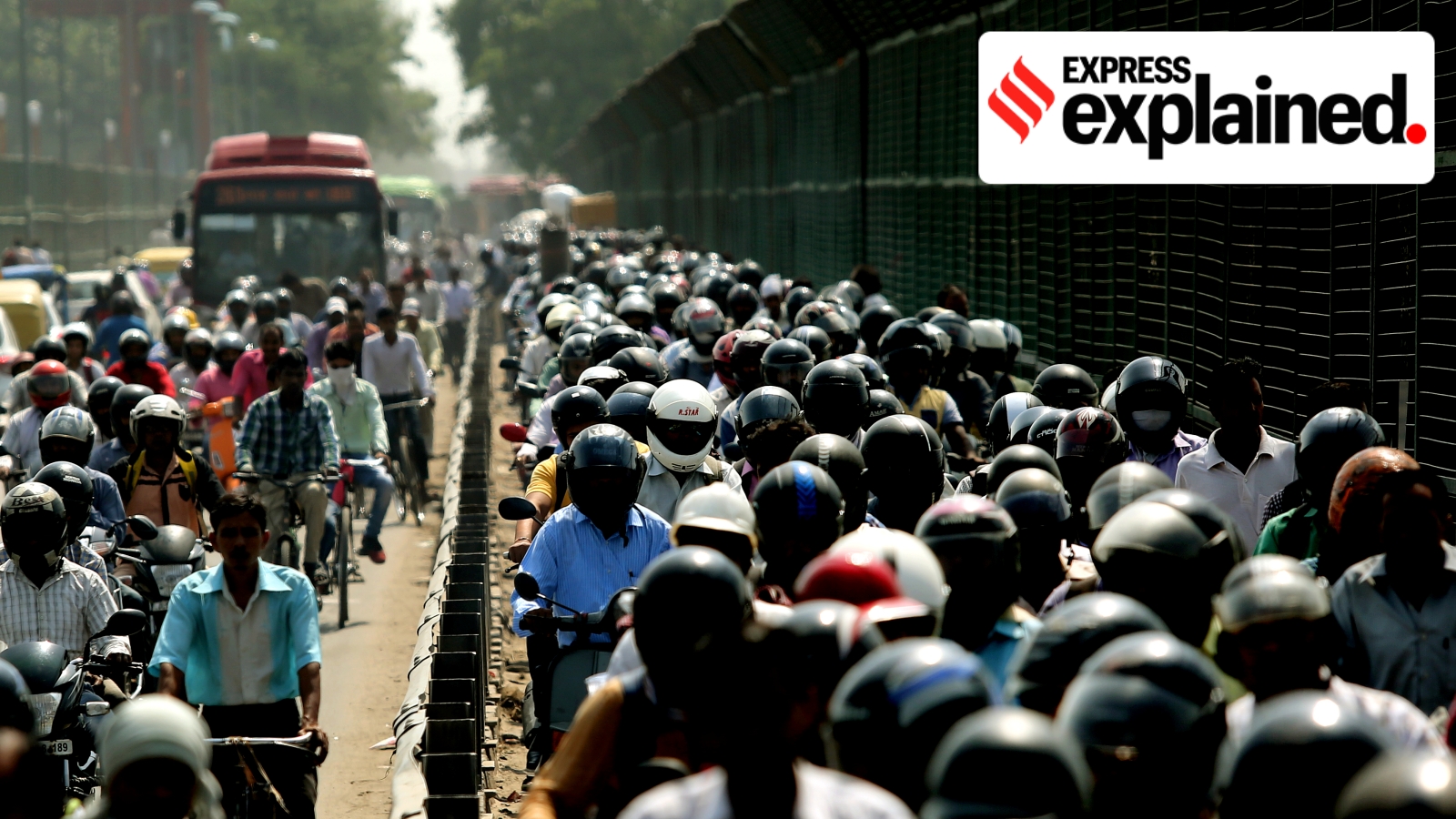
Pedestrians are among the most vulnerable road users in India, often wary of walking even on footpaths due to encroachment by two-wheelers or shopkeepers. An analysis by The Indian Express shows that while total road fatalities increased by 21.24% between 2015 and 2024, pedestrian deaths surged by nearly 163%, rising from 13,894 to 36,526. Their share in total road fatalities more than doubled, from 9.5% to 20.61%.
In its judgment, the Supreme Court highlighted the irony that while walking predates wheeled transport by millennia, road infrastructure is overwhelmingly designed for motorised vehicles. The Court observed that the Motor Vehicles Act has, in many ways, undermined the rights of pedestrians. “It could also be elitism to start with, for machines with wheels were only for the rich, but as economies progressed and cheaper motor vehicles were introduced, the entire spectrum of motorised transportation dominated the roads, pushed aside the walkers to the extent that they are treated as a nuisance for the drivers who routinely run over the walkers and their footpaths. This should stop from now on as we declare the fundamental right to walk on demarcated footpaths alongside motorised roads,” the Court stated.
The absence of safe and comfortable footpaths, and their subjugation to motor transport, was described by the Court as a “civilisational problem”. The Court also linked walking with India’s freedom struggle, noting that the Motor Vehicles Act ignited many ideals during that period.
Piyush Tiwari, founder and CEO of the SaveLIFE Foundation, said the Court has reversed the hierarchy over motorised vehicles. “For decades the footpath has been the most expendable line on road building and maintenance plans. By recognising the right to walk as a fundamental right that takes priority over motorised traffic, the Supreme Court has reversed that hierarchy, and rightly so. For municipal bodies and road-owning agencies, a safe, unobstructed footpath is no longer discretionary; it is a constitutional duty wherever a road exists,” said Tiwari.
The Court criticised the Motor Vehicles Act, 1988, stating that it is built upon “vehicle” as the subject, with “human” interests only incidental. The Court urged that walking must be treated as a primary activity, and road infrastructure must accommodate it as a constitutional requirement.