US Voices Concern Over China's Nuclear Expansion Following Pacific Missile Test
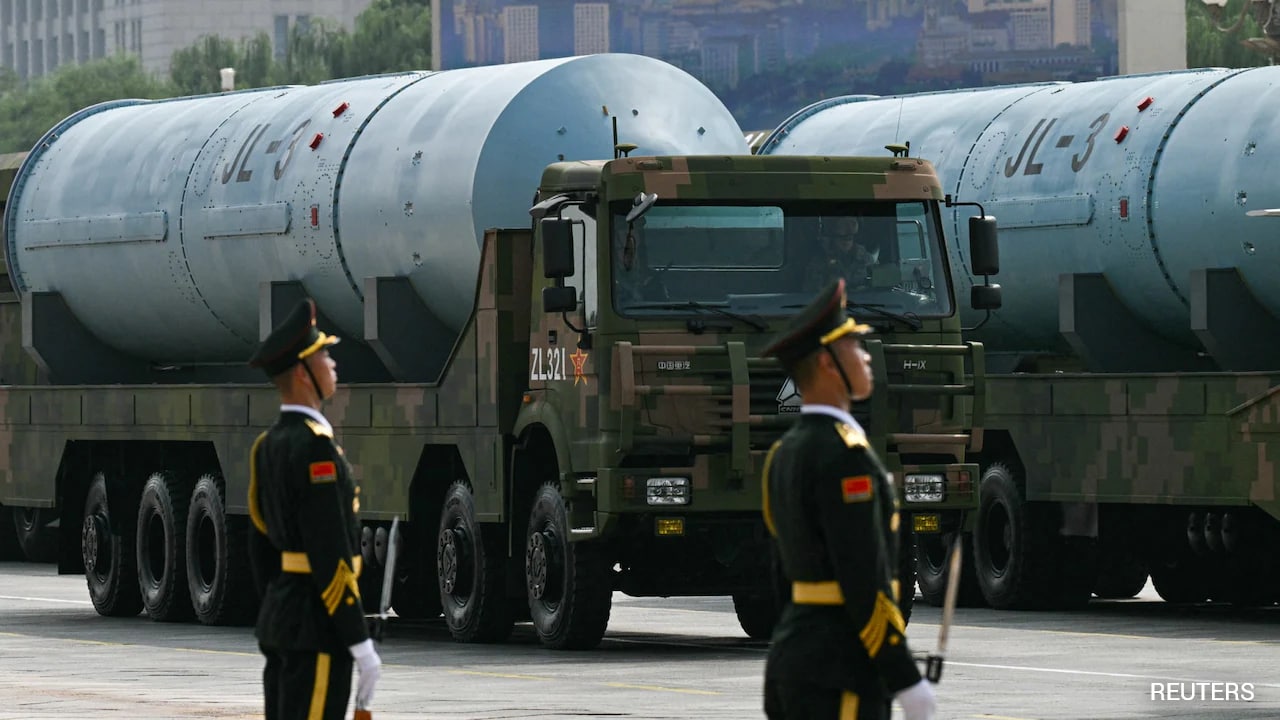
The United States has expressed alarm over China's growing nuclear capabilities after Beijing test-fired a missile with a dummy warhead into the Pacific Ocean. The launch, conducted on Monday, marks another step in China's rapid military modernization.
This test comes two years after China launched an intercontinental ballistic missile (ICBM) into waters near French Polynesia—the first such launch over international waters in over 40 years. Analysts say the latest test demonstrates China's increasing ability to strike the US mainland, despite ongoing diplomatic efforts between the two nations.
State Department spokesman Tommy Pigott said in a statement, 'At a time when the United States is working harder than ever to prevent nuclear proliferation, China is doing the opposite. Beijing's rapid and opaque nuclear weapons buildup is of great concern to the region and the world.'
The US allowed the New START treaty—the last major arms control pact with Russia—to expire in February, insisting on a new agreement that includes China. Beijing has rejected these overtures, citing its much smaller nuclear arsenal, though its capabilities are growing quickly.
The State Department urged China to 'engage in meaningful arms control discussions and commit to a regularized notification arrangement for all intercontinental-range ballistic missile and space launches.'
New Zealand reported that China informed Pacific nations of the test only two hours before it occurred. It remains unclear if similar notice was given to the United States. Chinese navy spokesperson Wang Xuemeng stated on WeChat that the launch was 'a routine arrangement of China's annual military training' and that 'relevant countries were informed in advance.'
The missile, fired from a nuclear submarine, appeared to land near the Solomon Islands. That nation signed a secretive security deal with China in 2022, which its new government is currently reviewing. Lyle Morris, a senior fellow at the Asia Society Policy Institute, commented, 'A test of this length is a major development and would indicate that China is moving toward a significantly more survivable and longer-range sea-based nuclear deterrent capability.' He added that China's navy is now capable of targeting the continental US from positions close to Chinese waters.
The test coincided with Australia and Fiji signing a major defense treaty, part of Canberra's efforts to counter Chinese influence in the region following the controversial Solomon Islands agreement. However, analysts believe the two events are not directly linked, as such tests are typically planned well in advance.
Australian Foreign Minister Penny Wong described the test as 'destabilizing to the region.' Japan, which was informed in advance, said it strongly urged China to reconsider and voiced 'serious concerns' over Beijing's growing military activity. Relations between China and Japan have become strained since Japanese Prime Minister Sanae Takaichi suggested in November that Japan might involve itself militarily in a potential future attack on Taiwan, the self-ruled island claimed by China.
Russia, a Chinese ally, defended the test as China's 'sovereign right' and stated that Beijing 'is not threatening anyone in the world.'