US Policy Shift in Indo-Pacific: Quad Allies Explore Deeper Regional Cooperation
The Trump administration's reluctance to convene a Quad summit, the decision to revert the US Pacific Command to its earlier nomenclature, and Washington's interest in a possible G2 arrangement with China have raised questions about the future of the Quad and the broader Free and Open Indo-Pacific (FOIP) vision.
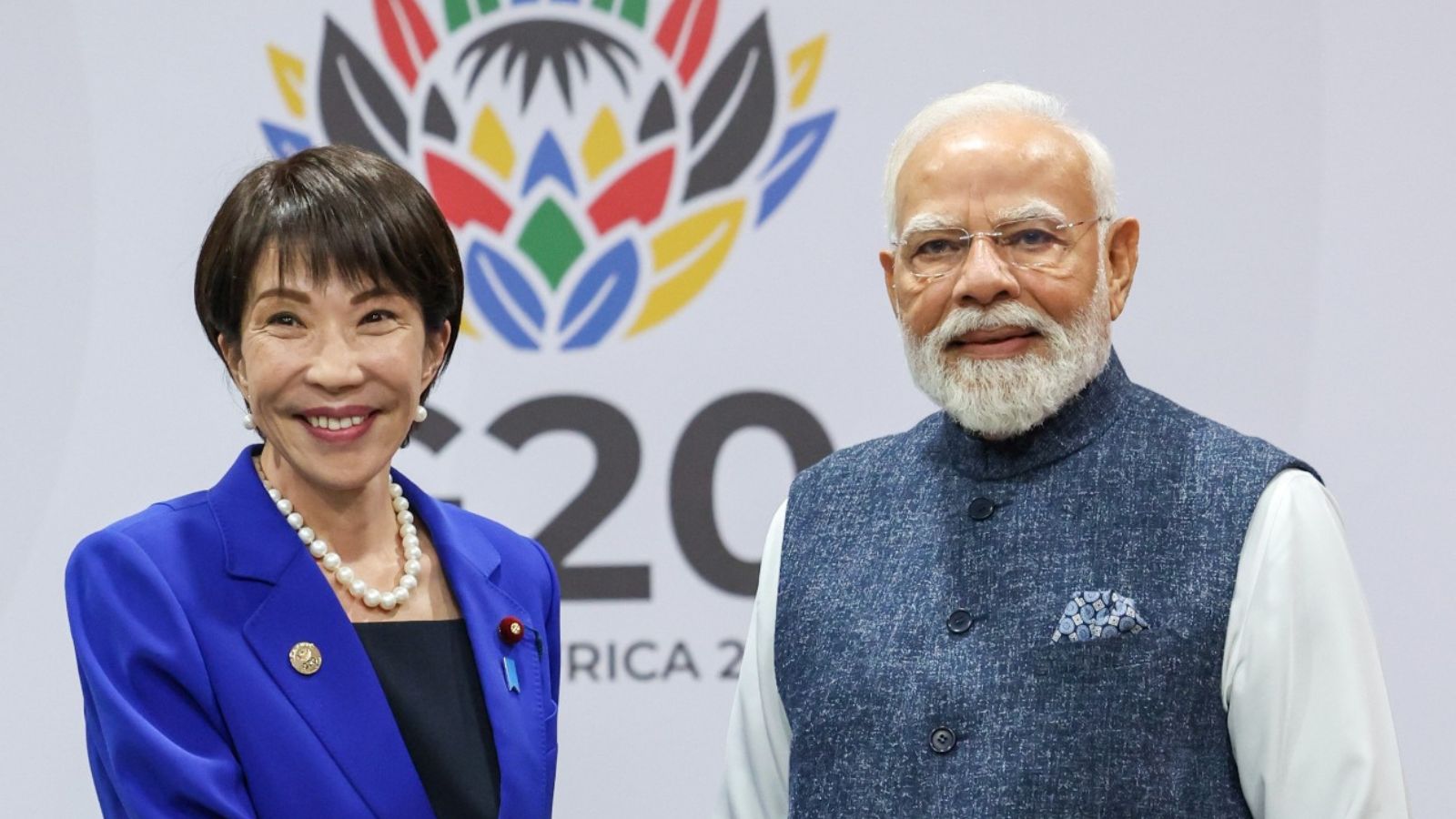
In this context, India, Japan, and Australia are examining ways to sustain the Indo-Pacific framework. The Quad was never exclusively an American project; Japan, under Shinzo Abe, laid much of the intellectual groundwork, while India and Australia embraced the concept due to shared interests in a rules-based maritime order from Africa's eastern coast to the Pacific Ocean.
Japanese Prime Minister Takaichi, marking ten years since Abe first outlined the FOIP concept, reaffirmed its relevance in a speech in Vietnam, aligning it with ASEAN's Outlook on the Indo-Pacific. Japan's updated FOIP focuses on economic infrastructure for the AI era, resilient supply chains for energy and critical materials, and security cooperation—areas that overlap with India's priorities of strategic autonomy, reliable technology, and economic resilience.
Australia has also deepened its defence cooperation with Japan, including plans to procure a multi-role frigate based on Japan's Mogami-class design, signalling a move beyond traditional alliance dependence.
For India, these developments offer an opportunity to enhance its regional role while maintaining strategic autonomy. New Delhi has consistently stated that the Quad is not an 'Asian NATO' and resists formal alliance structures. However, a stronger India-Japan-Australia trilateral could enable collaboration on maritime security, critical minerals, supply chains, cyber resilience, and infrastructure financing without necessitating a formal alliance. India can focus on the Indian Ocean without entanglement in distant conflicts.
China's growing naval presence, economic coercion, and territorial assertiveness remain unspoken but significant factors driving this cooperation. At the same time, many ASEAN members prefer not to choose between Beijing and Washington, underscoring the need for a balanced regional approach.