US Demands Iran Pledge to Keep Strait of Hormuz Open Ahead of Talks
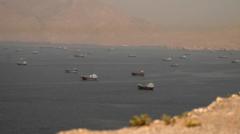
The United States has demanded that Iran issue a public statement declaring the Strait of Hormuz open to navigation and commit to ceasing attacks on commercial vessels, according to multiple reports. The demand comes ahead of negotiations scheduled for Saturday in Oman between the two countries.
Citing unnamed US officials, American media reported that Tehran had privately acknowledged to President Donald Trump's advisers that recent shootings at ships in the strait were a mistake. Iranian officials reportedly blamed the attacks on a rogue internal group, suggesting that hardliners were trying to undermine the negotiation process.
President Trump has stated that both sides agreed to continue talks despite the recent escalation over the Strait of Hormuz, which the White House viewed as a violation of a ceasefire agreement signed in June. That agreement included a provision for Iran to ensure safe passage for commercial ships.
Iranian Foreign Minister Abbas Araqchi said on social media platform X that his country had 'kept its word' on the ceasefire, and accused the US of violating the deal. Araqchi is expected to attend Saturday's talks.
Senior US officials told CBS News, the BBC's US partner, that a message had been conveyed to Tehran's leadership through regional mediators. The message demanded that Iran release a statement declaring the strait open and that it will stop shooting at commercial ships. 'They're either going to give us that statement or we're not having a good outcome for them,' one official told Reuters.
The American delegation for Saturday's talks is expected to include Vice-President JD Vance, Secretary of State Marco Rubio, special envoy Steve Witkoff, and Trump's son-in-law Jared Kushner. The talks are a continuation of efforts to stabilise the strategic waterway, through which about a fifth of global oil supply passes.
Context: The Strait of Hormuz is a narrow passage between the Persian Gulf and the Gulf of Oman, crucial for international energy shipments. The US and Iran have a history of tensions in the region, including previous seizures of vessels and military confrontations. The upcoming talks aim to de-escalate and maintain freedom of navigation, a principle upheld by international maritime law.