US Declares Indian-Origin Lab Owner Fugitive in $93 Million Medicare Fraud Case; May Be in Hyderabad
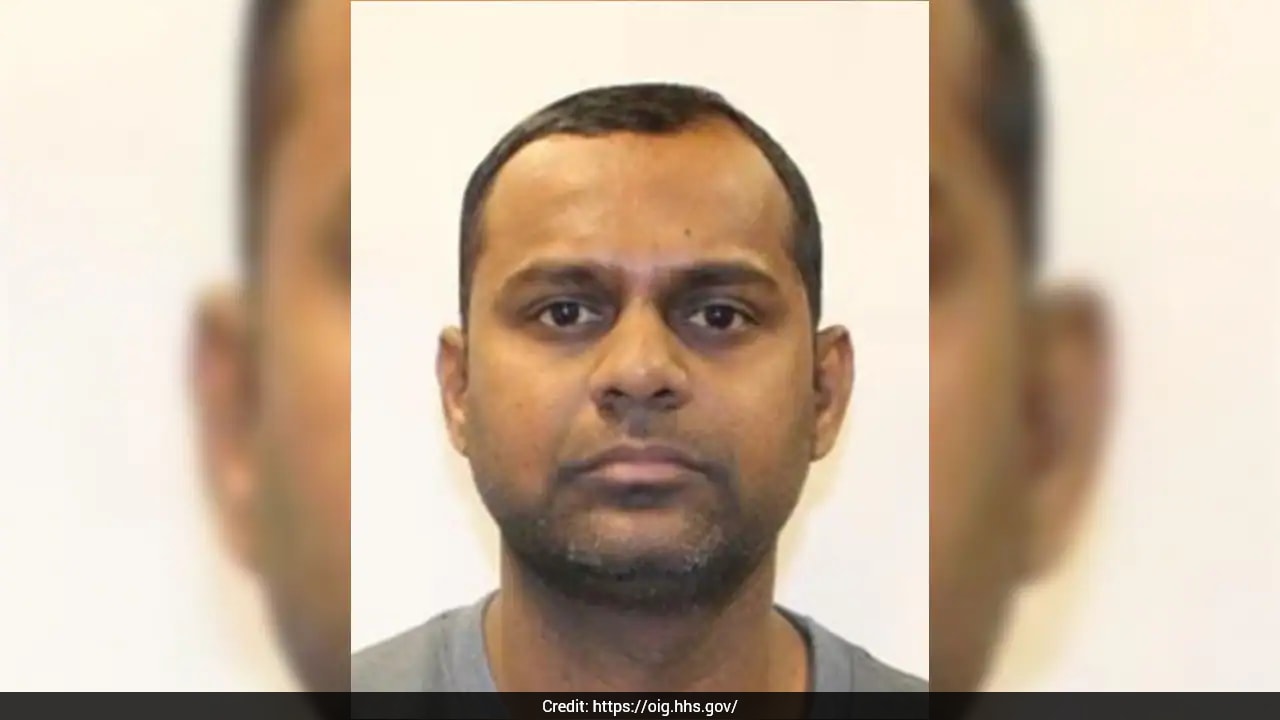
United States authorities have declared a 46-year-old Indian-origin laboratory owner a fugitive after accusing him of orchestrating a Medicare fraud scheme worth about $93 million (roughly Rs 890 crore) involving genetic testing. Officials believe he may be in Hyderabad, India.
The accused, Khadeer Khan Mohammed, owned American Premier Labs LLC, a laboratory based in Richardson, Texas. According to the US Department of Health and Human Services, he allegedly used the laboratory to submit fraudulent claims to Medicare, a government-funded health insurance programme in the United States that mainly covers people aged 65 and above, and certain younger people with disabilities.
Authorities say that between about August 2023 and October 2024, he directed others to file claims that were not eligible for reimbursement, had not been requested by authorised medical providers, and were not for the services the laboratory actually provided.
Court records and department data cited in the case indicate that American Premier Labs submitted approximately $93 million in allegedly fraudulent claims, of which Medicare paid out at least $65 million. In one 10-day period in 2023 alone, Medicare paid roughly $13 million against claims that are now suspected to be fraudulent.
A central element of the alleged scheme, according to investigators, was the misuse of other doctors' personal identifying information. The department says Mohammed used physicians' identities — without their knowledge or consent — to make claims for genetic tests appear legitimate. The claims concerned Medicare beneficiaries with whom those doctors had no treatment relationship at all.
US authorities have now listed Mohammed as a fugitive and stated that they believe he may be in Hyderabad. The Department of Health and Human Services and the Federal Bureau of Investigation are pursuing a criminal case against him. Nearly $6 million has reportedly been seized from bank accounts said to be under his control.
A fugitive designation in the United States generally means that a person has been formally charged and is believed to have left the jurisdiction or gone into hiding to avoid prosecution. It is not a finding of guilt. Like all accused persons, Mohammed is presumed innocent unless and until charges are proved in a court of law, and he has the right to contest the allegations.
If he is indeed in India, any attempt to secure his presence in the United States would ordinarily proceed through the extradition arrangements that exist between the two countries. Such requests are examined by Indian authorities and are ultimately decided by the courts. India is a frequent partner in US healthcare fraud investigations, and several Indian-origin individuals have faced prosecution in similar cases in recent years.
Medicare fraud involving genetic testing has become a significant enforcement priority in the United States. Investigators have repeatedly flagged schemes in which laboratories bill the programme for expensive tests that were never ordered by a treating doctor, never performed, or were marketed to beneficiaries through call centres and door-to-door agents. The scale of such billing, officials say, drains public funds meant for the healthcare of elderly and disabled Americans.
The case also draws attention to how easily medical identities can be misused in digital billing systems. Physicians' licence numbers and personal details are often sufficient to file a claim, and doctors frequently learn that their names have been used only after the money has been paid out.
There was no immediate public information about whether Mohammed has legal representation, or about his response to the charges. Details of the investigation, including the exact charges filed and the status of any proceedings against other individuals named in the matter, have not been fully disclosed.