Union Minister Dharmendra Pradhan Resigns Amid Ongoing Protests; Government Cites Pragmatism
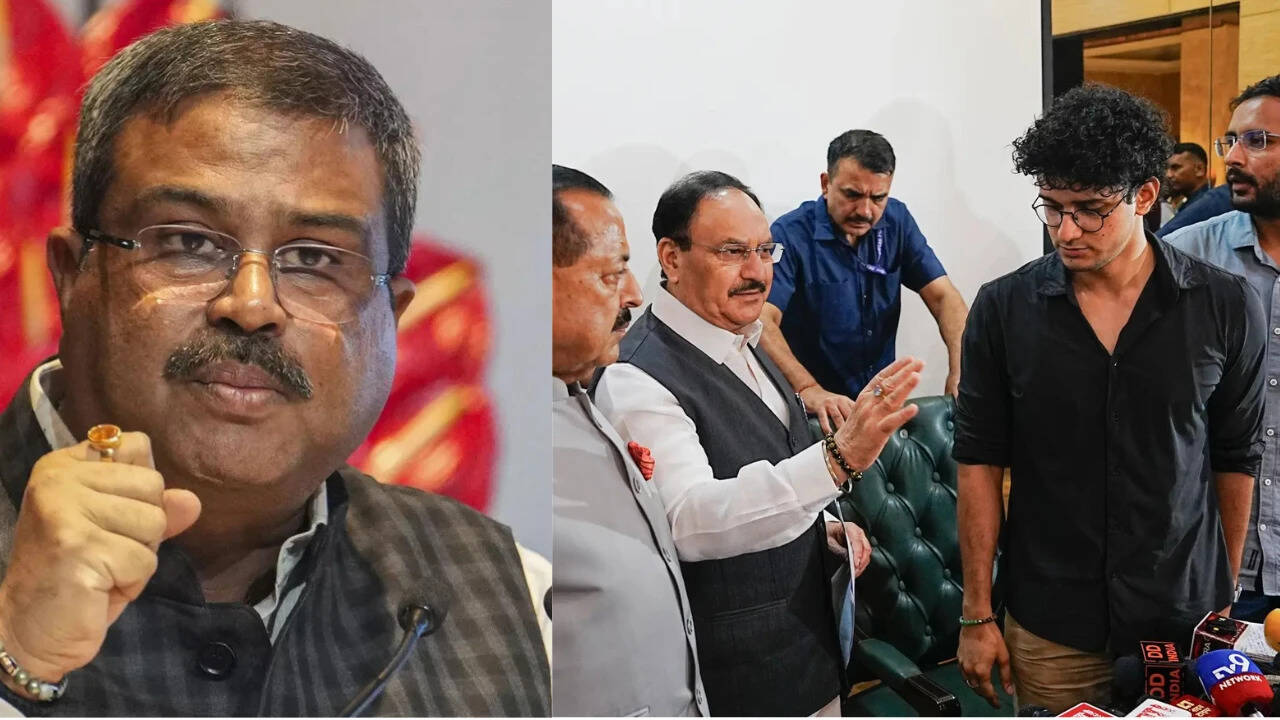
Union Minister Dharmendra Pradhan, a senior member of the Cabinet since Prime Minister Narendra Modi took office in 2014, resigned on [date] following weeks of protests that showed no signs of abating. The government described the decision as a pragmatic move to de-escalate tensions and demonstrate its willingness to engage with protesters.
The protests, led by climate activist Sonam Wangchuk, had gained significant momentum after Wangchuk ended a 26-day hunger strike on [date] by accepting soup from Union Minister J P Nadda. Despite this gesture, the demonstrations continued, with opposition leaders like Rahul Gandhi amplifying calls for action. The government faced intense pressure from a younger generation that used social media to amplify its demands, with slogans and memes going viral.
In a press conference, Union Ministers Jitendra Singh and J P Nadda, along with Saurav Das of the Centre for Justice and Peace, addressed the media, stating that the resignation was a voluntary decision by Pradhan to uphold his responsibilities. They emphasised that the government had engaged constructively with protesters and that the move reflected its commitment to resolving grievances through dialogue.
This is not the first time the government has yielded to sustained public pressure. In November 2021, it withdrew three farm laws after a year-long protest by farmers. In December 2019, Prime Minister Modi announced that the government had no plans for a National Register of Citizens, aiming to defuse protests against the Citizenship (Amendment) Act. However, analysts note that the resignation of a senior Cabinet member like Pradhan marks a significant political concession.
Political observers suggest that the protests highlight a growing restiveness among the youth, particularly over employment concerns, even as some sections support the government's other policy planks. The Bharatiya Janata Party (BJP) now faces the challenge of winning over a generation that appears increasingly disenchanted, despite its strong electoral performance in the past.
Within the party, there is a view that by engaging with protesters and conceding to their demands, the government has demonstrated sincerity of purpose and belied accusations of being 'arrogant and insensitive.' Critics, however, argue that the resignation reflects a failure to address underlying issues and could embolden future protests.
The opposition has seized on the resignation as a rare opportunity to build on youth anger, after suffering electoral setbacks and desertions from its ranks. The incident is expected to feature prominently in upcoming parliamentary debates and election campaigns.
As the dust settles, the government will need to navigate the delicate balance between maintaining order and addressing legitimate grievances, while the opposition seeks to capitalise on the political dent. The long-term impact on the BJP's image and governance remains to be seen.