UDP Chief Metbah Lyngdoh Quits Meghalaya Cabinet as 11 of 12 MLAs Leave Party
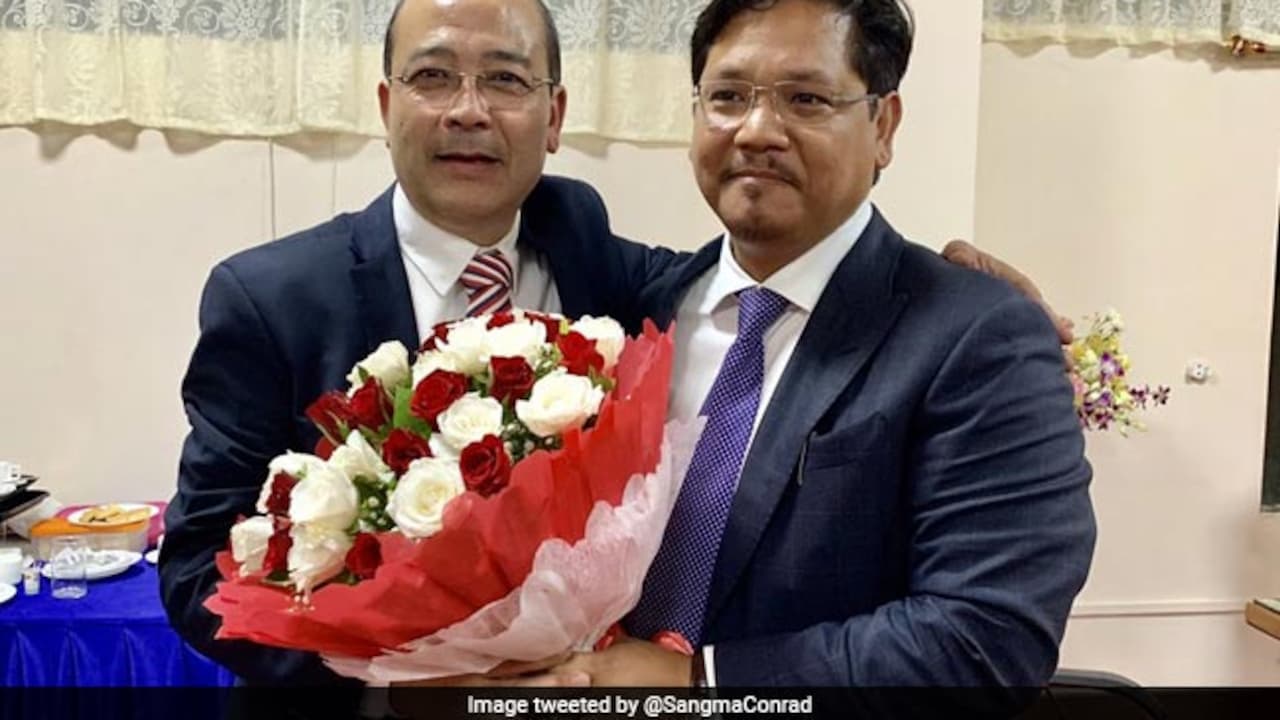
Metbah Lyngdoh, president of the United Democratic Party (UDP), resigned as a cabinet minister in the Conrad K Sangma-led Meghalaya Democratic Alliance (MDA) government on Saturday, after 11 of the party's 12 MLAs left the UDP. Eight of the legislators have joined the Bharatiya Janata Party (BJP) and three the National People's Party (NPP), which is led by the Chief Minister.
Mr Lyngdoh, a former Speaker of the Meghalaya Legislative Assembly, submitted his resignation to Mr Sangma and said it would take effect immediately. He had served in the cabinet for more than a year.
Explaining his decision, he said the changed political situation in the state had left him as the party's only legislator in the assembly, making it untenable for him to continue in the council of ministers.
"Due to the current political scenario arising in the state, where 11 MLAs of the UDP have left me as the lone MLA in the party, I decided I will not be able to continue as a cabinet minister in the MDA government," he said. "Therefore, today I have placed my resignation before Chief Minister Conrad K Sangma. My resignation is effective immediately. This is the first decision of the party; other decisions will follow."
The development marks a sharp reversal for the UDP, which won 12 seats in the 2023 assembly elections and emerged as the single-largest regional party in the Khasi-Jaintia Hills region. Within three years, the party has seen almost its entire legislative wing move elsewhere.
The UDP has historically been a significant force in Meghalaya politics and has often played the role of kingmaker in coalition governments in the 60-member assembly. Its reduced strength now alters the internal arithmetic of the ruling alliance, in which the NPP is the largest partner and the BJP is also a constituent.
Mr Lyngdoh's remarks suggest the party is yet to decide its next course of action, including whether it will remain within the MDA coalition or sit in opposition. He did not elaborate on the decisions that might follow.
Mass transfers of legislators between parties in India typically invite scrutiny under the Tenth Schedule of the Constitution, commonly known as the anti-defection law, which provides for the disqualification of members who voluntarily give up the membership of the party on whose ticket they were elected. Whether such proceedings are initiated in this case is not yet known.
The resignations and defections come at a time when political realignments in the north-eastern states are being watched closely, given their bearing on the composition of coalitions in state assemblies and on regional parties that have traditionally drawn their strength from distinct community-based constituencies.
For the UDP, the immediate challenge is organisational. With one MLA in the assembly and its president out of the cabinet, the party faces questions about its representation in the government and its capacity to hold together its remaining structure ahead of future elections.
The Chief Minister's office has not issued a detailed statement on the resignation. Further political developments are expected in the coming days as the party works out its position.