Two-Thirds Majority at Stake: Inside the Numbers Game for Constitutional Amendments
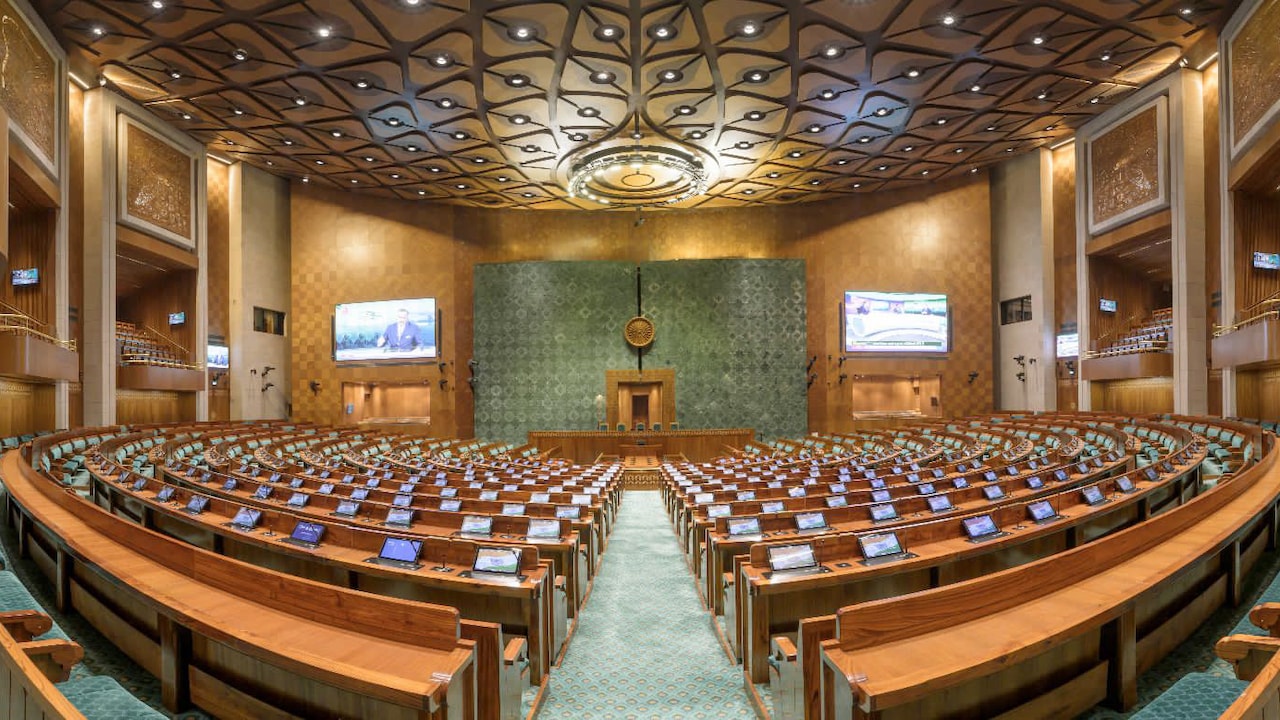
The government is preparing for a crucial test in the upcoming monsoon session of Parliament, where it will attempt to pass two constitutional amendments that require a two-thirds majority in both Houses. The first is the 130th Amendment Bill, which proposes disqualification of a prime minister, chief minister, or minister if they are jailed for 30 days even on allegations. The second, the 131st Amendment Bill, links the already-passed 33 per cent Women's Reservation to the delimitation process, which would restructure and increase the number of Lok Sabha seats.
Constitutional amendments require a special majority — two-thirds of members present and voting — in both Lok Sabha and Rajya Sabha. During the April session, the government brought the Delimitation Bill but fell short by 54 votes. Out of 528 MPs who voted, 298 voted in favour, 230 against, while the required 352 votes for a two-thirds majority were not achieved.
Since then, political equations have shifted. The most significant boost to the National Democratic Alliance (NDA) comes from 20 rebel MPs of the Trinamool Congress who have written to the Lok Sabha Speaker seeking to merge into a new group called 'Nationalist Citizens Party of India' and join the NDA. In Tamil Nadu, the Dravida Munnetra Kazhagam (DMK), which holds 30 seats (22 in Lok Sabha, 8 in Rajya Sabha), has been distancing itself from the Congress due to the latter's support for actor-turned-politician C Joseph Vijay. This rift could lead to DMK either silently supporting the NDA or abstaining.
Currently, the NDA has 292 MPs in the Lok Sabha. To reach the two-thirds mark of 360, the government needs additional 68 votes. With the Trinamool rebels (20) and possibly 6 rebel Shiv Sena (UBT) MPs, the total could reach 318. If DMK's 22 MPs support, it becomes 340. Additional support from 8 MPs of the Nationalist Congress Party (Sharad Pawar faction) would bring the count to 348. The NCP (SP) has offered conditional support, demanding a uniform 50 per cent increase in seats for Lok Sabha and state assemblies.
Even with these numbers, the government would still need 12 more votes. Smaller parties like the YSR Congress (4), Jharkhand Mukti Morcha (3), Viduthalai Chiruthaigal Katchi (2), Rashtriya Loktantrik Party (1), Shiromani Akali Dal (1), and a few independents could be approached.
Alternatively, if the Opposition chooses to walk out or remain absent during the vote, the required majority could be lower as it is based on those present and voting. However, the government would still need to ensure a favourable composition in Rajya Sabha, where the NDA currently lacks a clear majority.
The broader 'One Nation, One Election' (ONOE) project is also under parliamentary committee review, but immediate focus remains on the monsoon session. The outcome will depend on the final alignments and the ability of the government to secure the necessary support.