Tupac Trial Witness Turns Combative, Says 'I Don't Want to Send Him to Prison'
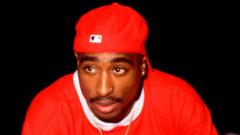
The murder trial of Duane "Keffe D" Davis, the man charged with the 1996 killing of rapper Tupac Shakur, witnessed an unexpected outburst on Tuesday when a key prosecution witness grew combative under cross-examination and declared he did not want to see the defendant sentenced to prison.
The witness, identified as McDonald, is a former member of the Mob Piru gang, an offshoot of the Bloods, and a former enforcer at Death Row Records, the record label founded by Suge Knight that represented Shakur. McDonald testified that he was not with Shakur when the shooting took place. He told the court, however, that individuals who were present at the scene had quickly communicated among themselves about who was responsible for the attack.
During the questioning by Davis's defence attorney, Michael Sanft, McDonald repeatedly raised his voice and made sweeping gestures with his arms, making his frustration evident. He expressed reluctance to answer a series of questions, stating that doing so "wouldn't be good" for the defendant. In an unusual moment, he looked over at Davis and said, "Talk to your lawyer, man, this dude is tripping."
McDonald then addressed Davis directly from the witness stand. "I don't want to send him to prison, even though we don't like each other. I don't want to send you to prison," he said, while Davis sat silently in his suit, his expression unchanged.
When Sanft pressed him to explain how he could identify those responsible without having been at the shooting, McDonald said that members of Shakur's entourage had quickly spread the word about the attackers. He described the period as a gang war, where tensions were high and revenge was sought.
"It was a gang war. People were getting hurt. People were being sought," McDonald testified. He named Orlando Anderson, Davis's nephew, and several others as the primary targets of retaliation in the aftermath of Shakur's death. "They were the main subjects of a gang war — they were in the middle," he said, acknowledging that he too was involved in the conflict.
McDonald's testimony is regarded as a significant element of the prosecution's case, given his close associations with Death Row Records and his familiarity with the gang dynamics in Los Angeles during the 1990s. Shakur was shot in a drive-by shooting in Las Vegas on September 7, 1996, and died six days later. The killing came at the height of a highly publicised rivalry between East Coast and West Coast hip-hop artists.
Davis, a former leader of the South Side Compton Crips, was arrested in September 2023 and has pleaded not guilty to a charge of murder. Prosecutors allege that he planned the attack in retaliation for an altercation in which Shakur was involved earlier that night. Orlando Anderson, who was suspected by many of being the gunman, was killed in 1998 and was never charged in Shakur's murder.
The trial, which is being held in Las Vegas, has drawn widespread attention because Shakur remains one of the most influential figures in music history. The case went unsolved for nearly three decades, and Davis's arrest was the result of renewed investigative efforts and the emergence of new witnesses.
McDonald's reluctance to give potentially damaging testimony against Davis added an unpredictable dimension to the courtroom proceedings. His outburst highlighted the personal conflicts and loyalties that persist from the gang era, even as the legal process seeks to establish accountability for a crime that has haunted the music world for decades.
The trial is expected to continue for several weeks, with further testimony from witnesses and legal arguments from both the prosecution and the defence. The jury will ultimately decide whether the evidence presented links Davis to the murder beyond a reasonable doubt.