Trump's Iran Deal vs Obama's JCPOA: A Comparative Analysis
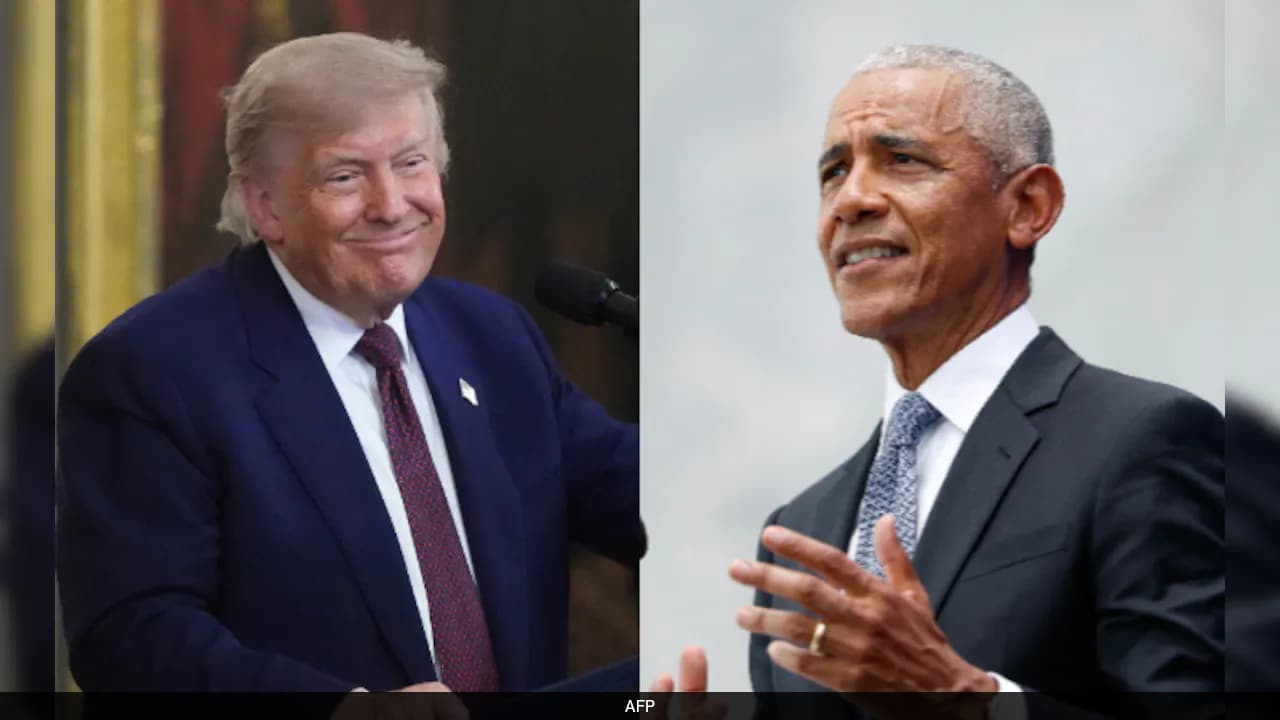
The United States and Iran have reached a new interim agreement, marking a significant shift from the 2015 Joint Comprehensive Plan of Action (JCPOA) negotiated under President Barack Obama. President Donald Trump has touted his deal as superior, while critics argue it offers less verification and more upfront concessions. Here is a comparison of the two frameworks.
Nature and Scope of the Agreements
The Trump administration's deal is a 14-point memorandum of understanding (MOU) spanning one-and-a-half pages. It is not a final agreement but a framework that initiates a 60-day negotiation period for a comprehensive settlement covering Iran's nuclear programme, sanctions relief, and the Strait of Hormuz. The JCPOA, by contrast, was a detailed 160-page document focused exclusively on restricting Iran's nuclear activities, with strict benchmarks and verification mechanisms. The JCPOA was a multilateral agreement involving China, France, Germany, Russia, the United Kingdom, and the European Union, whereas Trump's MOU is bilateral between the U.S. and Iran.
Nuclear Programme Provisions
Both deals include a written commitment by Iran never to seek nuclear weapons. The JCPOA imposed tight limits on uranium enrichment, extending the 'breakout time' needed to produce a bomb. The U.S. government verified Iran's compliance until Trump withdrew from the pact in 2018. The new MOU outlines a general path toward curbing nuclear activities, but lacks specific commitments from Tehran regarding its near-bomb-grade uranium stockpile. It suggests a willingness to resolve disputes, possibly through 'down blending' under International Atomic Energy Agency supervision, but leaves such decisions for final negotiations. The JCPOA included extensive international inspections; the MOU does not call for reinstating that regime.
Sanctions Relief and Frozen Assets
Both agreements involve sanctions relief, but the timing and scale differ. Obama eased sanctions only after a comprehensive deal was signed, with phased relief based on verified steps. Trump's MOU front-loads initial relief, including immediate U.S. waivers for Iran to export oil, leaving the final package for later. It also mentions releasing billions in frozen assets without a clear timeline. Additionally, the MOU calls for a $300 billion fund from the U.S. and allies for Iran's economic development, though conditions and timetable are vague. This has drawn criticism from some within Trump's own party who view it as excessive concessions.
Strait of Hormuz and Regional Security
The JCPOA deliberately avoided bundling regional issues, whereas the MOU aims to permanently end the war that Trump launched with Israel in February. One of its main thrusts is an agreement on freedom of navigation in the Strait of Hormuz, a critical chokepoint for global oil shipments. This reflects the broader scope of the current talks, which seek to address multiple dimensions of the conflict.
Conclusion
The two agreements represent fundamentally different approaches: the JCPOA was a detailed, multilateral nuclear deal with strict verification; the Trump MOU is a broad bilateral framework that offers early concessions and a 60-day window to negotiate a comprehensive settlement. Whether the new approach will succeed where the JCPOA faced criticism remains to be seen.