Supreme Court Declares Homemakers as ‘Nation Builders’, Acknowledges Economic Value of Unpaid Domestic Work
In a landmark ruling, the Supreme Court of India has recognised homemakers as “nation builders” and introduced a new category of compensation for unpaid domestic work in accident claims. A bench of Justices Sanjay Karol and N Kotiswar Singh held that homemakers are not just caregivers but “economic entities” whose contributions have been consistently undervalued. The judgment sets a baseline value of ₹30,000 per month for assessing loss of domestic care in motor accident compensation cases.
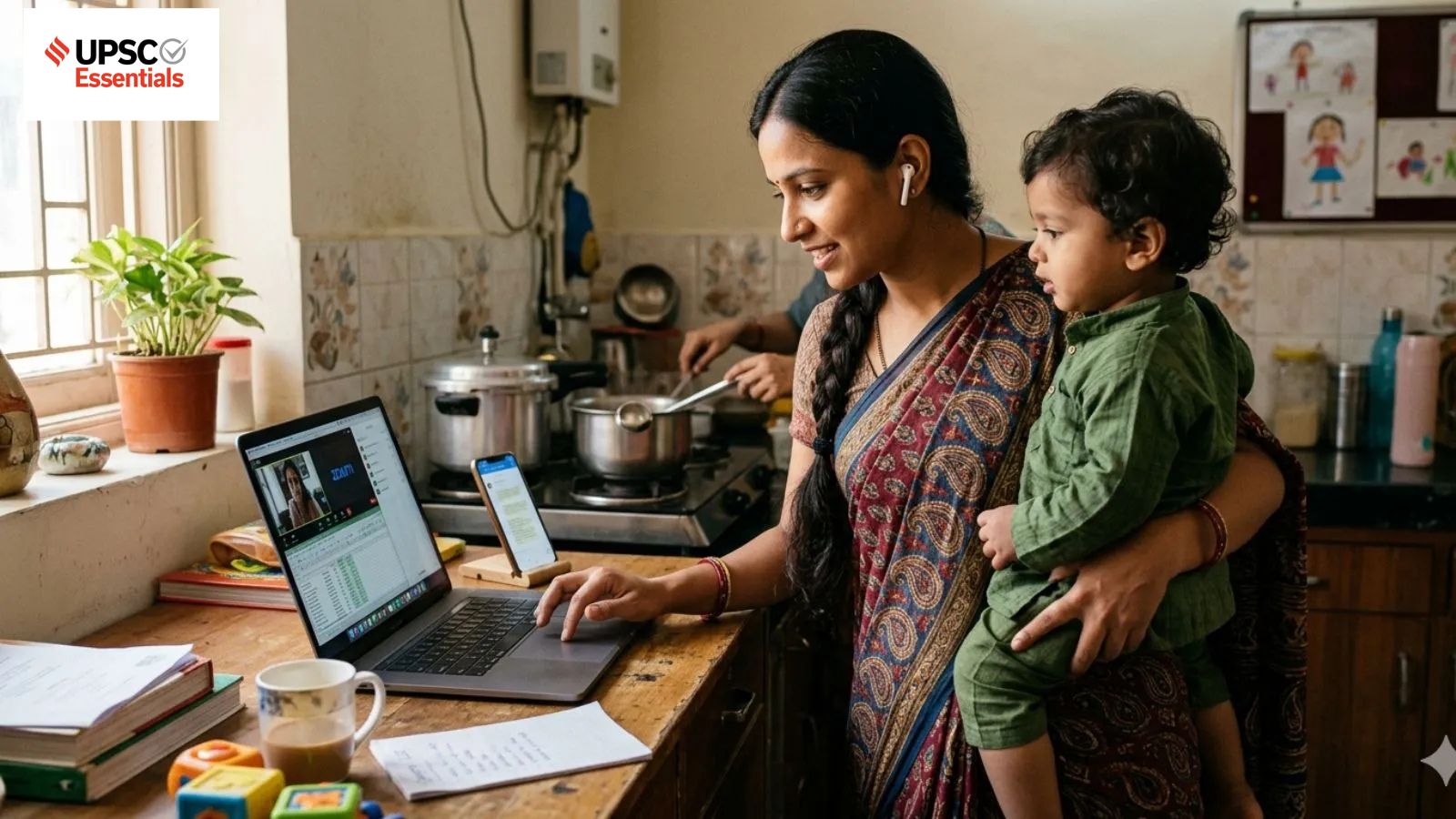
The court observed that unpaid domestic and care work, performed overwhelmingly by women, remains one of the most invisible yet vital contributors to the economy. Citing data from the Time Use Survey, the bench noted that women spend over seven hours daily on unpaid domestic work and shoulder 2.6 times more unpaid care responsibilities than men. This labour, although unrecognised in national accounts, sustains households and enables other family members to participate in the formal workforce.
Justice Sanjay Karol, writing for the bench, emphasised that the traditional approach of courts in calculating compensation had failed to account for the true economic loss when a homemaker dies or is disabled. “The ‘homemakers’, to put it directly, actually are the ‘nation builders’ and they ought to be recognised as such,” the judgment stated. The court added a separate head – “loss of domestic care” – to ensure that future compensation awards reflect the real worth of services like cooking, cleaning, child and elder care, and emotional support.
The ruling marks a significant step towards gender justice. By formally valuing unpaid care work, the court challenges the deep-rooted societal perception that such labour is without economic merit. It highlights the structural inequalities that push women into disproportionate unpaid work, limiting their opportunities for education, employment, and financial independence. The judgment also cites research estimating that women’s unpaid caregiving contributes 15–17% of India’s GDP, a massive figure that remains invisible in policy and data.
From a social equity perspective, the judgment extends the impact of a homemaker’s loss beyond the immediate nuclear family. It notes that the death of a homemaker affects not just the spouse and children, but also ageing parents and in-laws who depend on her care and companionship. By recognising this wider web of dependency, the court strengthens the principle of substantive equality, moving beyond formal legal rights to address real-world vulnerabilities.
Legal experts have welcomed the decision as a progressive interpretation of the Motor Vehicles Act and a reaffirmation of constitutional guarantees under Articles 14 and 15. They point out that the ruling could influence other areas of law, such as matrimonial disputes and inheritance, where non-monetary contributions of women are frequently ignored. However, some caution that proper implementation will depend on lower courts consistently applying the ₹30,000 benchmark and adjusting it for inflation and individual circumstances.
The judgment arrives amid growing global recognition of unpaid care work as a critical economic and human rights issue. The International Labour Organization and UN Women have long advocated for measuring and valuing such work in national policies. India’s top court joins a small but growing list of judiciaries worldwide that are attempting to correct the historical undervaluation of domestic labour.
By explicitly linking homemakers’ roles to nation-building and human capital development, the Supreme Court has sent a powerful message. It underscores that care work is not a private, sentimental service but a foundational economic activity that sustains society. The ruling is expected to prompt broader policy discussions on social security for homemakers, gender budgeting, and the need for time-use surveys to inform legislation.