SC permits dropping cases against student protestors, with exception for serious crimes
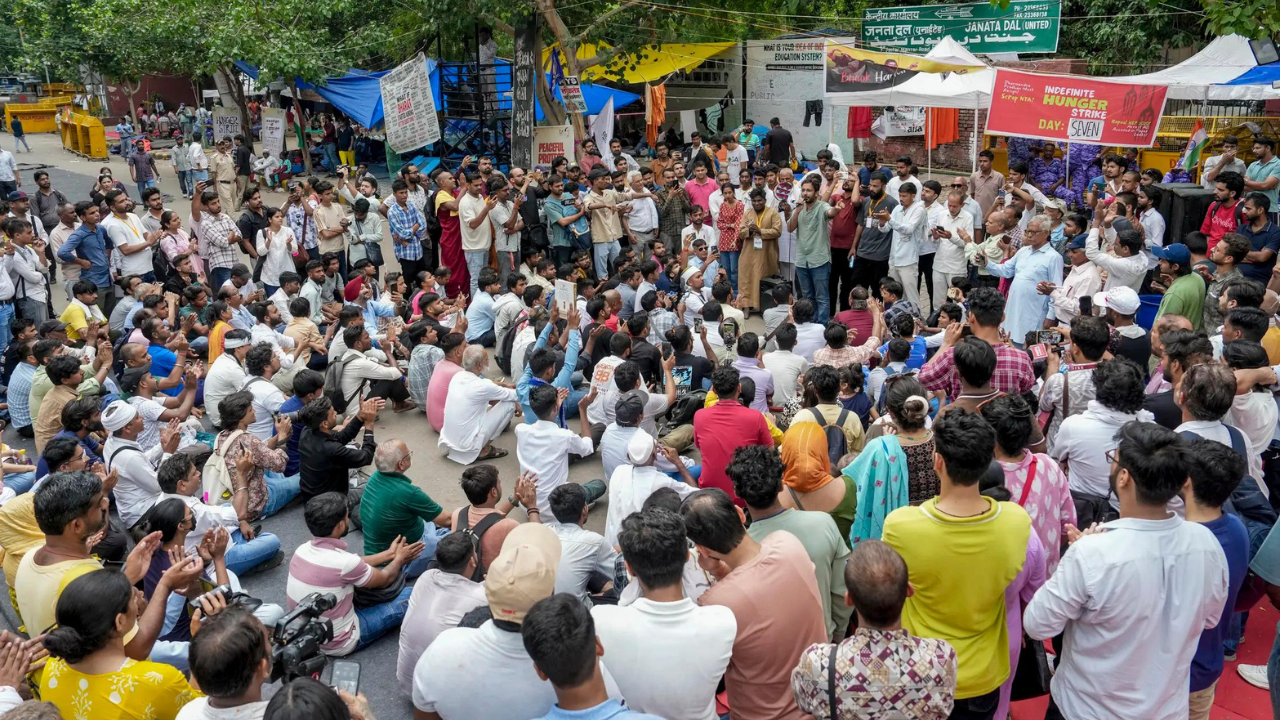
The Supreme Court on Monday paved the way for the withdrawal of cases against student protestors, allowing Delhi and state governments to close or withdraw FIRs registered during protests against the NEET paper leak. The Court clarified that genuine student protestors must be allowed to pursue their studies without the fear of prosecution, while making clear that those accused of heinous crimes would not benefit from this relief.
The clarification came in response to apprehensions raised by students following the Court's earlier order on July 28, which had stayed coercive action against protestors but permitted police to continue investigations. Solicitor General Tushar Mehta informed a bench comprising Chief Justice Surya Kant and Justices Joymalya Bagchi and V Mohana that the government was committed to withdrawing cases against student protestors and was working out the modalities.
However, Mehta clarified that FIRs against 2,738 individuals with criminal antecedents—including those accused of rape, murder, and offences under the Protection of Children from Sexual Offences (POCSO) Act—who had allegedly infiltrated the protests to indulge in violence and vandalism, would not be withdrawn. The bench said this rider would apply only to those accused of heinous and grave offences, not to those involved in petty offences or political cases.
Chief Justice Kant emphasised that student protestors must be freed from the fear of future prosecution. “Parameters for students are altogether different. Their cases should be considered in a different manner so that they remain in the mainstream and their education is not disturbed,” he observed. He also noted the expectations of parents who spend their hard-earned money on their children's education and said that dragging youngsters into police and court processes unnecessarily would serve no purpose.
Justice Bagchi remarked that when parties agree, the court could enable the process so that FIRs do not remain hanging over students' heads. He mentioned that options include the prosecution filing a closure report, the public prosecutor advising withdrawal of cases, or the court itself quashing the FIRs.
Senior advocate Vrinda Grover, appearing for some of the protestors, said that leaders of the protesting students were in talks with the government to formulate an agreed mechanism for dropping cases. She cited a Patna FIR naming 142 individuals and 5,000 unknown persons, calling it a potential “catch-all” tactic, and urged for a comprehensive mechanism to avoid future arbitrary action.
The bench also indicated its intention to lay down comprehensive guidelines on the use of graded force by police, including whether pellet guns should be used. The Court said it would constitute a high-powered committee to make recommendations on this issue. Senior advocate Shyam Divan suggested that the committee should be headed by a retired Chief Justice of India.
The Supreme Court has posted the matter for further hearing on August 18.