Record temperatures in Europe lead to deaths, strain on hospitals and infrastructure
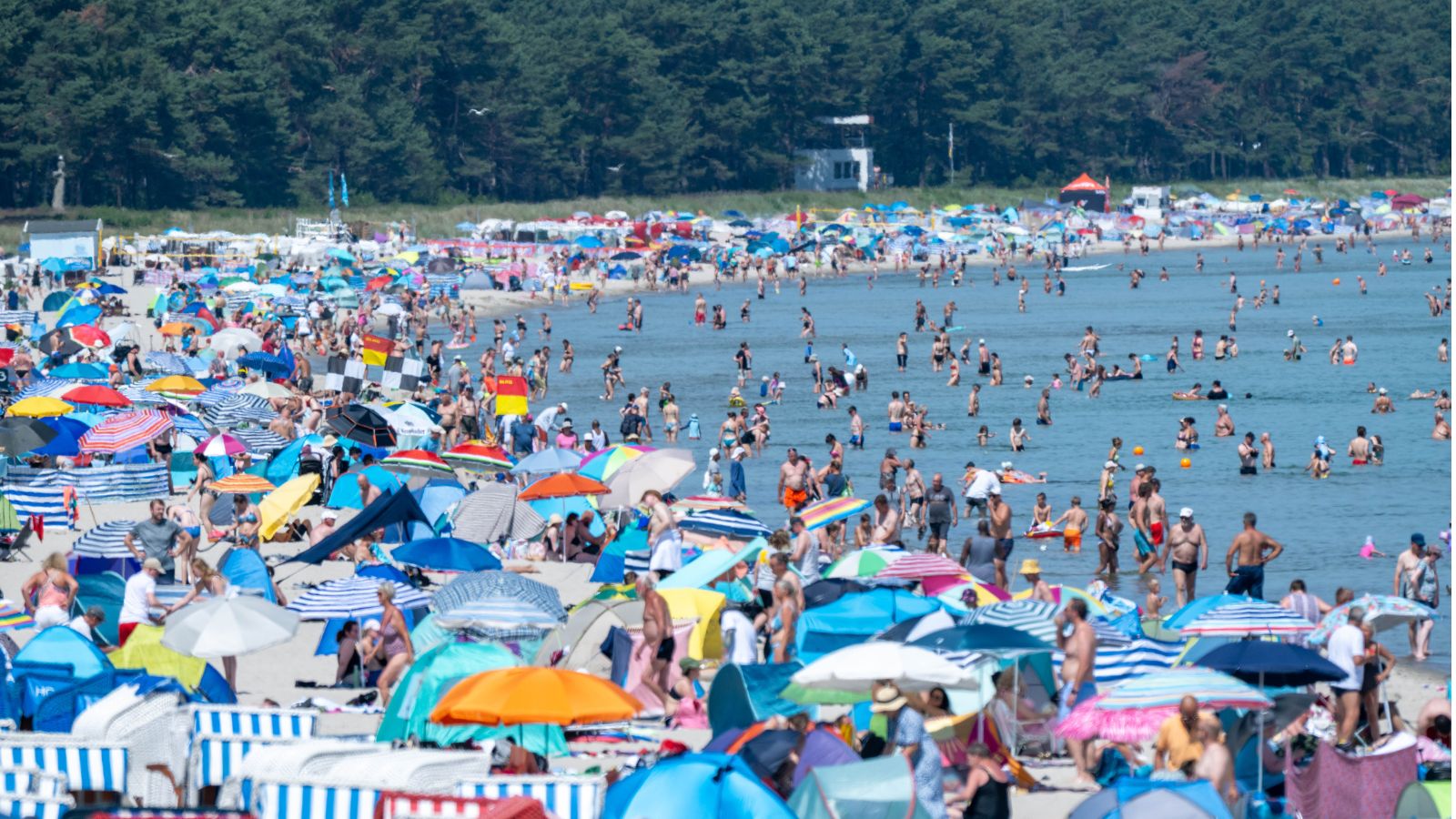
A week-long heatwave that affected western Europe moved east on Saturday, setting national temperature records and resulting in dozens of deaths. Nearly 200 million people experienced temperatures above 35 degrees Celsius on Saturday alone, according to reports.
Germany recorded a new national high of 41.5°C, while the Czech Republic reached 40.8°C. Denmark registered its highest temperature since records began in 1874 at 37°C, and Switzerland recorded 38.8°C. The United Kingdom experienced its hottest June day ever on Friday, reaching 37.3°C, breaking the record for the third consecutive day.
In France, authorities reported around 40 drownings in the past week, many occurring in unsupervised swimming areas as people sought relief from the heat. Paris hospitals recorded nearly 3,000 emergency room visits for a second consecutive day, about one-third above normal. The Paris public hospital authority activated its emergency response plan across all 38 hospitals, with calls to medical dispatch centres nearly 80 per cent higher than the same period last year.
Nicolas Revel, director of the authority, said he did not expect the death toll to reach the catastrophic levels seen in 2003, when a heatwave killed 15,000 people in France, partly due to improved treatment for heat illness. 'I think we'll be situated, clearly, between 2019 and without necessarily reaching the catastrophic level of 2003,' he told the Associated Press. 'But we have to expect that there will still be many deaths.'
In Britain, police recovered the bodies of a 22-year-old man and a 15-year-old boy from a lake and a river on Saturday, bringing the week's heat-related death toll in the UK to four. In the western German city of Dormagen, dozens of nursing home residents were evacuated after temperatures inside the building reached 35 degrees Celsius. A resident died overnight, though it was not immediately clear whether the heat was responsible.
The heatwave also caused significant infrastructure disruption. Sections of Germany's A2 motorway buckled and burst outside Berlin, forcing road closures. Rail operator Deutsche Bahn advised against all non-essential travel over the weekend, stating that the country's transport network was being severely tested. In Belgium, hundreds of Eurostar passengers were evacuated after train failures left them without air conditioning.
British hospitals reported equipment failures, including MRI machines and IT systems. Tourist attractions such as Tower Bridge and the Royal Observatory temporarily shut their doors. Energy production was also impacted: Switzerland shut down both reactors at the Beznau nuclear plant after the Aare River became too warm to cool them. France reduced output at several nuclear reactors for similar reasons, while Hungary's Paks plant cut capacity at one of its four reactors after the Danube's temperature exceeded regulatory limits.
Scientists have cautioned that such extreme heat events may become more frequent and intense due to climate change. However, they note that the current heatwave is consistent with projections for a warming world. The question for many Europeans is no longer whether climate change is making summers worse, but how much worse they will become.







