Rajnath Singh stresses deeper military-civil integration to strengthen defence ecosystem
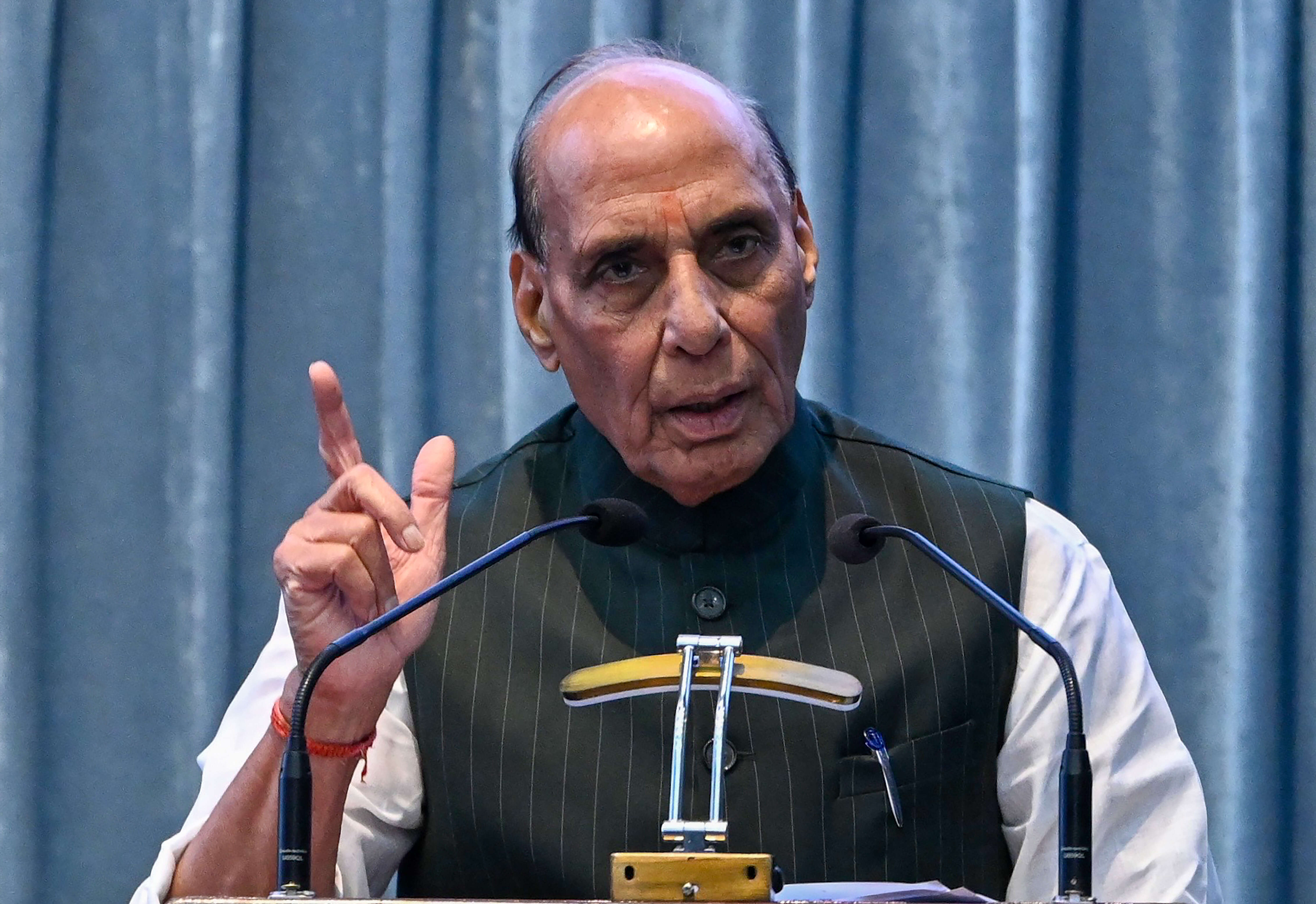
New Delhi: Defence minister Rajnath Singh on Monday emphasised the need to deepen integration between the military and civilian components of the defence ministry, saying it would foster greater synergy within the defence ecosystem to tackle evolving security and technological challenges.
Addressing the 85th Armed Forces Headquarters (AFHQ) Civilian Services Day celebrations in Delhi, Singh said both uniformed and civilian services share the same commitment of 'Nation First', and when the objective is singular, every element of the system transforms into national strength.
The minister underlined that military and administrative integration cannot proceed along separate paths. As joint and integrated structures develop, there will be a need for continuity and expertise across all areas — policy, administration, human resource management, financial processes, logistics, and institutional knowledge.
Singh highlighted the importance of enhancing structured cross-exposure between civilian and military officers, suggesting joint training programmes and developmental assignments for both sides to learn from each other's experiences.
“Military officers bring operational experience, a command perspective, and an understanding of warfare, while civilian officers contribute through administrative continuity, policy experience, an understanding of government processes, and institutional memory. When these strengths combine, decision-making becomes more informed, balanced, and effective,” he said.
Explaining with the example of 'cyber warfare', the minister said that if officers of the AFHQ civilian services develop defence-specific common cyber tools leveraging their expertise, it could prove beneficial to the defence forces. He also proposed a forum for the study of Indian military history from a civilian perspective, which could foster fresh ideas and new perspectives.
Singh called upon the AFHQ civilian services to evolve into the “strategic brain” of India's defence management architecture by developing a comprehensive understanding of the defence sector, functioning effectively in a joint environment, and continuously enhancing its expertise to face emerging challenges.
While acknowledging that the AFHQ civilian services have moved in sync with changing times, he asserted that at a time when modern warfare is driven by technological dynamism, the cadre must move beyond its specific mandate of proper implementation of service rules, regulations and orders.
“A military derives its strength not merely from weapons and ammunition, but also from the thousands of unseen hands that always stand in their support. AFHQ Civilian Services is one of these unseen yet decisive forces. It must focus on strengthening the security architecture through research, geo-strategic thinking and innovative ideas. Its active participation in core defence matters is essential as, being a permanent cadre of the Ministry of Defence, it possesses deep domain knowledge,” Singh said.


