Rabies vaccine vials found in Delhi substandard: manufacturer denies they are its product
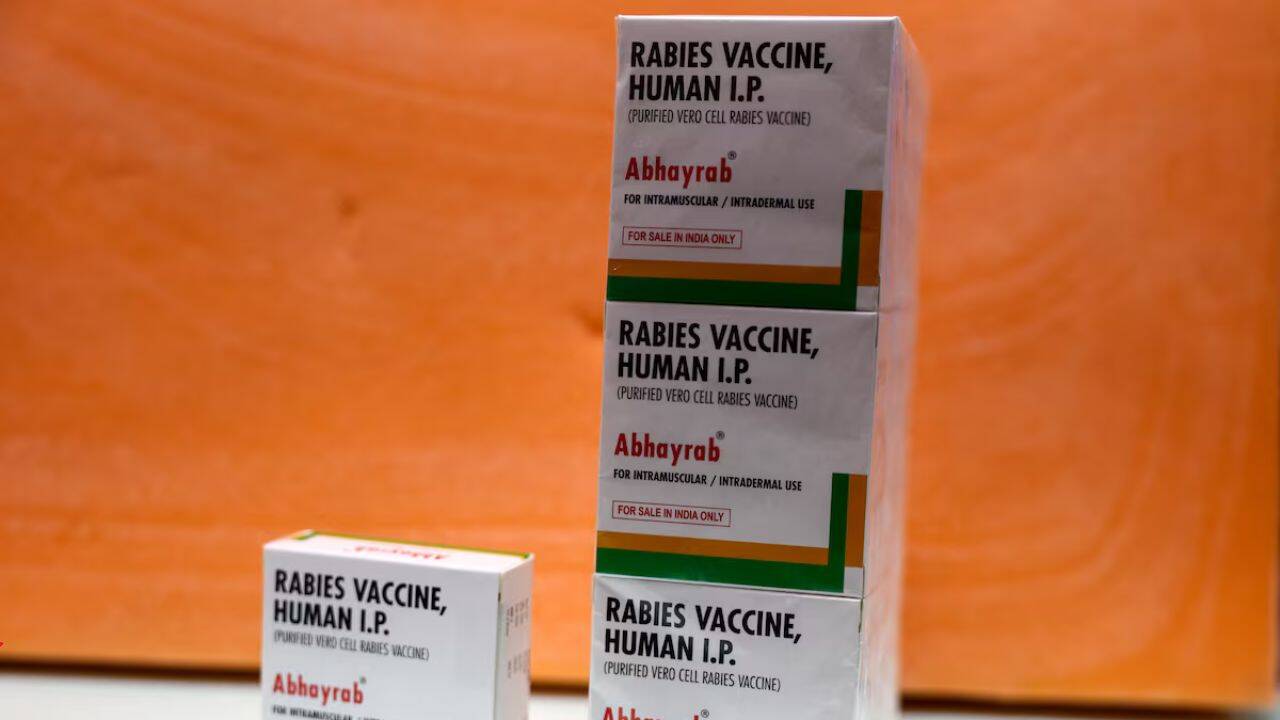
NEW DELHI: Vials labelled as Abhayrab, a rabies vaccine, discovered at an unlicensed residential premises in Mukherjee Nagar have been declared "Not of Standard Quality" and misbranded by the Central Drugs Laboratory (CDL) in Kasauli. The vials were sampled by the Central Drugs Standard Control Organisation (CDSCO) during an enforcement action and sent for testing.
According to the laboratory report, the vials, bearing batch number KE25012, failed the potency test. They passed sterility, moisture and identity checks. The report also recorded 17 differences between the tested vials and the retention samples of the same batch submitted by Human Biologicals Institute, a division of Indian Immunologicals Ltd, for batch-release testing. These differences spanned labelling, artwork, QR-code verification, cap colour, licence details and packaging text.
Indian Immunologicals said the vials examined were not manufactured by Human Biologicals Institute. The company said the genuine KE25012 batch had been tested and released by the Central Drugs Laboratory under a batch-release certificate dated November 7, 2025. A total of 83,370 vials from that batch were supplied only through its authorised distribution channel, and no market complaint had been received for the batch, it added.
The finding is significant because a substandard or spurious rabies vaccine may fail to provide the protection expected after an animal bite. Rabies is almost invariably fatal once clinical symptoms develop, making effective post-exposure vaccination critical. Health experts say any compromise in vaccine quality can have serious public health consequences, especially in areas where awareness and access to proper post-exposure prophylaxis are limited.
The Mukherjee Nagar location is notable because earlier this year, a Crime Branch raid in the same area recovered 953 rabies vaccine vials among medicines allegedly linked to a spurious-drug racket. Four people were arrested. There is currently no evidence establishing that those vials belonged to batch KE25012.
This is not the first time Abhayrab has faced an authenticity issue. In January 2025, Indian Immunologicals informed the drug regulator about counterfeit Abhayrab doses bearing batch number KA24014. Following that, health authorities in the United States, the United Kingdom and Australia issued alerts for people who may have received the vaccine in India.
Indian Immunologicals said it submitted its manufacturing, quality-control, reconciliation and distribution records to the CDSCO on August 14. In its September 4 representation to the Drugs Controller General of India, it asked authorities to trace the source of the vials and act against those responsible. The company stressed that every Abhayrab batch is independently tested and released by the Central Drugs Laboratory before sale. Vaccines supplied through hospitals, clinics, government facilities and licensed pharmacies via its authorised distribution chain are not affected by this matter.
Regulatory authorities routinely conduct enforcement actions to check for substandard or counterfeit drugs in the market. This case highlights the need for continuous vigilance in the pharmaceutical supply chain. Consumers are advised to obtain vaccines only from authorised and licensed healthcare settings and to verify batch details with their healthcare providers.